
Where will the market go after negotiations break down?

The first round of negotiations between the US and Iran, held in Islamabad, Pakistan from April 11 to 12, ended in failure, which was generally in line with market expectations. What is truly noteworthy is the underlying logic behind the actions taken by all parties and the market’s response after talks broke down.
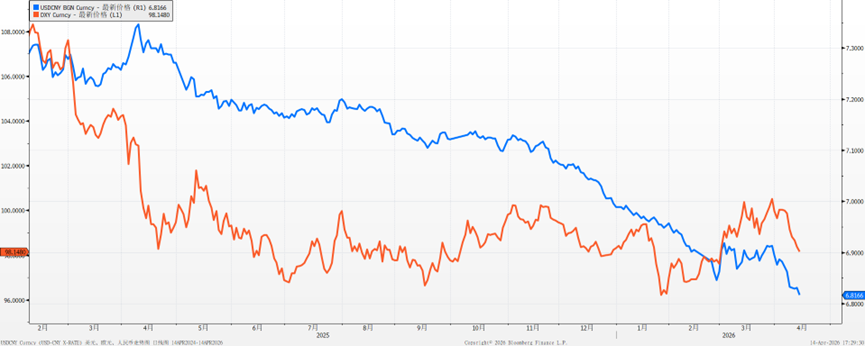
In terms of asset performance, the market has not reverted to a strong dollar environment, but has instead continued along a path of rising risk appetite. Taking USDCNY as an example, the overall trend since April has been downward, falling from a high of 6.91 to around 6.82. Observing the RMB exchange rate against a basket of currencies shows that the RMB has not appreciated against non-dollar currencies such as the euro and the pound; its appreciation is mainly due to the weakening of the dollar itself.
The recent decline in USDCNY is mainly due to a weakening dollar index
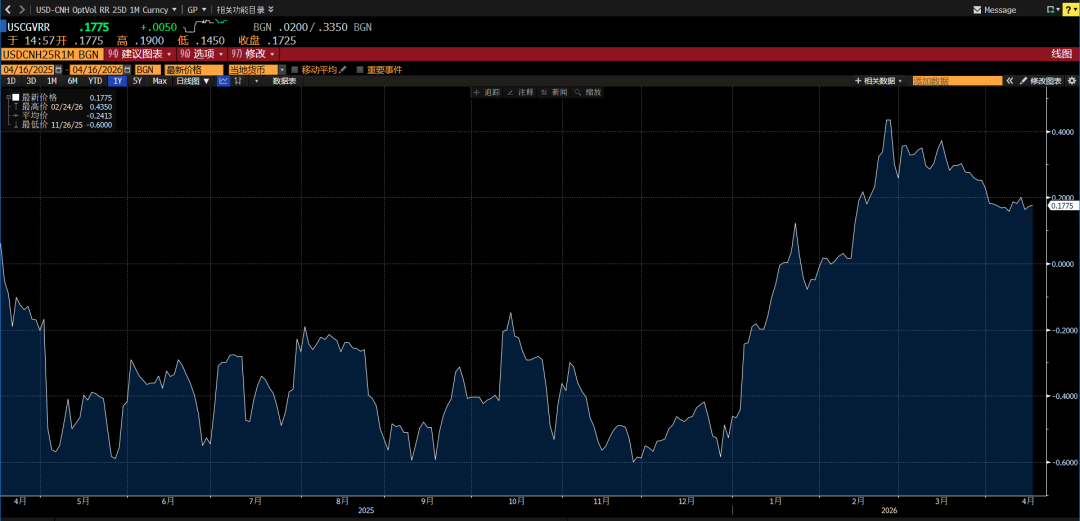
In addition, looking at the 25D RR (risk reversal indicator) of USDCNH, the index has continued to decline since March, indicating that after the first round of conflict, market expectations for large exchange rate fluctuations have gradually cooled, and implied volatility has also been trending downward.
Implied volatility of USDCNH has generally declined since March
Why has the market chosen an upswing in risk appetite? The failure of the first round of negotiations was apparently due to lack of consensus on several key issues: 1. The Iran nuclear enrichment issue; 2. Control of the Strait of Hormuz; 3. Sanctions, compensation, and security guarantees.
But on a deeper level, this is a test and contest between nations. In the first round of negotiations, both sides presented so-called bottom-line conditions, but these were more of a probe — to test the other side’s limits and to see if there was room to push for more concessions. For the US and Iran, relaxing their bottom lines in the first round would easily be exploited by the other party.
Therefore, after talks broke down, the US did not take further military action but accepted Pakistan’s proposal to prepare for a second round of negotiations. This indicates that both sides have the intention to reach an agreement, and the conflict is likely to be gradually resolved through extended ceasefires and repeated negotiations. The market has interpreted this as a positive development.
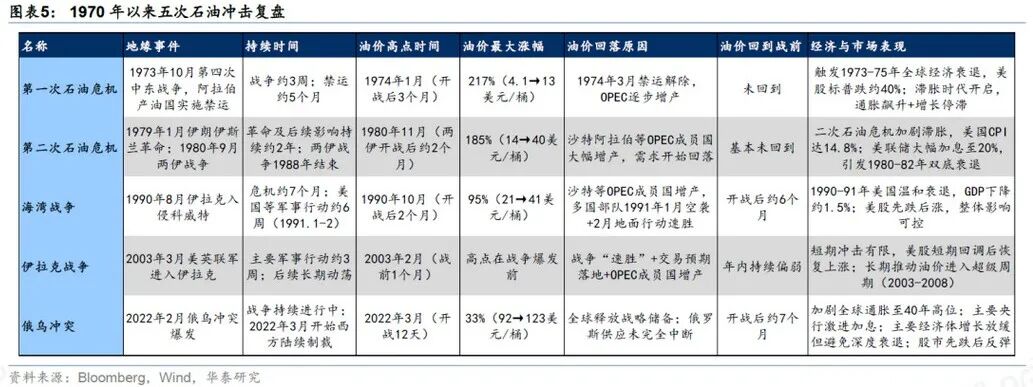
Looking at cases of the five oil shocks in history, each oil price peak appeared within three months after the wars began. As the midterm elections approach, launching a larger-scale war rashly, without the ability to exit swiftly, would become increasingly costly. The potential military benefits of geopolitical strategy and alliances would likely be outweighed by rising prices, declining approval ratings, and other costs. In view of this risk-reward comparison, opting for a ceasefire is undoubtedly more rational.
The peak of the five historical oil crises all came within three months after the wars began
In summary, the core logic of the current market is this: the most extreme phase of geopolitical conflict is over, and risk appetite is gradually returning. As funds flow out of the dollar and other safe-haven assets, if the dollar index continues to drop to the pre-conflict low of 95-96, USDCNY will come under greater downward pressure.
Strategy recommendations:
For clients with FX settlement needs: Pay attention to potential windows for USDCNY rebounds that could be triggered by further escalation in the conflict, and consider closing part of your positions at higher levels. Medium- and long-term clients looking to lock in settlement prices can consider buying put options to secure a minimum FX settlement price, while simultaneously selling puts for the same term to reduce costs.
For clients with FX purchase needs: Watch for a continued RMB appreciation trend and establish foreign currency positions in batches.
Disclaimer: The content of this article solely reflects the author's opinion and does not represent the platform in any capacity. This article is not intended to serve as a reference for making investment decisions.
You may also like
AIAV fluctuates 48.1% in 24 hours: low liquidity leads to sharp price volatility
ILY token surges 37,245.9% in 24 hours: Directly driven by new listing on Bitget exchange
HOOLI fluctuated by 4900% in 24 hours: Listed on KuCoin ignited extreme volatility before retreating
Trending news
MoreCrypto prices
More





