

Recent days have seen Bitcoin move within a narrow price range, giving the impression of calm in the spot market. However, shifts in the derivatives markets suggest that the potential for a downward move may be mounting. According to the latest report from Bitfinex, the gap between expected volatility in the options market and realized volatility in spot prices has widened. While implied volatility on options sits between 48% and 55%, actual spot price fluctuations have stayed well below these levels—indicating investors are paying a premium to hedge against risks despite price stability.
Bitcoin options market signals rising downside risk despite stable spot prices
By:Cointurk
Bitget offers one-stop trading for cryptocurrencies, stocks, and gold. Trade now!
A welcome pack worth 6200 USDT for new users! Sign up now!
Negative gamma risk looms in options market
A key concern raised by analysts centers on the positioning just below the current Bitcoin price. Specifically, in a “negative gamma” environment below $68,000, market makers who have sold protection contracts may be forced to sell more Bitcoin as prices drop to balance their risk exposure. This kind of hedging activity could accelerate downward movement, potentially triggering a chain reaction of selling in the market.
If prices breach certain support levels, pressure to close derivative positions typically intensifies, leading investors to further contribute to selling momentum. Although recent market declines saw liquidations exceeding $247 million in long positions, Bitfinex’s report suggests that overall positions have yet to be fully unwound, leaving the market exposed to further volatility.
At the same time, there is little consensus among market players on a clear price direction. While many investors are steering clear of substantial risks, they remain to sudden market swings. This cautious stance points to the possibility that Bitcoin’s current price stability may not hold in the short run.
A fragile equilibrium and waning demand
Though Bitcoin has recently traded sideways between $64,000 and $74,000, creating an appearance of stability, underlying supply and demand dynamics tell a more nuanced story. The report notes that immediate buy-side interest is decreasing, and the number of active participants is falling. As a result, the price is increasingly propped up by a shrinking pool of investors.
Previously, the treasuries of institutional companies served as a significant source of demand for Bitcoin. MicroStrategy (MSTR) has continued to accumulate Bitcoin, whereas Marathon Digital Holdings (MARA) has shifted toward selling. This development has made demand more reliant on the moves of a handful of major players, highlighting the market’s growing dependence on large institutional actors.
Meanwhile, a substantial supply of Bitcoin has built up just above the current range, particularly around the $74,000 level. Investors who bought at higher prices appear poised to sell into any price rallies, placing clear limitations on upside movement and making further gains more difficult to achieve.
Bringing these factors together, it becomes evident that Bitcoin’s present calm could be misleading. Market balance remains precarious, and the apparent tranquility in spot prices is not necessarily a sign of lasting strength.
0
0
Disclaimer: The content of this article solely reflects the author's opinion and does not represent the platform in any capacity. This article is not intended to serve as a reference for making investment decisions.
Understand the market, then trade.
Bitget offers one-stop trading for cryptocurrencies, stocks, and gold.
Trade now!
You may also like
Metaplanet CEO explains why preferred share launch is taking time
Crypto.News•2026/05/13 11:36
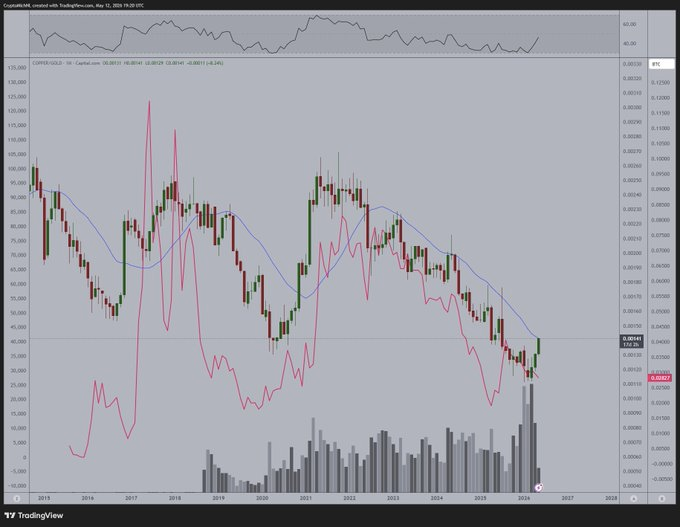
Copper-to-Gold Rebound Sparks Fresh Altcoin Market Discussion
CoinEdition•2026/05/13 11:33
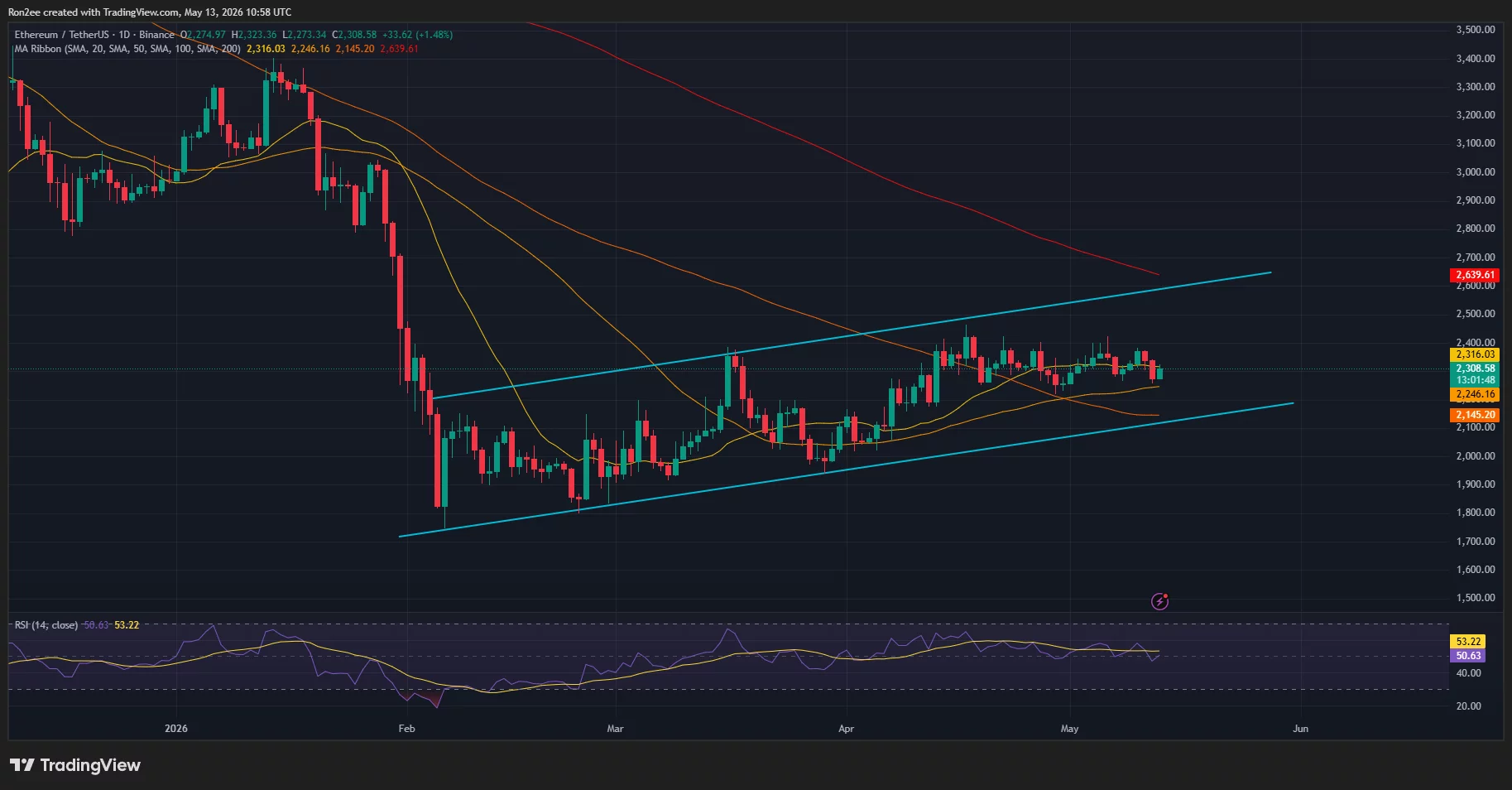
Ethereum price forms bullish SMA crossover as ascending channel targets $2,600
Crypto.News•2026/05/13 11:30
Bitcoin holds below $81,000 with Trump-Xi talks on the horizon
CryptoNewsNet•2026/05/13 11:27

Trending news
MoreCrypto prices
More
Bitcoin
BTC
$80,549.91
-0.10%

Ethereum
ETH
$2,301.12
+0.74%

Tether USDt
USDT
$0.9996
-0.01%

BNB
BNB
$677.9
+2.43%

XRP
XRP
$1.45
+0.32%

USDC
USDC
$0.9998
+0.00%

Solana
SOL
$94.37
-0.38%

TRON
TRX
$0.3513
+0.71%

Dogecoin
DOGE
$0.1130
+3.90%

Hyperliquid
HYPE
$39.61
-2.54%
How to buy BTC
Bitget lists BTC – Buy or sell BTC quickly on Bitget!
Trade now
Become a trader now?A welcome pack worth 6200 USDT for new users!
Sign up now