
Pi Coin Price Caught Between Bulls and Bears — But One Side Has the Edge

Pi Coin price sits at $0.20, trapped between bullish hope and bearish pressure. A tiny 5% drop could trigger a selloff, while a 34% surge is needed for a breakout.
Pi Coin (PI) price is down 2% in the past 24 hours and 4.5% over the last week, extending its 43% monthly decline. The token has been stuck in a tight range near $0.20, with neither buyers nor sellers taking full control.
However, recent signals show a clear divide between bullish and bearish forces. While sellers appear to be losing some strength, key indicators still point to a fragile setup where the downside looks easier to trigger than a Pi Coin price recovery.
Two Bearish Indicators Keep Bulls on the Back Foot
The Money Flow Index (MFI), which tracks money moving in and out of the asset, highlights a bearish divergence. Between October 10 and 17, PI’s price formed a higher low, but the MFI printed a lower low. That pattern shows weaker buying strength despite stable prices — a sign that retail traders are holding back.
Want more token insights like this? Sign up for Editor Harsh Notariya’s Daily Crypto Newsletter .
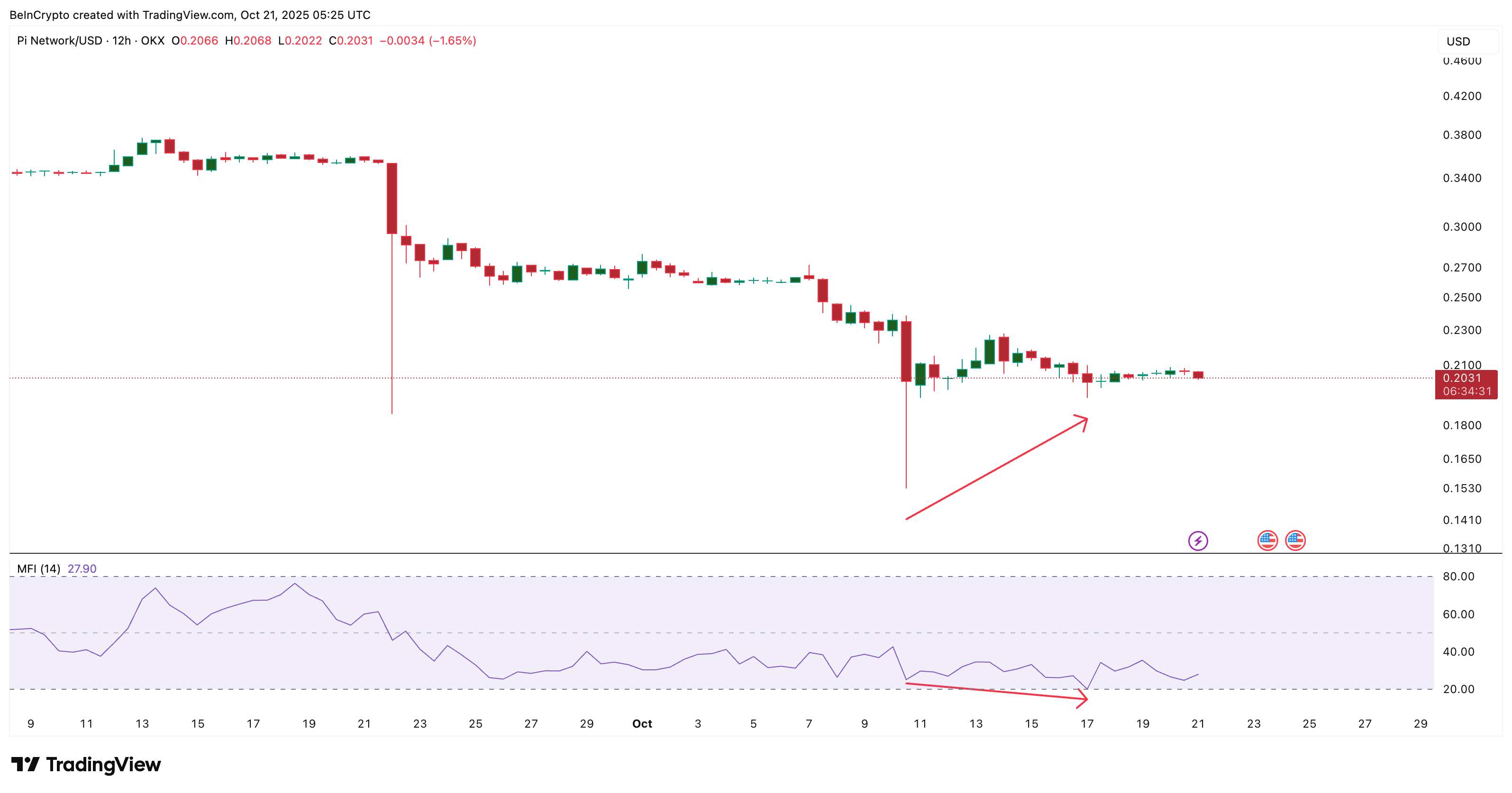 Pi Coin Retail Not Active Enough:
TradingView
Pi Coin Retail Not Active Enough:
TradingView
Adding to that, the Chaikin Money Flow (CMF), which tracks large money inflows, remains slightly positive but has fallen sharply since October 20. A drop in CMF above the zero line often signals that while big investors are still present, they’re pulling back on fresh buys.
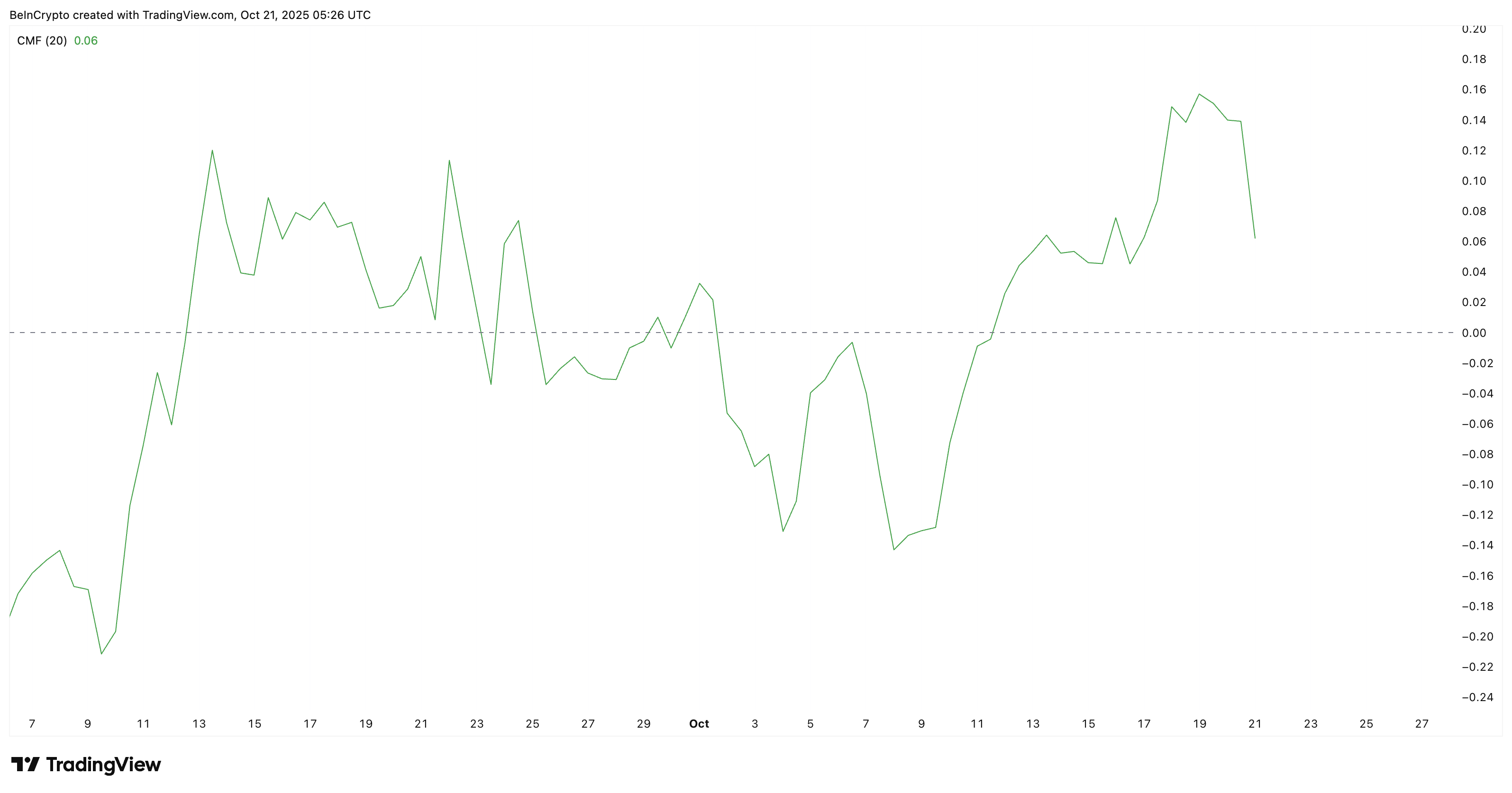 Large Money Leaving Pi Network:
TradingView
Large Money Leaving Pi Network:
TradingView
Together, the falling MFI and CMF point to fading demand from both small and large holders. Unless inflows improve, any Pi Coin price rebound could stay short-lived.
One Bullish Signal Keeps the Setup From Turning Fully Negative
The one indicator holding the bullish structure together is the Bull Bear Power (BBP). This indicator measures the gap between buying and selling strength. Since October 7, bearish momentum has been shrinking steadily. The red bars on the chart have grown smaller — showing that sellers are losing force.
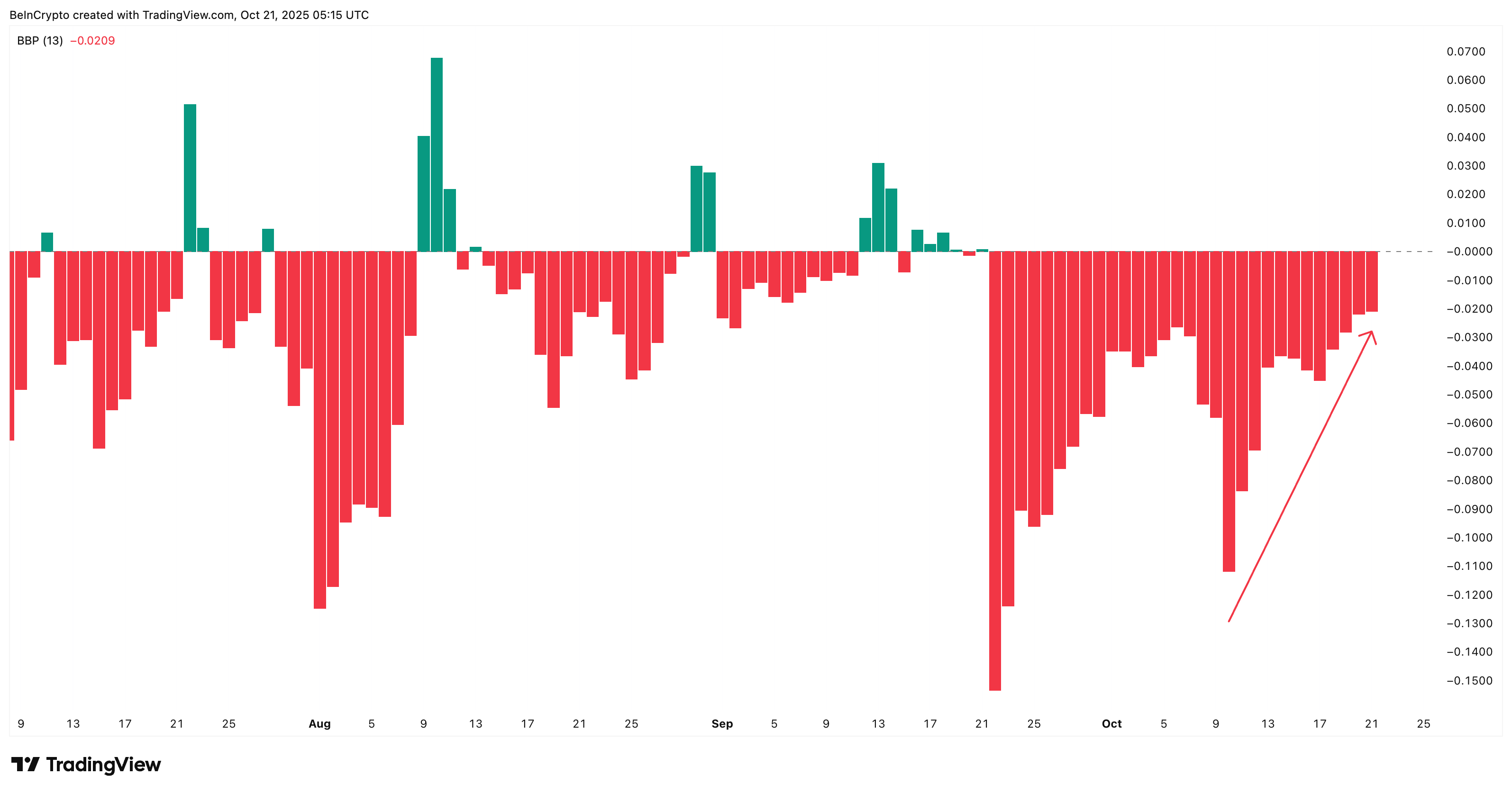 Pi Coin Bears Are Getting Weaker:
TradingView
Pi Coin Bears Are Getting Weaker:
TradingView
It’s not a full reversal yet, but the consistent decline in bearish power suggests that downside pressure is slowly wearing off. This is the only factor currently keeping Pi Coin’s short-term structure from breaking down completely.
Falling Pi Coin Price Wedge Pattern Hints at a Battle Between Two Extremes
Pi Coin continues to trade inside a falling wedge on the daily timeframe. This pattern typically precedes bullish reversals. But the breakout point remains far above current levels.
For a confirmed upside move, the PI price would need a 34% rally to cross $0.27 (the strongest near-term resistance), followed by a close above $0.29 to break the upper wedge boundary. If that happens, the price could target $0.30 and even $0.34.
On the other hand, the bearish scenario is much easier to trigger. A clean drop below $0.19 could send the Pi Coin price quickly to $0.15, where the wedge’s lower trendline sits. Since that lower wedge trendline only comes with two clear touchpoints, it’s weak — and a break there could open the door to deeper losses.
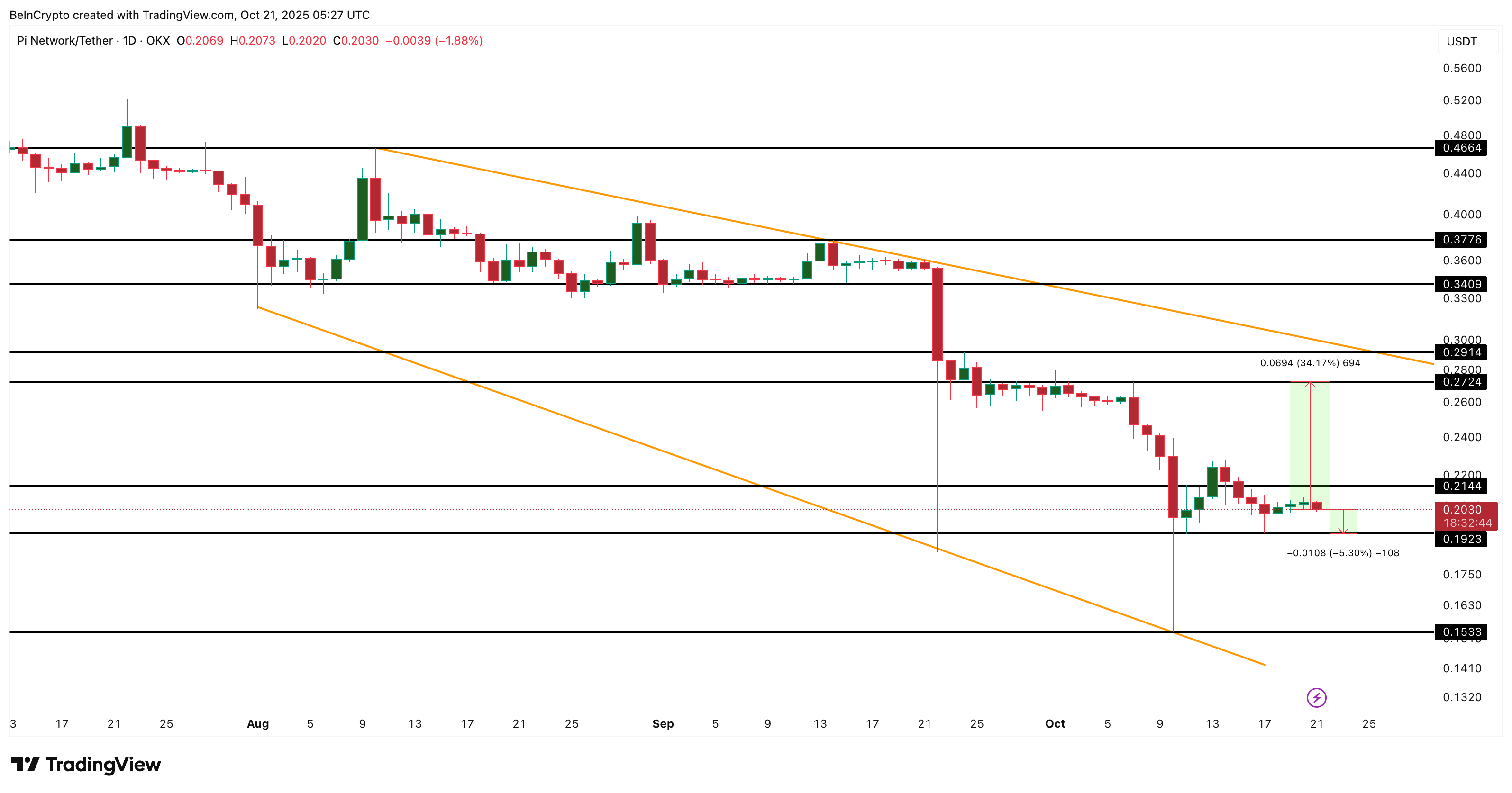 Pi Coin Price Analysis:
TradingView
Pi Coin Price Analysis:
TradingView
In short, the Pi Coin bears have a shorter distance to win. A 5% drop would confirm a breakdown, while bulls need more than six times that effort for a breakout.
Disclaimer: The content of this article solely reflects the author's opinion and does not represent the platform in any capacity. This article is not intended to serve as a reference for making investment decisions.
You may also like
The ZK Transformation: Evaluating How Zero-Knowledge Technology Influences the Future Development of Blockchain
- ZK-rollups scale blockchain networks by bundling transactions, achieving 43,000 TPS and 30% lower gas fees, attracting institutions like Goldman Sachs and JPMorgan . - ZK technology resolves privacy-scalability paradox by enabling verifiable transactions without data exposure, adopted by EU regulators and enterprises like Nike and Sony . - Challenges persist: ZK-SNARKs require heavy computation, trusted setup risks exist, and privacy conflicts with AML regulations in some jurisdictions. - $725M+ VC inves

The Influence of Vitalik Buterin's Support for ZKsync on the Advancement of Scalable Blockchain Technologies: Evaluating the Prospects for Long-Term Investment in Pr
- Vitalik Buterin's 2025 endorsement of ZKsync accelerated its rise as a scalable Ethereum Layer-2 solution with 30,000 TPS and $3.3B TVL. - ZKsync's EVM compatibility and institutional partnerships contrast with StarkNet's quantum-resistant STARK proofs and Aztec's privacy-first architecture. - Analysts project ZK token prices at $0.40–$0.60 by 2025, while StarkNet faces adoption barriers and Aztec navigates regulatory challenges in privacy-focused DeFi. - The $7.59B ZKP market (2033 forecast) hinges on b

ZK Atlas Enhancement: Transforming Blockchain Scalability and Paving the Way for Institutional Integration
- ZKsync’s 2025 Atlas Upgrade achieves 15,000–43,000 TPS with $0.0001/transaction costs, boosting blockchain scalability for institutions. - Deutsche Bank , Sony , and Citi adopt ZKsync for tokenized assets and privacy-driven transactions, citing compliance and efficiency gains. - Market forecasts predict 60.7% CAGR for ZK Layer-2 solutions through 2031, with Fusaka upgrade targeting 30,000 TPS to solidify ZKsync’s leadership.

Hinge’s latest AI tool assists singles in skipping dull introductory conversations

Trending news
MoreCrypto prices
More





