
ZK Atlas Enhancement: Transforming Blockchain Scalability and Paving the Way for Institutional Integration
- ZKsync’s 2025 Atlas Upgrade achieves 15,000–43,000 TPS with $0.0001/transaction costs, boosting blockchain scalability for institutions. - Deutsche Bank , Sony , and Citi adopt ZKsync for tokenized assets and privacy-driven transactions, citing compliance and efficiency gains. - Market forecasts predict 60.7% CAGR for ZK Layer-2 solutions through 2031, with Fusaka upgrade targeting 30,000 TPS to solidify ZKsync’s leadership.
ZKsync Atlas Upgrade: Transforming Blockchain Scalability
Unveiled in late 2025, the ZKsync Atlas Upgrade represents a significant leap forward in blockchain scalability, positioning zero-knowledge (ZK) rollups as a foundational technology for enterprise adoption. With the ability to process between 15,000 and 43,000 transactions per second (TPS), achieve near-instant finality, and reduce transaction fees to as little as $0.0001, ZKsync is redefining what is possible for Layer-2 solutions. These advancements, powered by the Atlas Sequencer and the Airbender Prover—a zkVM built on RISC-V—address longstanding performance challenges in blockchain infrastructure, making ZKsync an attractive solution for businesses and financial institutions seeking efficient, cost-effective systems.
Breakthrough Technology and Market Leadership
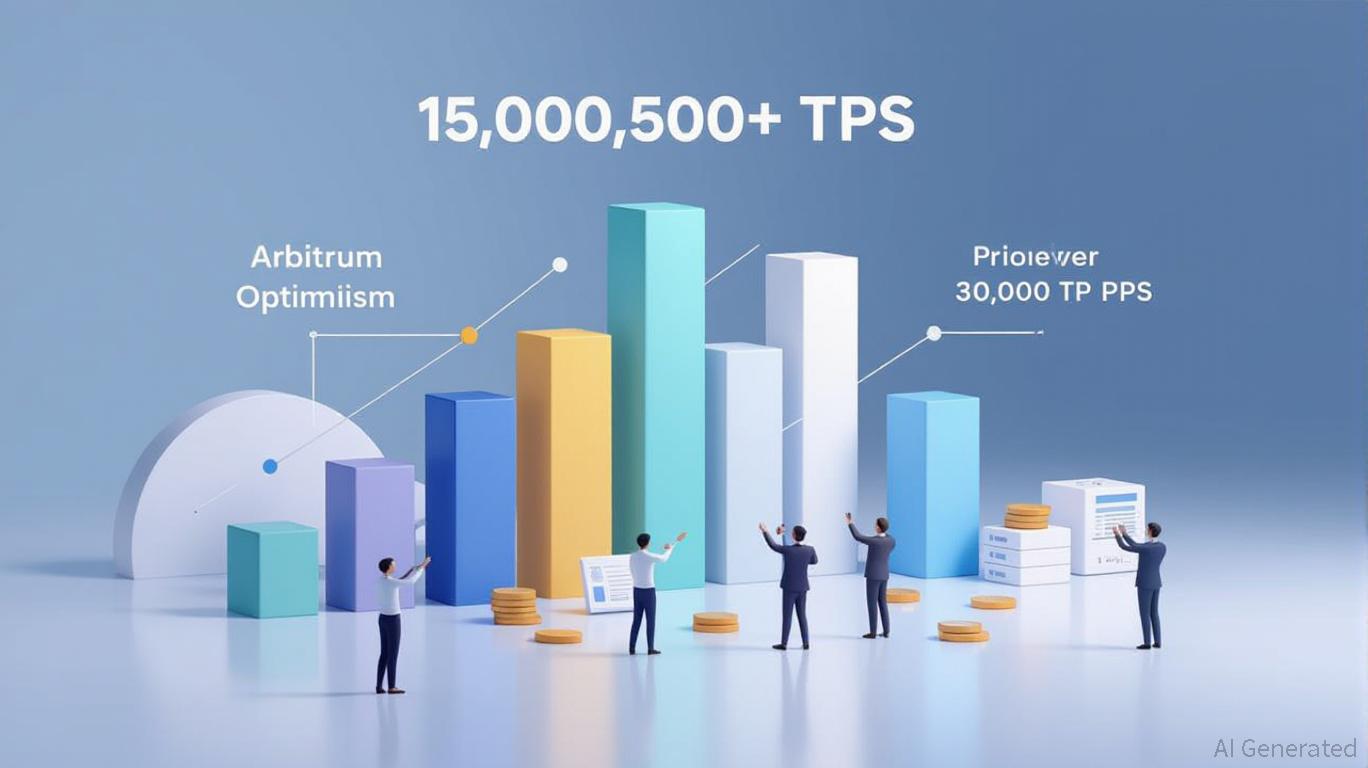
ZKsync’s modular design, a key component of the broader ZK Stack, delivers rapid finality and significantly lowers proof generation costs, outpacing rivals such as Arbitrum and Optimism. While Arbitrum manages 1.5 million transactions daily and Optimism handles 800,000, ZKsync’s throughput of over 15,000 TPS (with plans to reach 30,000 TPS through the upcoming Fusaka upgrade) highlights its technological edge. Ethereum co-founder Vitalik Buterin has publicly recognized the advantages of ZK-based solutions for their privacy and scalability, reinforcing their potential for institutional use.
Another major advantage of the Atlas Upgrade is its compatibility with the Ethereum Virtual Machine (EVM), enabling Ethereum-based projects to migrate effortlessly without rewriting code. This seamless transition has already attracted DeFi platforms such as SyncSwap and Mute.io, which have reported a 90% decrease in transaction costs and a 276% surge in daily transaction volume after moving to ZKsync.
Enterprise Adoption and Practical Use Cases
ZKsync’s rapid adoption by major institutions is driven by its ability to meet stringent privacy and compliance requirements. Leading banks like Deutsche Bank and UBS have integrated ZKsync for tokenized asset settlements, leveraging its cryptographic security to streamline processes. Corporations such as Sony and Citi are utilizing ZK-based frameworks for digital rights management and confidential transactions, using zero-knowledge proofs to verify authenticity while safeguarding sensitive information. These implementations are supported by evolving regulatory clarity in the United States, including the GENIUS and CLARITY Acts, which have helped reduce legal uncertainties surrounding ZK technology.
The platform’s Total Value Locked (TVL) has soared to $28 billion, with $15 billion in new inflows from Bitcoin ETFs, reflecting growing trust in ZKsync’s infrastructure. The native ZK token has appreciated by 50% since the upgrade, fueled by deflationary mechanisms such as token burns and staking rewards, further encouraging institutional involvement.
Growth Outlook and Investment Potential
Market analysts forecast a compound annual growth rate (CAGR) of 60.7% for ZK Layer-2 solutions through 2031, driven by increasing demand from institutions and the DeFi sector for scalable blockchain infrastructure. ZK-Rollups, including ZKsync, now process over 1 million transactions daily and collectively hold a TVL of $3.5 billion, underscoring their expanding influence in global finance. With cross-border blockchain payments expected to reach $2 trillion by 2025, ZKsync’s high-performance, interoperable architecture is well-positioned to support tokenized assets and facilitate cross-chain settlements.
The forthcoming Fusaka upgrade, which aims to boost throughput to 30,000 TPS, is set to further strengthen ZKsync’s leadership in the Layer-2 space. Combined with robust privacy features and regulatory alignment, ZKsync stands out as a strategic choice for institutions looking to benefit from the next wave of blockchain innovation.
Summary
The ZK Atlas Upgrade is more than just a technical enhancement—it is a driving force for mainstream blockchain adoption. By tackling challenges related to scalability, privacy, and compliance, ZKsync has established a strong platform for enterprise and institutional applications. As the ecosystem evolves, investors should keep a close eye on ZKsync’s TVL growth, strategic partnerships, and the impact of future upgrades like Fusaka. In a landscape where Layer-2 solutions are set to take center stage, ZKsync’s distinctive strengths present a compelling opportunity for long-term growth.
Disclaimer: The content of this article solely reflects the author's opinion and does not represent the platform in any capacity. This article is not intended to serve as a reference for making investment decisions.
You may also like
Phase 2: Gold Distribution 6
LUNA Rises 21.77% in a Day as Digital Asset Treasuries Summit Kicks Off in Abu Dhabi
- Luna PR hosts first Digital Asset Treasuries Summit in Abu Dhabi on Dec 10, 2025, addressing valuation gaps and governance for publicly listed digital-asset companies. - Event gathers institutional leaders, investment banks , and firms like Galaxy Digital to debate DAT sustainability, operating models, and 2026 market outlook. - Summit aims to unify stakeholders amid crypto price compression and MSCI index consultation, emphasizing transparent dialogue to rebuild sector confidence. - Organized by Web3 co

LUNA Surges 33.2% in a Day as Abu Dhabi Hosts Summit on Digital Asset Treasury Management
- LUNA surged 33.2% in 24 hours as Abu Dhabi hosts first Digital Asset Treasuries (DAT) Summit on Dec 10, 2025. - The summit, coinciding with Abu Dhabi Finance Week, aims to address valuation challenges and governance for publicly listed digital-asset holding companies. - Industry leaders, including Galaxy Digital and BTCS , will debate operational models and standardization amid crypto volatility and MSCI’s index consultation. - Luna PR emphasizes urgent need for transparent frameworks to stabilize DATs t
Timeless Investment Strategies: Insights from 1927 for Today’s Markets
- R.W. McNeel's 1927 market principles align with Buffett's value investing, emphasizing emotional discipline and intrinsic value over speculation. - These strategies counter modern crypto market volatility, as 2025 studies show disciplined investors avoid behavioral biases like FOMO and disposition effect. - Behavioral finance tools (dollar-cost averaging, stop-loss orders) reduce losses by 37% during downturns, validating McNeel/Buffett's risk management focus. - 2025 research confirms temperament—not te

Trending news
MoreCrypto prices
More





