
Aave Unveils Horizon: Permissioned RWA Market for Institutions

Aave has launched Horizon Market, a platform allowing institutional investors to borrow stablecoins using tokenized real-world assets as collateral, bridging traditional finance with DeFi.
DeFi leader Aave has officially launched Horizon Market. The new platform allows institutional investors to borrow stablecoins using tokenized real-world assets (RWAs) as collateral.
The move will unlock significant institutional capital for DeFi. Finally, it addresses long-standing regulatory and compliance hurdles that kept many large players on the sidelines.
Horizon: First RWA Market for Institutional Investors
Announced via a company blog post on Thursday, Horizon will function as an institutional-grade RWA marketplace. Specifically, it’s a service that allows stablecoins like USDC, GHO, and RLUSD to borrow against traditional financial assets such as US Treasuries, corporate bonds, and money market funds (MMFs).
The launch addresses a core challenge for institutional adoption. Most DeFi protocols are open and permissionless. Historically, these characteristics have been incompatible with institutional investors’ stringent internal policies and complex regulatory obligations.
Aave emphasized that Horizon provides a compliant infrastructure. The team specially designed this infrastructure to meet institutional requirements for collateralized lending. Consequently, this design enabled on-chain lending against real-world assets to become scalable for the first time.
The company explained, “Horizon will operate on a permissioned instance of the Aave V3 protocol.” This ensures that only verified participants can supply RWA collateral. Aave stated the platform will offer institutional clients 24/7 real-time lending with enhanced transparency and efficiency.
24/7 Real-Time Lending Service
Industry heavyweights like Centrifuge, Circle, VanEck, WisdomTree, and Ripple have joined the platform as initial partners, specifically taking on the role of early asset suppliers.
The first supported collateral assets are institutional-grade MMFs and short-term US Treasury-backed tokens. For example, JAAA (by Centrifuge), USYC (by Circle), and USTB (by Superstate) are the representatives.
These tokens represent yields from underlying, low-risk assets like short-term US Treasuries and AAA-rated corporate bonds. Once an institution passes the necessary compliance checks, it can seamlessly borrow stablecoins against this collateral for deployment across the broader DeFi ecosystem.
Horizon’s design is its dual-structure system. In other words, the system permits and restricts RWA collateral pools to qualified investors while allowing anyone to use the corresponding stablecoin pools.
This means anyone in the DeFi space can freely lend or borrow the stablecoins generated from the institutional RWA collateral, creating a powerful new liquidity bridge between traditional and decentralized finance.
Disclaimer: The content of this article solely reflects the author's opinion and does not represent the platform in any capacity. This article is not intended to serve as a reference for making investment decisions.
You may also like
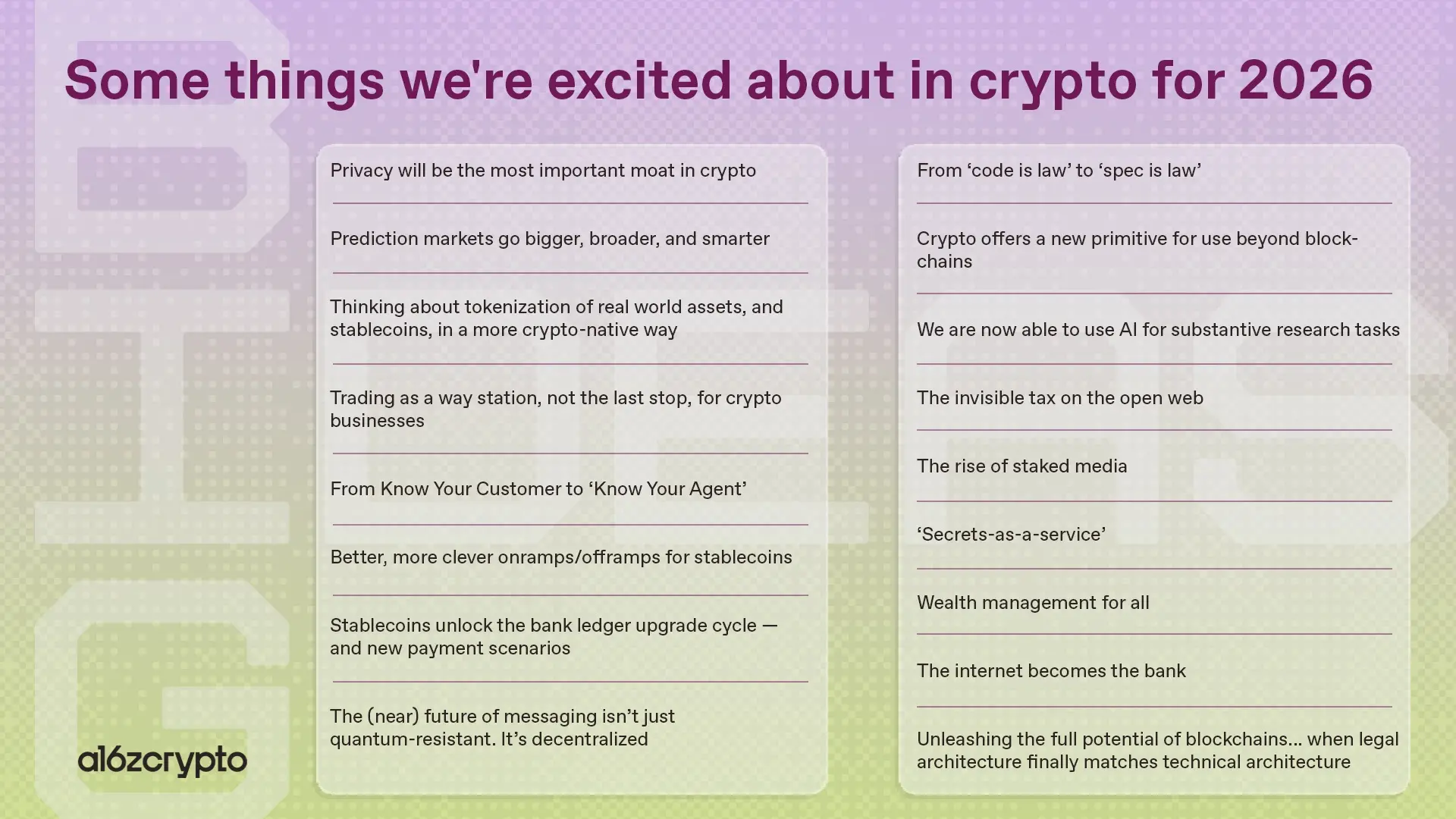
a16z Annual Report: The 17 Most Exciting Web3 Ideas for 2026
Stablecoins will become the infrastructure of Internet finance, AI agents will gain on-chain identity and payment capabilities, and the advancement of privacy technologies, verifiable computation, and compliance frameworks will drive the crypto industry from pure trading speculation towards building decentralized networks with lasting value.
Morning Brief | a16z Crypto releases annual report; crypto startup LI.FI completes $29 million financing; Trump says the rate cut is too small
A summary of important market events on December 11.

Trend Research: The "Blockchain Revolution" is Underway, Remain Bullish on Ethereum
The integration trend in the crypto market and Ethereum's value capture.

Interest Rate Cuts Implemented, Why Are Assets Acting "Rebellious" Collectively?
Trending news
MoreCrypto prices
More





