
Bitwise files for Bitcoin and Treasuries rotation ETF
Key Takeaways
- Bitwise's new ETF strategies will rotate between crypto and US Treasuries to manage volatility.
- The Trendwise strategies use a proprietary signal based on the 10- and 20-day EMA of crypto assets.
Bitwise Asset Management announced today it has filed with the SEC to change the investment strategies of its three existing Bitcoin and Ethereum futures ETFs. Each fund will be converted into trend-following strategies that involve rotating between crypto and US Treasuries exposure based on market conditions.
As detailed, three of Bitwise’s crypto futures ETFs, including the Bitwise Bitcoin Strategy Optimum Roll ETF (BITC), the Bitwise Ethereum Strategy ETF (AETH), and the Bitwise Bitcoin and Ether Equal Weight Strategy ETF (BTOP), will respectively become the Bitwise Trendwise Bitcoin and Treasuries Rotation Strategy ETF, the Bitwise Trendwise Ethereum and Treasuries Rotation Strategy ETF and the Bitwise Trendwise BTC/ETH and Treasuries Rotation Strategy ETF.
The proposed ETFs will adjust investment exposure based on market conditions, meaning that these funds will invest in crypto when they are trending upwards and rotate into US Treasuries during market downturns.
According to Bitwise, the strategy employs a proprietary signal that analyzes the 10- and 20-day exponential moving average (EMA) of crypto asset prices. When the 10-day EMA is above the 20-day EMA, indicating upward momentum, the ETFs will invest in crypto assets. Conversely, when the 20-day EMA is above the 10-day EMA, suggesting a downward trend, the ETFs will rotate into Treasuries.
With the new Trendwise strategies, Bitwise aims to enhance risk-adjusted returns by capitalizing on market momentum while protecting investors during bearish market conditions.
“The new Trendwise strategies capitalize on that momentum through a trend-following strategy that rotates between crypto and Treasuries exposure based on market direction. The goal is to help minimize downside volatility and potentially improve risk-adjusted returns,” explained Bitwise.
Existing investors will not need to take any action, and there will be no changes to expense ratios or tax treatment, Bitwise noted. The conversion of ETFs is scheduled for December 3, 2024.
Bitwise has achieved major milestones this year, including the successful launch of its spot Bitcoin and Ethereum ETFs, which have collectively attracted over $10 billion in net inflows, according to data tracked by Farside Investors.
Bitwise recently applied to offer an XRP ETF as part of its mission to provide investors with diversified investment options, a bold move given the ongoing legal fight between Ripple Labs and the SEC.
Disclaimer: The content of this article solely reflects the author's opinion and does not represent the platform in any capacity. This article is not intended to serve as a reference for making investment decisions.
You may also like
Five charts to help you understand: Where does the market go after each policy storm?
After this regulatory crackdown, is it a harbinger of an impending downturn, or the beginning of a new cycle where all negative news has been fully priced in? Let’s examine the trajectory after the storm through five key policy milestones.

Mars Morning News | The crypto market rebounds across the board, Bitcoin rises above $94,500; The "CLARITY Act" draft is expected to be released this week
The crypto market has fully rebounded, with bitcoin surpassing $94,500 and US crypto-related stocks rising across the board. The US Congress is advancing the CLARITY Act to regulate cryptocurrencies. The SEC chairman stated that many ICOs are not securities transactions. Whales are holding a large number of profitable ETH long positions. Summary generated by Mars AI. The accuracy and completeness of the content generated by the Mars AI model is still being iteratively updated.

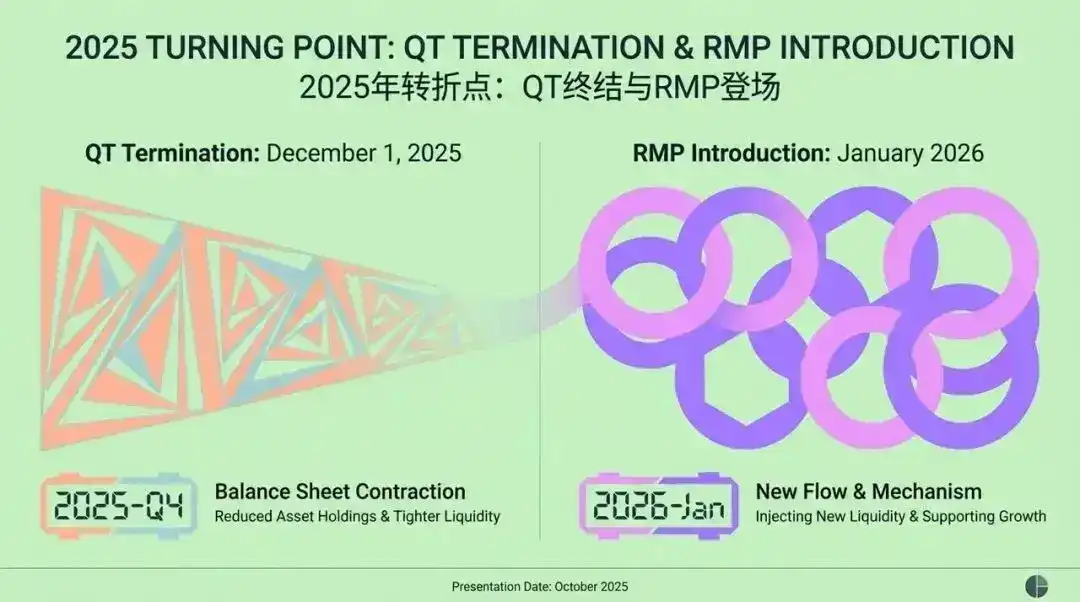
Federal Reserve’s Major Shift: From QT to RMP, How Will the Market Transform by 2026?
The article discusses the background, mechanism, and impact on financial markets of the Federal Reserve's introduction of the Reserve Management Purchases (RMP) strategy after ending Quantitative Tightening (QT) in 2025. RMP is regarded as a technical operation aimed at maintaining liquidity in the financial system, but the market interprets it as a covert easing policy. The article analyzes RMP's potential effects on risk assets, the regulatory framework, and fiscal policy, and provides strategic recommendations for institutional investors. Summary generated by Mars AI This summary was generated by the Mars AI model, and the accuracy and completeness of its content are still in the process of iterative improvement.
Rate Hike in Japan: Will Bitcoin Resist Better Than Expected?

Trending news
MoreCrypto prices
More





