
3 reasons why Maker (MKR) fundamentals hint at further price upside

MKR looks primed to continue the rally given its recent buyback mechanism and two other key metrics that impact Maker’s price.
Maker has gained 53.5% over the past month, and the cryptocurrency witnessed a remarkable 28.1% surge between July 15 and July 22, achieving its highest daily close in nearly a year. While the gains are impressive, the real question is: Can the cryptocurrency sustain its current trajectory, or were short-term factors behind the price pump?
 Average Maker (MKR) price at Coinbase, Binance and Bybit. Source: TradingView
MakerDAO, the decentralized autonomous organization (DAO) responsible for the Dai () stablecoin and the governance token Maker (), unveiled a five-phase roadmap in mid-May. Dubbed “Endgame," includes a new blockchain, a rebrand and the introduction of two tokens featuring updated functionalities.
Rune Christensen, co-founder of MarkerDAO, revealed that the primary component of “Endgame” entails developing incentive programs for interactions and governance participation based on a new chain bridged to the Ethereum network. Essentially, users will have the capacity to initiate hard forks in response to power attacks or abuse.
Ascribing the recent rally solely to these proposed changes seems simplistic, given that Maker’s price remained stable for 30 days after the announcement. Consequently, investors seeking to understand MKR’s movement must delve deeper to identify the precise triggers behind the price surge.
According to crypto markets and decentralized finance analyst Nay, Paradigm Capital likely divested a significant portion of its MKR investments in March. Furthermore, A16z, another major venture capital firm that previously invested in Maker, has been reducing its position over recent weeks.
While determining whether their sell pressure is abating proves challenging, one of the most significant risks for Maker has always been secondary token sales to venture capitalists from April 2019, at an average price below $250, amounting to 170,000 MKR.
According to Nay, Polychain and Dragonfly had also previously divested their positions, lending credibility to the rally based on the anticipation of other venture capitalists following suit.
Simultaneously, Christensen reinforced his commitment to the project’s long-term performance by reducing positions in Lido DAO (LIDO) and increasing the stake in MKR, as per his public Ethereum address.
Collateralized debt positions (CDPs) enable borrowing DAI from MakerDAO using crypto assets as collateral. The smart contract then issues DAI, allowing borrowers to use it freely.
The previous smart burn mechanism involved burning DAI when a CDP closed. However, this posed a challenge if numerous CDPs closed simultaneously, leading to a DAI shortage.
Conversely, the new smart burn mechanism involves purchasing MKR from the market and burning it, independent of CDP closures. This allows MakerDAO to respond to market changes effectively and results in a reduced MKR supply, positively impacting its price.
MakerDAO has impressively increased its earnings by 343% in three months by reducing reliance on the USD Coin () stablecoin and incorporating yield-generating real-world assets, according to MakerBurn data. This shift involved reducing the stablecoin ratio from 62.4% to 20.2% over three months.
 MakerDAO annual profit estimate in dollars. Source: MakerBurn
Unlike other stablecoins, DAI passes yield to its holders through the DAI savings rate (DSR), a variable interest rate users can earn by depositing DAI into the DSR contract.
Related:
While the increase in the DSR has yet to reverse the trend for the DAI supply, mainly due to its 3.5% yield being lower than traditional fixed-income investments offering 5%, the protocol’s higher savings rate bolsters the odds of sustaining its 4.5 billion DAI supply.
Maker appears well-positioned to sustain its rally due to the implementation of a buyback mechanism, the notable 343% increase in revenue and the reduced risk after venture capital exit strategies. Additionally, the co-founder’s reinforcement of commitment by adjusting his holdings in favor of MKR adds confidence to its future prospects.
to preserve this moment in history and show your support for independent journalism in the crypto space.
This article does not contain investment advice or recommendations. Every investment and trading move involves risk, and readers should conduct their own research when making a decision.
Disclaimer: The content of this article solely reflects the author's opinion and does not represent the platform in any capacity. This article is not intended to serve as a reference for making investment decisions.
You may also like
Datavault AI Inc. (DVLT)
Glider Launches Solana Ecosystem Portfolio – A One-Click Gateway to Automated DeFi Management
US: AI impact to labor market stays limited – TD Securities
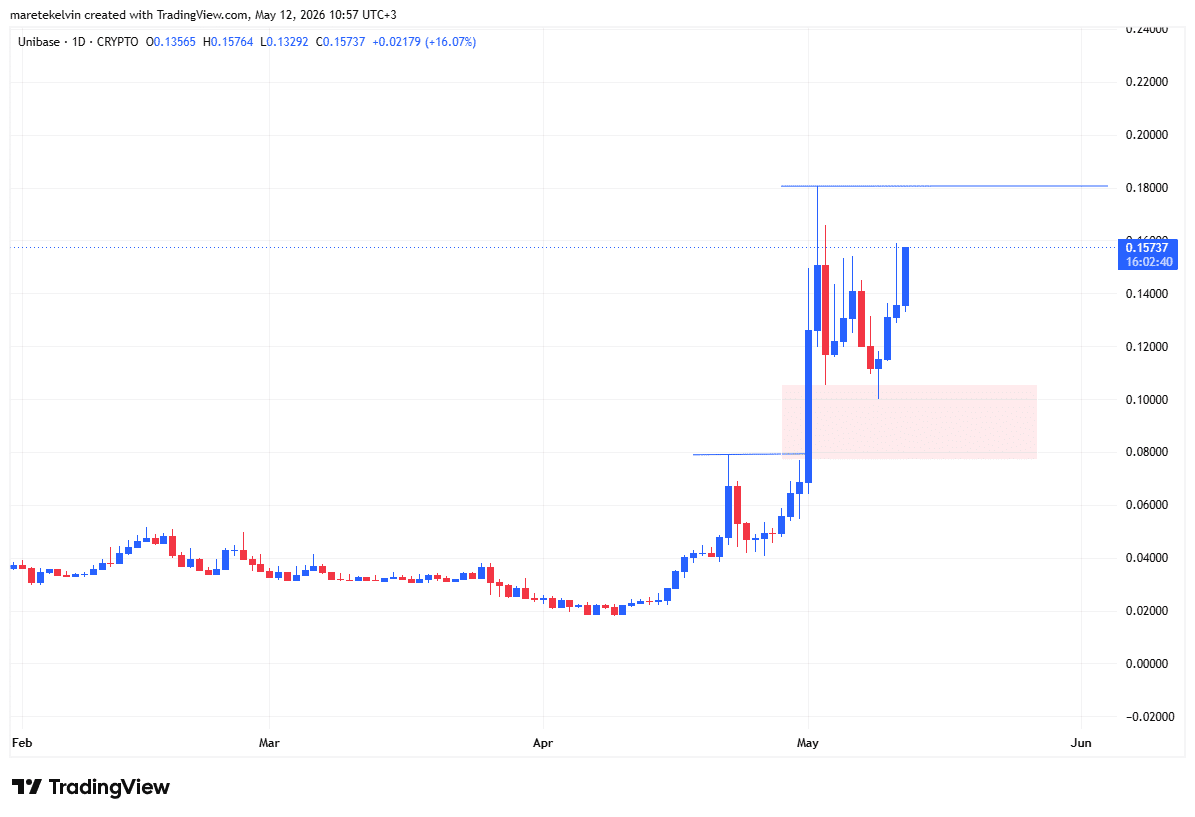
Unibase rallies 17% as Open Interest climbs: Is UB’s breakout sustainable?
Trending news
MoreCrypto prices
More





