
Evaluating How New AI Education Initiatives Influence the Development of Technology Talent Pools
- AI is reshaping workforces, displacing 92M jobs but creating 170M new roles by 2025, per WEF. - Only 25% of employees receive AI training despite doubled adoption, highlighting skill gaps. - JFF and Georgetown stress non-technical skills (ethics, problem-solving) are critical for AI adaptation. - Investors must prioritize education programs blending technical training with human-centric competencies.
The Transformative Impact of AI on Workforce and Education
The swift adoption of artificial intelligence across industries is fundamentally altering our approach to education, workforce development, and the nature of employment itself. For those investing in the future, the focus has shifted from questioning AI’s influence to evaluating how well new educational initiatives can keep pace with the evolving needs of AI-powered economies. AI’s influence is twofold: while it may render some traditional jobs obsolete, it also paves the way for innovation and new opportunities—provided that individuals are equipped with the right skills.
AI’s Dual Impact: Job Displacement and Creation
Recent findings from the World Economic Forum suggest that AI could eliminate 92 million positions worldwide, but at the same time, generate 170 million new jobs by 2025. This dramatic shift highlights the pressing need for educational systems to evolve. Deloitte’s research further emphasizes that bridging the gap in skills and experience—especially among younger professionals aged 25 to 34, who are generally more open to AI—is critical for a successful transition. However, the challenge extends beyond technical know-how. According to Jobs for the Future (JFF), the workforce of tomorrow will require a mindset that spans multiple disciplines, prioritizing creativity, ethical reasoning, and advanced problem-solving—qualities that machines cannot easily replicate.
Current Gaps in AI Training
Despite the growing presence of AI in the workplace, there are notable shortcomings in training programs. Workera.ai reports that only a quarter of employees have received AI-focused training, even as workplace adoption of AI has nearly doubled since 2024.

This gap reveals a significant problem: many organizations are investing in AI technologies without adequately preparing their staff to utilize these tools effectively.
Misaligned Priorities and Communication Barriers
One of the main obstacles is a disconnect in organizational priorities. For example, a government health agency managed to cut training time by 40% through an AI-powered platform that tailored learning to each employee’s expertise. While such personalized approaches show promise, widespread adoption is hampered by unclear communication from leadership. Data indicates that 57% of workers feel uncertain about their organization’s AI objectives, and just 16% strongly believe that AI tools are beneficial to their roles. Without a coherent strategy, even the most advanced AI solutions may go underused.
Structural Challenges for Investors
Investors must also consider the broader structural issues introduced by AI. Wharton’s research on the “vanishing ladder” effect warns that automation is eroding the foundational tasks that once helped entry-level employees build their careers, threatening traditional pathways for professional growth. In the UK, the number of tech graduate positions has already dropped by 46% in 2024, with forecasts predicting a 53% decrease by 2026. While these trends are concerning, they are not insurmountable. Initiatives like Denver’s advanced-manufacturing institute demonstrate that partnerships between educational institutions, employers, and students can successfully align training with high-quality job opportunities, creating robust talent pipelines.
Shifting Skill Demands in an AI-Driven Economy
As AI automates more routine tasks, the demand is moving toward advanced capabilities such as data analysis and ethical oversight of AI systems. However, technical expertise alone is not enough. Georgetown University’s Center for Security and Emerging Technology highlights the growing importance of interpersonal skills and creative problem-solving in adapting to AI-driven changes. Balancing technical knowledge with human-centric abilities is crucial for organizations seeking to avoid the pitfalls of excessive automation and to maintain a resilient workforce.
Strategic Investment in Education and Training
For investors, the message is clear: the future success of AI-powered industries relies on targeted investments in education and workforce training. This includes supporting immersive, hands-on AI learning experiences that allow employees to apply concepts in practical settings, as recent studies suggest. It also involves backing institutions like community colleges and alternative training providers, which are well-positioned to deliver personalized education at scale and address issues of inequality.
Embedding AI Competence for Organizational Success
Ultimately, the benefits of AI in the workplace are not guaranteed. The EY Work Reimagined 2025 study shows that organizations that integrate AI literacy—including foundational knowledge, data awareness, and ethical considerations—into their culture experience transformative outcomes. In contrast, companies that fail to align AI initiatives with their broader strategies risk falling behind. Investors have a unique opportunity to support efforts that balance automation with human collaboration, ensuring that AI serves to enhance, not replace, the workforce.
Looking Ahead: Building a Sustainable AI Economy
While the journey toward an AI-driven future presents significant challenges, the potential rewards are substantial. By focusing on long-term workforce development, investors can help build an AI-powered economy that is not only more efficient, but also fair and sustainable for all.
Disclaimer: The content of this article solely reflects the author's opinion and does not represent the platform in any capacity. This article is not intended to serve as a reference for making investment decisions.
You may also like
COAI Token Fraud: Insights for Cryptocurrency Investors During Times of Regulatory Ambiguity
- COAI token's 88% collapse in late 2025 exposed systemic risks in AI-driven DeFi ecosystems, with $116.8M investor losses. - Governance flaws included 87.9% token concentration in ten wallets, untested AI stablecoins, and lack of open-source audits. - Panic selling accelerated by AI-generated misinformation and CEO resignation, amid conflicting global crypto regulations. - Lessons emphasize scrutinizing token distribution, demanding transparent audits, and avoiding jurisdictions with regulatory ambiguity.

Renewable Energy Training as a Key Investment to Meet Future Workforce Needs
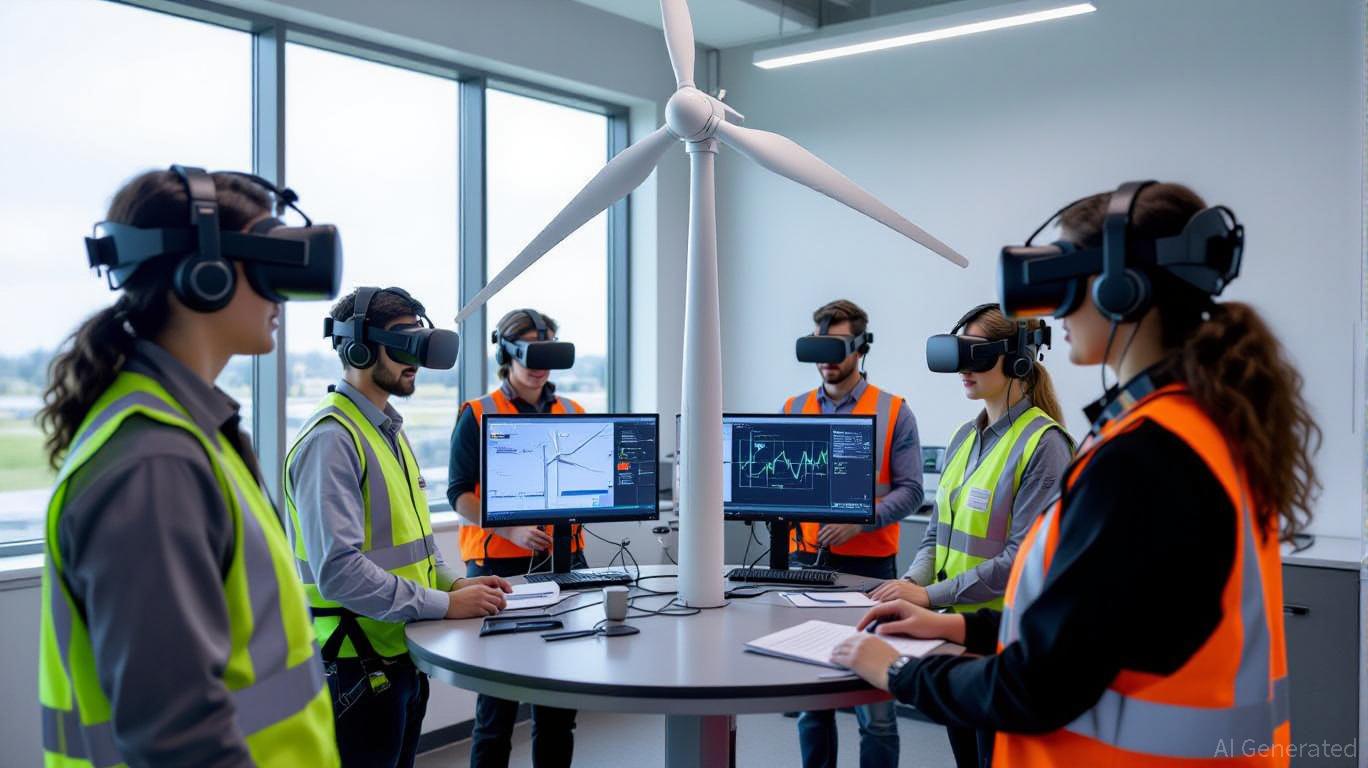
- Farmingdale State College's Wind Turbine Technology program aligns with surging demand for skilled labor in decarbonizing economies, driven by U.S. renewable energy targets. - Industry partnerships with Orsted, GE Renewable Energy, and $500K in offshore wind funding validate the program's role in addressing workforce shortages in expanding wind sectors. - Hands-on training with GWO certifications and VR simulations prepares graduates for high-demand, high-salary roles ($56K-$67K annually), reducing corpo
The Revival of STEM Learning as a Driving Force for Tomorrow’s Technology Investments
- Emerging STEM universities are driving tech innovation through interdisciplinary curricula and industry partnerships, focusing on AI, biotech , and advanced manufacturing. - U.S. programs like STEM Talent Challenge and NSF Future Manufacturing allocate $500K-$25.5M to bridge skills gaps and fund projects in quantum tech and biomanufacturing. - Leadership-focused STEM programs at institutions like Florida State and Purdue boost startup success rates (75-80%) and align with venture capital trends favoring

Assessing KITE’s Price Prospects After Listing as Institutional Interest Rises
- Kite Realty Group (KRG) reported Q3 2025 earnings below forecasts but raised 2025 guidance, citing 5.2% ABR growth and 1.2M sq ft lease additions. - Institutional investors showed mixed activity, with Land & Buildings liquidating a 3.6% stake while others increased holdings, reflecting valuation debates. - Technical indicators suggest bullish momentum (price above 50/200-day averages) but a 23.1% undervaluation vs. 35.1x P/E, exceeding sector averages. - KRG lags peers like Simon Property in dividend yie

Trending news
MoreCrypto prices
More





