
Bitcoin’s Latest Downturn: Key Factors for Investors to Monitor in the Weeks Ahead
- Bitcoin fell below $100,000 in 2025 amid geopolitical tensions, U.S. trade tariffs, and regulatory shifts, raising concerns over market stability. - The Trump administration's pro-crypto policies, including the GENIUS Act and CFTC reforms, aim to boost adoption but face criticism over fraud risks. - Global regulatory divergence, from EU's MiCAR to UAE's innovation-friendly rules, highlights fragmented oversight and cross-border coordination challenges. - Central bank actions, including Fed rate hikes and
Bitcoin’s Drop Below $100,000: Navigating a Shifting Crypto Landscape
Bitcoin’s recent slide beneath the $100,000 threshold has reignited debates about the digital asset’s notorious price swings. Investors are left questioning whether this downturn is a brief setback or signals a more fundamental change in the market. While macroeconomic factors and institutional activity certainly influence price action, the latest decline is closely tied to a mix of global political tensions and evolving regulatory policies. As the cryptocurrency sector continues to transform in 2025, it’s crucial for market participants to keep a close eye on how these elements interact and shape Bitcoin’s direction in the near future.
Geopolitical Forces Fueling Market Instability
In 2025, the crypto market’s vulnerability to international events has become increasingly apparent. For example, U.S.-initiated airstrikes on Iranian nuclear facilities late in the year triggered a swift sell-off in Bitcoin, dragging its value below $100,000 before a partial rebound. Such incidents highlight how periods of global uncertainty can quickly unsettle digital asset prices.
Additionally, the Trump administration’s imposition of sweeping trade tariffs in April 2025 intensified market volatility, compounding the effects of a hawkish Federal Reserve and disappointing corporate earnings. Later, the threat of a 100% tariff on Chinese rare earth imports in October led to further panic, resulting in widespread liquidations among leveraged traders. These episodes underscore how protectionist policies and geopolitical rivalries can magnify crypto market swings, even as large investors proceed with caution.
Regulatory Shifts in the U.S.: Balancing Progress and Risk
In 2025, the United States has adopted a more progressive stance toward cryptocurrency oversight, with the Trump administration aiming to establish the nation as a global leader in digital assets. Notable regulatory milestones include the approval of the GENIUS Act, which set out new rules for stablecoins, and the SEC’s issuance of no-action letters for DePIN token distributions and state-regulated crypto custody services. The CFTC has also greenlit spot crypto trading on U.S. exchanges and updated collateral requirements, making it easier for institutions to access these markets.
However, some critics warn that these regulatory advances may not go far enough in preventing fraud and money laundering. As the SEC and CFTC work to align their oversight, investors must weigh the benefits of regulatory clarity and innovation against the potential for systemic vulnerabilities.
Global Regulatory Fragmentation and the Push for Coordination
Outside the U.S., the international regulatory environment for cryptocurrencies is becoming increasingly diverse. The European Union’s Markets in Crypto-Assets Regulation (MiCAR) has introduced banking-style rules to promote financial stability and protect consumers. Meanwhile, countries across Asia, Latin America, and Africa are crafting their own approaches to balance technological progress with regulatory compliance. For instance, Japan enforces strict anti-money laundering requirements for crypto exchanges, while the UAE fosters innovation alongside robust AML and counter-terrorism financing standards.
This patchwork of regulations raises concerns about regulatory arbitrage, where businesses exploit differences between jurisdictions. Organizations like the Financial Action Task Force (FATF) and the Financial Stability Board (FSB) emphasize the importance of international cooperation to address these risks. Investors should stay alert to how these frameworks evolve, as they could impact capital movement and market fragmentation.
The Role of Central Banks in Shaping Digital Finance
Central bank decisions have also been instrumental in influencing cryptocurrency markets. The Federal Reserve’s interest rate increases in 2025 have prompted investors to shy away from riskier assets like Bitcoin, adding downward pressure on prices. At the same time, the emergence of central bank digital currencies (CBDCs), such as China’s digital yuan, has sparked debate over the future relevance of decentralized cryptocurrencies. While the U.S. continues to champion blockchain innovation, the EU’s focus on CBDCs signals a strategic divergence that could reshape the global financial system. Investors will need to consider how these competing models—decentralized crypto versus state-backed digital currencies—will interact in the months ahead.

Key Factors to Monitor in the Near Term
- Geopolitical Events: Ongoing trade disputes, military conflicts, or new sanctions could trigger additional market turbulence. The resolution of regional tensions and changes in U.S. trade policy will be especially influential.
- Regulatory Developments: The rollout of the GENIUS Act and MiCAR, along with potential coordination between the CFTC and SEC, could either stabilize or unsettle markets depending on their implementation.
- Central Bank Policy: The Federal Reserve’s approach to interest rates and the global uptake of CBDCs will shape investor risk appetite and sentiment.
- International Cooperation: Progress on FATF and FSB initiatives to address cross-border risks and regulatory loopholes will be crucial for the long-term health of crypto markets.
Final Thoughts
The recent downturn in Bitcoin’s price reflects a complex mix of geopolitical uncertainty, regulatory experimentation, and broader economic pressures. While the U.S. and EU are making strides toward clearer rules, the journey toward widespread adoption remains challenging. Investors must stay vigilant, balancing enthusiasm for innovation with awareness of systemic risks. The coming weeks will reveal whether the market can regain stability or if further volatility is on the horizon.
Disclaimer: The content of this article solely reflects the author's opinion and does not represent the platform in any capacity. This article is not intended to serve as a reference for making investment decisions.
You may also like
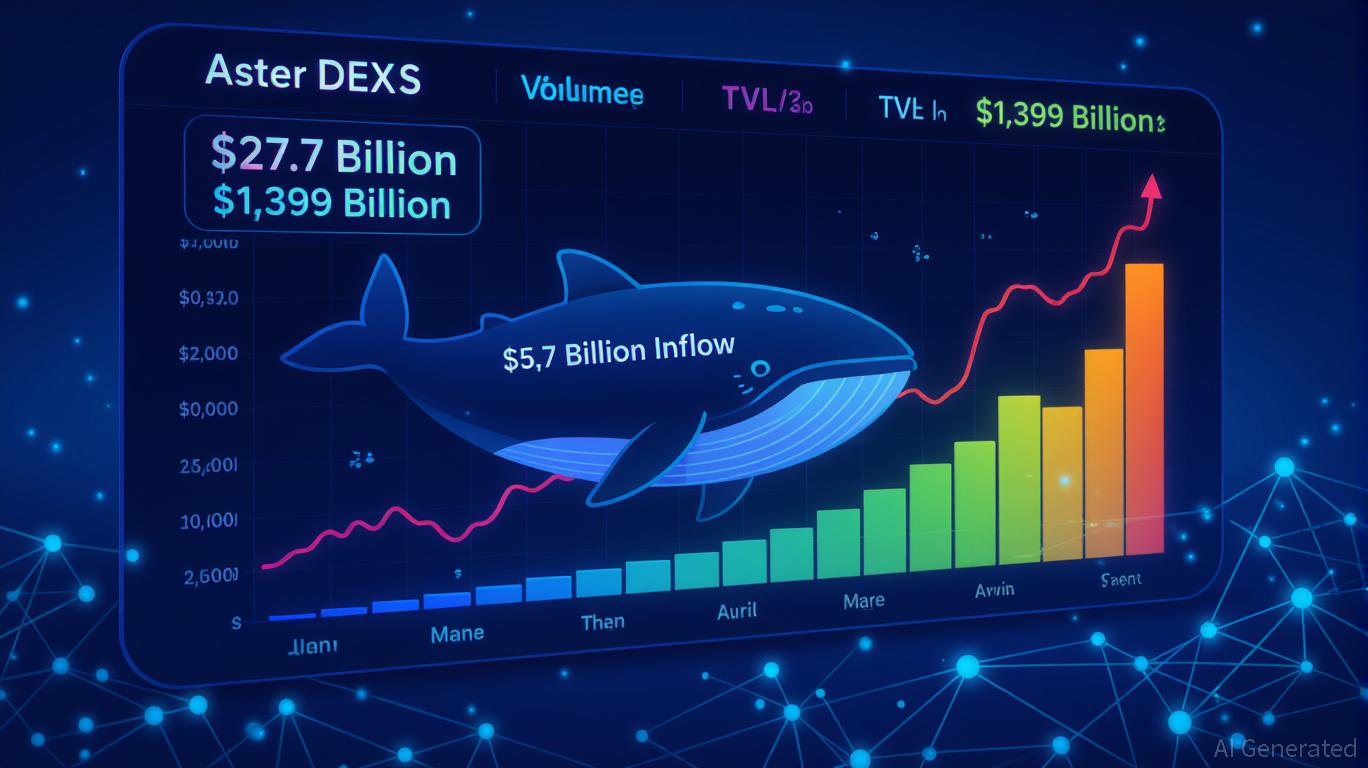
Aster DEX's On-Chain Momentum: Signaling the Future of DeFi
- Aster DEX reported $27.7B daily volume and $1.399B TVL in Q3 2025, outpacing DeFi benchmarks with 2M users. - Institutional whale activity, including CZ's $2M ASTER purchase, drove $5.7B inflows and 800% volume spikes. - Hybrid AMM-CEX model and ZKP privacy tech enabled 40.2% TVL growth, 77% private transactions, and 19.3% perpetual DEX market share. - ASTER's margin trading upgrades and Stage 4 airdrops fueled 30% price surges, while Aster Chain's 2026 launch will integrate privacy-preserving ZKPs. - On
Astar (ASTR) Price Rally: Protocol Enhancements and Ecosystem Growth Drive Long-Term Value
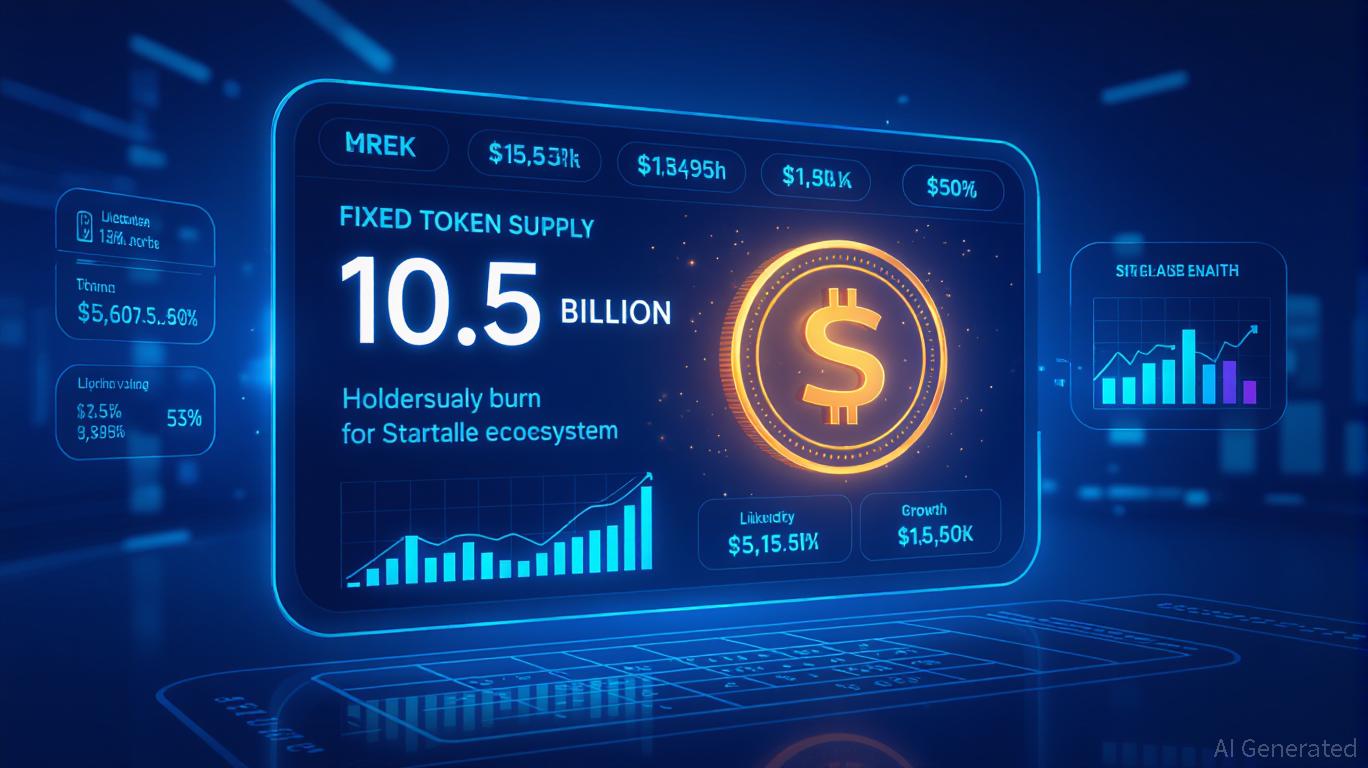
- Astar (ASTR) surged 150% due to protocol upgrades and ecosystem expansion, positioning it as a sustainable value creation case study in blockchain. - Tokenomics 3.0 (fixed 10.5B supply) and Burndrop mechanism created deflationary incentives, supported by Galaxy Digital's $3. 3M OTC investment and Astar's $29.15M buyback. - Cross-chain interoperability with Polkadot/Plaza and Sony's Soneium, plus partnerships with Toyota and Japan Airlines, expanded real-world utility in logistics, identity, and loyalty p

Astar 2.0 Debut and Tokenomics Revamp: Driving DeFi Innovation and Attracting Institutional Participation
- Astar Network's Astar 2.0 introduces Tokenomics 3.0 with fixed 10.5B ASTR supply and 5% annual burn rate to stabilize value for institutional investors. - The update features Burndrop mechanism, asynchronous cross-chain security, and ESG-aligned protocols to address regulatory risks and attract traditional capital. - Plaza platform enables seamless asset transfers across Ethereum , BSC, and Polkadot , while zkEVM scalability targets 300,000 TPS by 2026 for enterprise-grade DeFi solutions. - Governance sh
PNC Bank launches Bitcoin trading for high-net-worth clients
Trending news
MoreCrypto prices
More





