
SOL Drops 50%: Is This a Healthy Market Adjustment or the Onset of a Major Sell-Off?
- Solana's 50% price drop sparks debate over whether it signals a bear market correction or deeper structural selloff. - On-chain metrics show liquidity contraction and reduced exchange supply, but ETF inflows and validator activity suggest structural resilience. - Corporate transfers and the Upbit hack highlight volatility risks, while Solana's alignment with Bitcoin's trend underscores macroeconomic influence. - Key watchpoints include liquidity recovery timelines, ETF inflow sustainability, and potentia
Solana’s Recent 50% Decline: Temporary Setback or Start of a Larger Downtrend?
Solana (SOL) has experienced a dramatic 50% price drop, sending ripples throughout the cryptocurrency sector. This sharp decline has ignited debates among investors and analysts about whether the move signals a short-term correction or the onset of a more significant downturn. By examining blockchain data and expert insights, we can better understand the risks and potential opportunities that lie ahead.
On-Chain Data: Bearish Warning or Market Reset?
Key blockchain indicators were the first to signal trouble. Since mid-November, Solana’s 30-day average realized profit-to-loss ratio has stayed below 1, a classic sign of a bearish market where losses are outpacing gains. Some analysts, such as Altcoin Vector, describe this as a “full liquidity reset”—a pattern that often marks the beginning of new liquidity cycles and can indicate a market bottom. While this may seem alarming, it could also suggest that a reversal is near.
Adding to this perspective, Solana has seen a steady outflow from exchanges, reducing the amount of SOL available for immediate sale. This trend helps ease downward pressure on the price. At the same time, Solana ETFs have attracted consistent net inflows, with $17.72 million added in the week before this report. These inflows imply that long-term investors are accumulating SOL at lower prices, which bodes well for the network’s future stability.
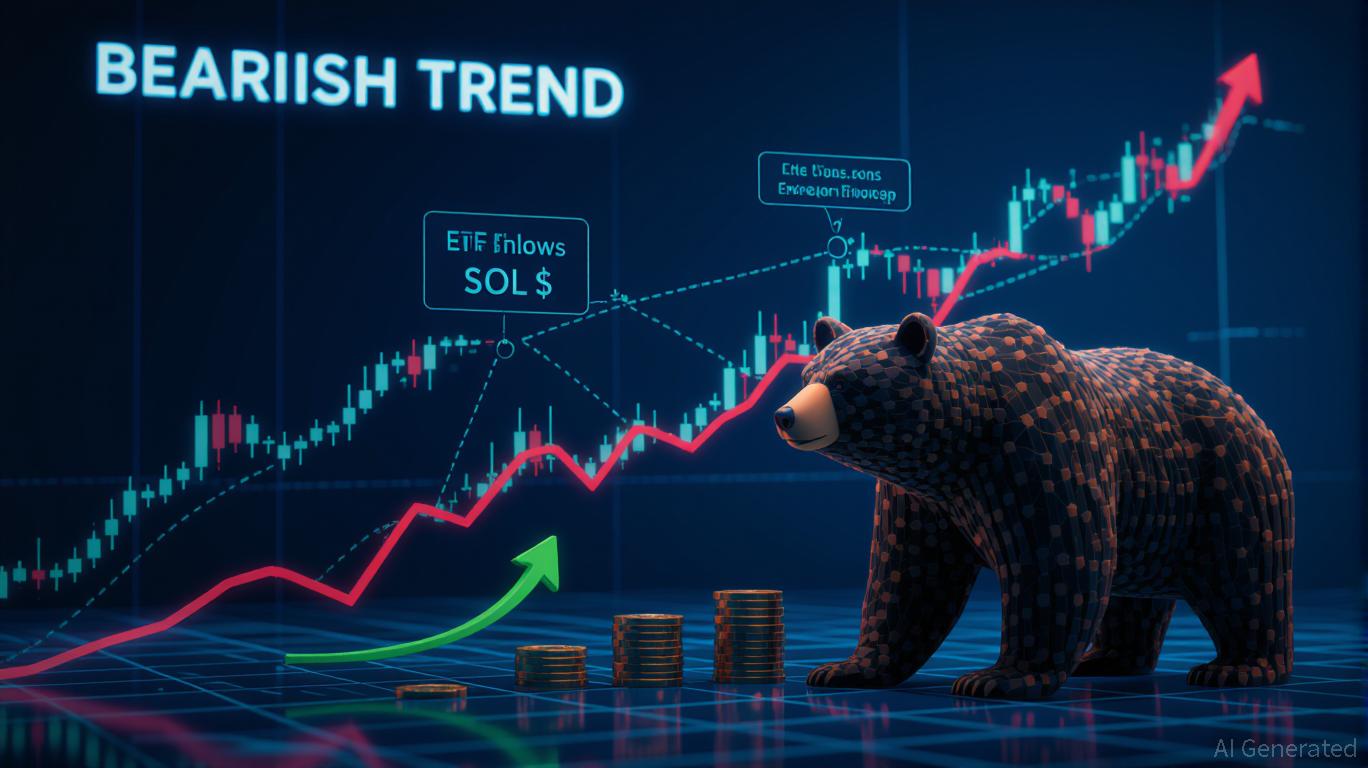
From a technical standpoint, Solana is trading near $139 and holding important support levels. Profit-taking has slowed, and technical indicators like the RSI and Bollinger Bands point to lower volatility and possible price consolidation. If SOL closes above the $145–$150 range, it could signal a bullish reversal. Conversely, a drop below $130 may lead to further declines.
Corporate Moves and Wallet Activity: Transparency or Turbulence?
Recently, Forward Industries transferred $201 million worth of SOL to Coinbase Prime, raising concerns about potential selling pressure. However, blockchain records show that 160,900 SOL were later returned to Forward Industries’ wallet, leaving the company with a substantial holding of 4.129 million SOL. The reason behind these transfers remains unclear, but the fact that most of Forward Industries’ SOL remains staked—earning a 6.82% annual yield—suggests they are not fully liquidating their position.
This ongoing staking, along with validator support from Galaxy Digital and Jump Crypto, has helped maintain Solana’s network performance. Still, the market has reacted strongly to large-scale transfers by corporate holders, contributing to increased price swings.
Further complicating matters, Upbit recently suffered a $36 million hot wallet breach, reportedly orchestrated by North Korea’s Lazarus group. While this incident highlights vulnerabilities in crypto infrastructure, Solana’s core network remains robust. In November, the blockchain processed 543 million transactions in a single week and recorded $29 billion in decentralized exchange (DEX) volume—almost twice that of Ethereum.
Wider Market Perspective: Tracking Bitcoin’s Movements
Solana’s price has closely followed Bitcoin’s recent trends, with both assets attempting to reclaim crucial support ahead of the December 10 FOMC meeting. A potential interest rate cut could inject new liquidity, possibly helping both cryptocurrencies break through resistance. However, the overall market remains fragile, with declining blockchain revenues and concerning on-chain signals.
According to VanEck, Solana, Bitcoin, and Ethereum all fell by about 31% in November, with the majority of losses occurring during U.S. trading hours. This correlation highlights the significant influence of macroeconomic factors on Solana’s short-term outlook.
Key Factors to Monitor Going Forward
- If current trends mirror those seen in April 2025, a liquidity recovery could begin within four weeks, potentially sparking renewed momentum by early January.
- Continued net inflows into Solana ETFs would indicate ongoing institutional interest, even if short-term selling persists.
- A daily close above $145–$150 would confirm a bullish reversal, while a fall below $125 could trigger further declines.
- An interest rate cut could provide the catalyst needed for the market to shift from consolidation to a breakout phase.
Final Thoughts: Is This a Correction or the Start of a Collapse?
The evidence suggests that Solana’s steep decline, while volatile, may not be a sign of imminent collapse. Although bearish factors such as reduced liquidity, large corporate transfers, and a weak market environment are concerning, positives like ETF inflows, lower exchange supply, and strong network fundamentals point toward a corrective phase rather than a total breakdown.
As always, maintaining discipline is crucial. If you believe in Solana’s long-term prospects, market dips like this could present buying opportunities. However, if the price continues to breach key support levels, it may be wise to reconsider your position. Ultimately, the market will reveal whether this is a chance to buy or a warning to exercise caution.
Disclaimer: The content of this article solely reflects the author's opinion and does not represent the platform in any capacity. This article is not intended to serve as a reference for making investment decisions.
You may also like
HYPE Token Experiences Rapid Growth: Could This Signal the Emergence of a Fresh Crypto Trend?
- HYPE token surged to $41.28 driven by speculation, ecosystem growth, and institutional interest. - November 29 unlock released 9.92M tokens but saw only 23.4% sold, with 40% re-staked, showing strong internal confidence. - Protocol upgrades (HIP-3) boosted trading volume by 15%, while HyperEVM and HyperCore expanded DeFi utility beyond futures trading. - Institutional backing from BlackRock/Stripe and $581M Paradigm stake contrasts with $410M potential sell pressure from future unlocks. - Token's long-te

The ChainOpera AI Token Crash: A Warning Story for AI-Based Cryptocurrency Initiatives Facing Regulatory and Market Challenges
- COAI token's 90% collapse highlights risks of centralized governance and unregulated AI in crypto. - Regulatory ambiguity under the CLARITY Act exacerbated volatility and investor uncertainty. - Unaudited AI algorithms and lack of stress-testing mirrored past financial crises, prompting calls for global oversight. - Investors now prioritize decentralized, auditable projects amid lessons from COAI's implosion.

Momentum (MMT) Gaining Traction Through Key Alliances and Growing Attention from Institutions
- Momentum (MMT) gains traction in 2025 via strategic partnerships with Sui , Coinbase , and OKX, boosting institutional adoption. - A $10M HashKey Capital funding round and regulatory clarity underpin MMT's cross-chain DEX launch and RWA tokenization efforts. - Ve(3,3) governance and buybacks drive deflationary dynamics, with TVL exceeding $600M and $1.1B daily trading volumes. - Technical indicators signal potential bullish reversal at $0.52–$0.54, despite 70% post-TGE price correction and volatile forec
ALGO Falls by 3.33% Amidst Market Developments and Announced Restructuring Plans
- ALGO drops 3.33% in 24 hours, part of a broader 61.02% annual decline amid volatile market conditions. - Upcoming Swiss rate decisions, U.S. jobless claims, and bond auctions may intensify market uncertainty affecting crypto assets. - Argo Blockchain's approved restructuring plan, including new mining equipment, could indirectly impact ALGO supply/demand dynamics. - Market participants monitor macroeconomic indicators and blockchain sector developments to gauge ALGO's future trajectory.
Trending news
MoreCrypto prices
More





