
The Federal Reserve's Change in Policy and Its Effects on Rapidly Growing Cryptocurrencies Such as Solana
- Fed's 2025 rate cut and QT halt injected $72.35B liquidity, briefly boosting crypto markets and Solana (+3.01%) amid easing monetary policy. - Prolonged US government shutdown and $19B October liquidation event exposed crypto's liquidity risks, despite Fed support for speculative assets. - Solana saw $3.65B trading volume but 6.1% price drop in November, with TVL falling 4.7% as regulatory pressures and macro volatility offset institutional inflows. - SIMD-0411 proposal aims to reduce Solana issuance by
Federal Reserve Policy Shifts and Their Impact on Crypto Markets
In November 2025, the Federal Reserve implemented a 0.25% interest rate reduction and brought its quantitative tightening program to an end. These policy changes reverberated throughout the digital asset sector, especially affecting fast-growing cryptocurrencies such as Solana. Although these moves signaled a shift toward a more accommodative monetary stance, the overall economic landscape remains turbulent, with ongoing regulatory ambiguity and liquidity constraints. This overview explores how these developments are influencing the cryptocurrency market, focusing on Solana’s recent trends and the persistent structural risks it faces.
Macroeconomic Effects: Shifts in Liquidity, Investor Sentiment, and Inflation
By lowering the federal funds rate to a target range of 3.75–4.00% and pausing its balance sheet reductions, the Federal Reserve released $72.35 billion in liquidity through the Standing Repo Facility. This influx initially encouraged a risk-taking attitude among investors, pushing the total crypto market value to $3.02 trillion and causing Solana’s price to climb by 3.01% as expectations for cheaper borrowing and a friendlier environment for speculative assets grew. However, this initial enthusiasm was soon dampened by broader economic challenges.
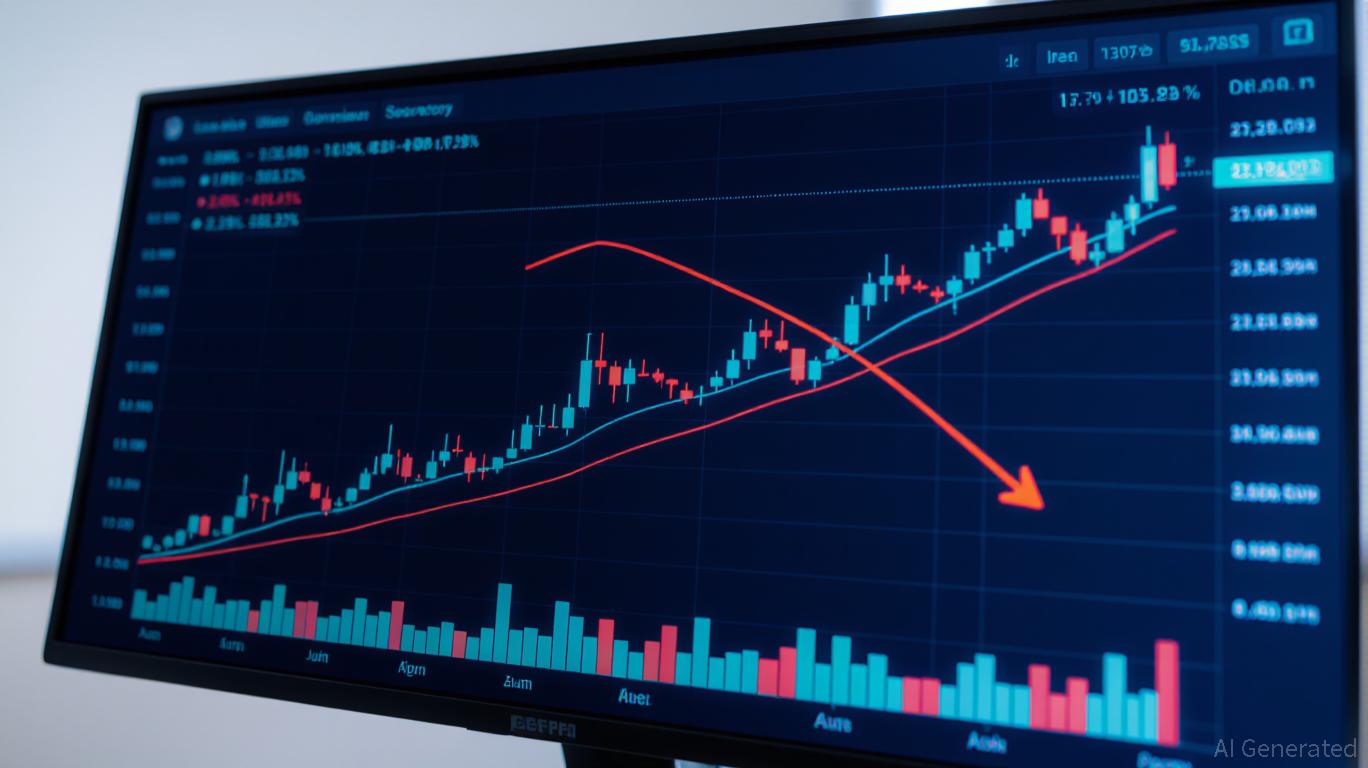
A prolonged shutdown of the U.S. government led to delays in the release of crucial inflation statistics, resulting in a “double squeeze” on both liquidity and market confidence. Policymakers were left to make decisions with incomplete data, heightening uncertainty. Additionally, a significant liquidation event on October 11, which wiped out $19 billion, exposed the shallow depth of crypto markets, despite the Fed’s efforts to support riskier assets.
Mid-November saw the Fed adopt a more hawkish tone, further complicating the outlook. As central banks worldwide prioritized controlling inflation, investors shifted toward safer assets, causing crypto prices to retreat. This created a push-and-pull dynamic for digital assets, which lack the income-generating features of traditional stocks and bonds.
Solana’s Market Journey: Navigating Structural Obstacles
Despite the Federal Reserve’s liquidity support, Solana’s performance in November 2025 was uneven. Trading volumes surged to $3.65 billion, indicating increased activity, but the asset’s value dropped 6.1% to $132 amid broader market corrections. By the start of December, Solana found stability at $123, yet the Total Value Locked (TVL) on its network fell by 4.7% in a single day, reflecting growing investor caution.
On the institutional side, there were positive signs. Solana-based funds attracted $101.7 million in net inflows during November, demonstrating ongoing interest, though this figure was modest compared to the inflows seen for Bitcoin and Ethereum. Developments within Solana’s DeFi ecosystem, such as Coinbase’s acquisition of Vector and the launch of Wormhole’s Sunrise gateway, mirrored larger trends in tokenization and layer 2 scaling. Nevertheless, these advances were counterbalanced by regulatory headwinds, including the European Systemic Risk Board’s enforcement of MiCA regulations and the introduction of leveraged ETFs, which contributed to increased volatility in an already fragmented market.
Looking Ahead: Weighing Prospects Against Risks
The Federal Reserve’s recent policy changes have brought a measure of short-term stability to the crypto sector, but significant risks remain. For Solana, the SIMD-0411 proposal—which aims to cut token issuance by $2.9 billion by 2029—signals a strategic focus on scarcity and liquidity management. Still, ongoing macroeconomic uncertainties, such as the U.S. government shutdown and persistent global inflation, continue to dampen risk appetite.
Institutional participation, which had been a driving force for crypto in the third quarter of 2025, encountered obstacles in the fourth quarter as liquidity constraints and price declines undermined Digital Asset Treasury (DAT) strategies. Mark-to-net-asset-value (mNAV) ratios dropped below 1, highlighting increased caution among investors and the sector’s susceptibility to systemic shocks.
Summary
The Federal Reserve’s policy adjustments in November 2025 have created both opportunities and challenges for dynamic cryptocurrencies like Solana. While increased liquidity and lower rates have offered temporary support, the broader environment—characterized by regulatory uncertainty, liquidity risks, and inflation—continues to pose significant hurdles. For investors, success will depend on balancing the promise of innovation and institutional engagement with the realities of a volatile, macro-driven market. As the Fed’s approach evolves into 2026, Solana’s ability to adapt will be crucial for its long-term prospects.
Disclaimer: The content of this article solely reflects the author's opinion and does not represent the platform in any capacity. This article is not intended to serve as a reference for making investment decisions.
You may also like
The Federal Reserve's Change in Policy and Its Unexpected Effect on Solana's Rise
- Federal Reserve's 2025 rate cut and QT end injected $72.35B liquidity, briefly boosting Solana by 3.01%. - October 2025's $19B liquidation and government shutdown exposed crypto liquidity fragility, eroding investor confidence. - Solana's 6.1% price drop and 4.7% TVL decline in November 2025 highlighted macroeconomic policy's volatile impact on crypto markets. - Upcoming December FOMC meeting (87% rate cut chance) could reignite risk appetite or trigger corrections, mirroring October's 20% price drop. -
Solana’s Latest Price Fluctuations and Institutional Involvement: Insights for Long-Term Investors
- Solana (SOL) faced 2025 price swings from $155 to $294, driven by macroeconomic pressures, on-chain weakness, and institutional adoption dynamics. - Institutional ETFs like Bitwise's BSOL attracted $2B AUM by mid-2025, with major holders staking SOL to deepen ecosystem integration despite short-term volatility. - Risks include network centralization, competition from Ethereum 2.0, and reliability concerns after the 2024 cluster outage amid Fed rate uncertainty. - Ecosystem resilience with 500+ dApps and
Timeless Strategies for Investing Amid Market Volatility
- In 2025, R.W. McNeel's 1927 value investing principles and Warren Buffett's strategies remain critical amid market volatility driven by tech disruption and geopolitical risks. - Both emphasize intrinsic value, emotional discipline, and long-term thinking to counter crypto and stock market swings fueled by speculation and social media hype. - Buffett's $340B cash reserves and focus on undervalued sectors like healthcare contrast with crypto's intangible promises, reinforcing tangible asset preferences. -

Saylor Strikes Again: Strategy Makes Its Biggest BTC Buy Since July
Trending news
MoreCrypto prices
More





