
Circle Mints 500 Million USDC on Solana Blockchain
- This mint reflects Circle’s steps to manage liquidity.
- It may enhance Solana DeFi ecosystem.
- Could influence Solana’s transaction volumes.
A recent 500 million USDC mint on Solana by Circle Internet Financial strengthens liquidity and usage for DeFi protocols. Past mints have increased denominated trading and boosted Solana-based financial ecosystem depth.
Circle’s recent minting of 500 million USDC on Solana signifies a boost in liquidity, enhancing opportunities within Solana’s DeFi ecosystem .
Impact on Solana Blockchain
Circle Internet Financial, led by CEO Jeremy Allaire, performed a significant treasury action by minting 500 million USDC on Solana’s blockchain. This move could provide liquidity and extend USDC’s footprint in DeFi spaces on Solana.
“Stablecoin operations like these underscore the critical role of USDC in enhancing liquidity across various blockchain ecosystems,” said Jeremy Allaire, Co-founder and CEO of Circle.
Solana’s high throughput blockchain benefits from this liquidity influx. This development highlights Solana’s role in stablecoin use, with the USDC mint potentially fueling DeFi growth and transaction efficiency.
Financial Implications
The financial implications for Solana include increased liquidity, likely encouraging DeFi participation. Market observers anticipate positive trade volumes, aiding the blockchain’s vitality and protocol adoption.
Although the action represents liquidity management, the broad market reaction remains under observation. Optimists predict higher engagement in Solana’s DeFi sector due to Circle’s strategic allocation, possibly attracting wider institutional interest.
Circle’s action could encourage other financial entities to explore Solana for USDC transactions. Historical patterns indicate increased USDC activity correlates with Solana’s improved network efficiency and expanded DeFi utilities.
Disclaimer: The content of this article solely reflects the author's opinion and does not represent the platform in any capacity. This article is not intended to serve as a reference for making investment decisions.
You may also like
Privacy Coins and Market Fluctuations: Uncovering the Factors Behind ZEC's Latest Price Jump
- Zcash (ZEC) surged 700% in late 2025 driven by institutional backing and network upgrades like the Zashi wallet. - Regulatory pressures and market fragmentation intensified as exchanges delisted privacy coins and liquidity shifted to decentralized platforms. - ZEC's volatility reflects macroeconomic tailwinds and speculative demand, but its long-term viability hinges on balancing privacy with regulatory compliance. - Institutional adoption of privacy coins accelerated in 2025, yet fragmented markets and

Why Dash (DASH) Is Soaring as Institutions Embrace It and Privacy Concerns Fuel Demand
- Dash (DASH) surged 150% in June 2025, driven by institutional adoption and privacy-focused demand. - Institutional ownership reached 90.64% after AGF Management's $7.79M investment and DoorDash's $450M partnership. - Dash Platform 2.0 enhanced scalability while PrivateSend usage grew 25% YoY amid rising privacy needs. - Regulatory challenges persist under EU MiCA and SEC scrutiny, prompting multi-jurisdictional compliance strategies. - DeFi integration and Latin American adoption expanded DASH's utility
ZK Atlas Upgrade: Pioneering the Future of Blockchain Infrastructure for Enhanced DeFi Scalability
- ZKsync's 2025 Atlas Upgrade revolutionizes DeFi scalability via zero-knowledge rollups, boosting transaction throughput to 43,000 TPS and slashing costs to $0.0001 per transfer. - Modular architecture with Atlas Sequencer and Airbender Prover enables real-time execution, while zkSync OS supports EVM/WASM compatibility and cross-chain liquidity unification. - Post-upgrade DeFi metrics show 300% transaction volume growth and $0.28–$1.32 ZK token price projections, positioning ZKsync as a key Layer 2 infras

Bloomberg: Power Theft Exceeds $1 Billion as Malaysia Bitcoin Mining Rigs Overwhelm
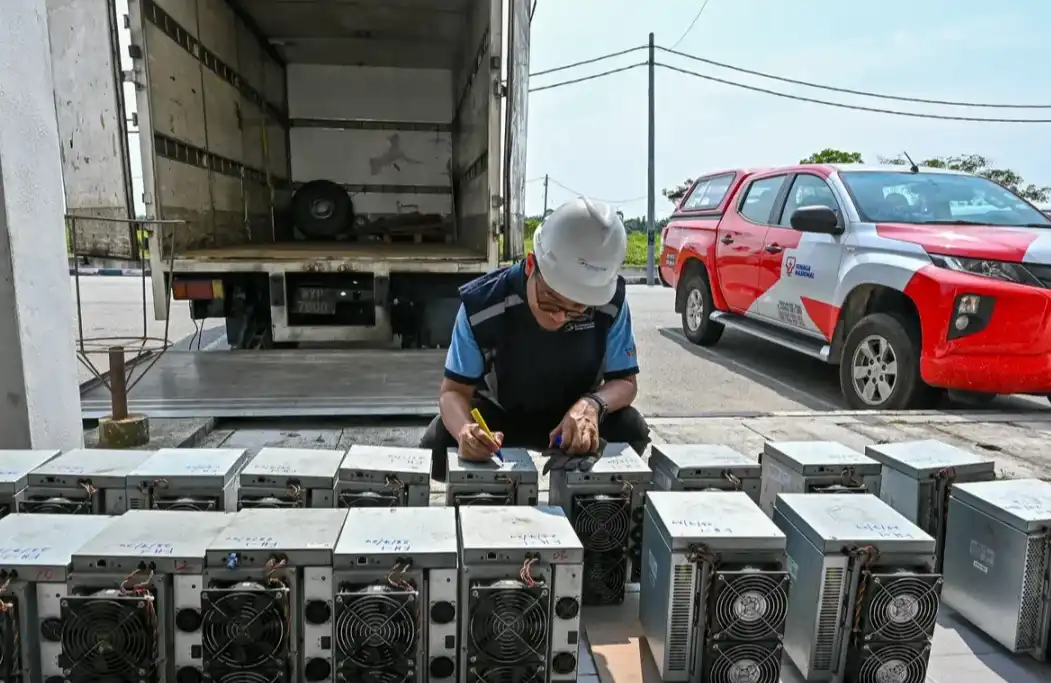
Malaysia has uncovered approximately 14,000 illegal cryptocurrency mining sites in the past five years, causing the state-owned power company losses of over $1.1 billion. In response, the local government established a special committee in November 2025 to consider a total ban on mining,
Trending news
MoreCrypto prices
More





