
HumidiFi Profit Model Under Fire as Solana DEX Giant Plans ICO

HumidiFi sits at the center of Solana’s trading activity. It controls nearly 50% of total DEX volume. That dominance usually signals strong revenue. However, a new debate now questions whether the platform actually makes money. The concern started after Meteora community member gosha publicly challenged the reason behind HumidiFi’s upcoming token launch. According to him, the token launch points to a simple truth. The protocol may be unprofitable under its current fee structure.
吴说获悉,Meteora 社区成员 gosha 质疑最大 Prop AMM HumidiFi 进行代币发行的主要原因是团队并不赚钱,其认为 HumidiFi 虽然占据了 Solana DEX 交易量的近 50%,但是他们实际收取极低的费用,比如 0.001% 甚至更低。gosha 表示,作为一名 LP,即便 0.04% 的费率都很难维持盈利,而 HumidiFi…
— 吴说区块链 (@wublockchain12) December 4, 2025
gosha claims HumidiFi likely charges fees as low as 0.001% or less. That level helps attract massive trading volume. Yet it also leaves little room to absorb losses from hedging, rebalancing and impermanent loss. As a liquidity provider himself, he warned that even 0.04% fees struggle to stay profitable in today’s market. He added that impermanent loss now eats most profits even at 0.02% fees. With HumidiFi operating below that level, he doubts how the protocol can stay sustainable without outside funding.
Why Huge Volume Does Not Guarantee Real Revenue
Many traders assume high volume equals high profits. That logic does not always hold in DeFi. Prop AMMs work on tight quotes. Tight pricing pulls in flow. But it also increases exposure to impermanent loss. gosha explained that low fees and tight quotes help HumidiFi dominate Solana volume. However, those same mechanics drain returns for liquidity providers over time.
The protocol may grow in activity while still bleeding at the base layer. He also rejected claims that HumidiFi earned $3 million in fees last month. He said that the figure lacks on-chain proof and does not align with realistic fee math under the current model. This puts the token launch in a new light. Instead of funding expansion, some now see it as a tool to plug a revenue gap created by an aggressive fee strategy.
Supporters Still Back the WET Token Launch
Not everyone agrees with the bearish view. Drift creator Squid published a bullish thesis for the WET token ahead of launch. He highlighted strong technical teams, deep Solana ties, and low initial float. The early offering sets a $69 million fully diluted valuation. Only a small portion unlocks at launch. There is also no VC allocation, which pushes early exposure into public markets.
Supporters argue that Prop AMMs represent “Solana DeFi 2.0”. They believe HumidiFi’s growth curve justifies future valuation expansion. Some targets stretch as high as $350-$550 million FDV if execution holds. However, even Squid admitted that insiders retain supply control. If large holders choose to sell early, retail buyers could face steep pressure.
A Token Launch Surrounded by Risk and Unanswered Questions
At its core, the debate centers on one issue. Can ultra-low fees and tight Prop AMM pricing support long-term profitability? If not, the token launch may mark a structural turning point for HumidiFi’s business model. So far, the team has not released detailed on-chain revenue data. The market now waits for proof. Either the protocol scales profit with its volume, or it proves that dominance alone cannot save thin margins. Currently, one thing is clear. The WET token launch arrives at a moment of maximum attention and maximum doubt. In Solana DeFi, that mix often leads to violent price discovery.
Disclaimer: The content of this article solely reflects the author's opinion and does not represent the platform in any capacity. This article is not intended to serve as a reference for making investment decisions.
You may also like
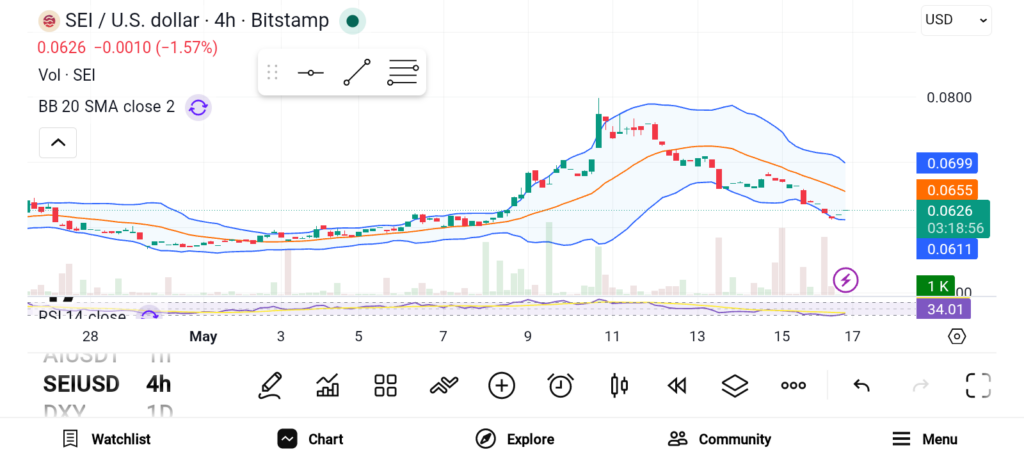
3 Breakout Cryptos to Watch for Huge Gains — ARKM, PYTH, and SEI
AEON raises $8m to wire AI agents into 50m real-world merchants
Quantum computers threaten $450 billion in BTC
Trending news
MoreCrypto prices
More





