
How Cardano plans to use $30M to bring real liquidity to the network

Cardano is entering a very important phase in its development, as its founding institutions are attempting to deliver the core infrastructure that every major blockchain already treats as standard.
On Nov. 27, a new proposal sought community approval to allocate 70 million ADA tokens (worth about $30 million) to onboard tier-one stablecoins, custody providers, cross-chain bridges, pricing oracles, and institutional analytics.
The effort is backed jointly by Input Output, EMURGO, the Cardano Foundation, Intersect, and the Midnight Foundation, an unusually coordinated coalition for a network often criticized for slow alignment and decentralized drift.
The central message behind this collaboration is unmistakable: Cardano wants to enter 2026 with the economic plumbing it has lacked for years.
Why the Cardano pivot matters
The integrations push arrives at a moment when Cardano’s economic base is still relatively shallow.
For context, DefiLlama data shows that the Charles Hoskinson-led network has about $248 million in TVL and roughly $40 million in stablecoins, as well as a limited pool for lending, liquidity provision, and RWA issuance compared with ecosystems that treat these assets as foundational utilities.
In comparison, Ethereum alone carries more than $170 billion in stablecoins, reflecting the scale gap Cardano is trying to close.
So, without deep stablecoin reserves, liquidity pathways, or institutional tooling, Cardano would continue to struggle to generate the network effects that make a blockchain economically relevant.
The network’s fragility came into focus earlier this month when it experienced a brief chain split.
While the disruption was resolved quickly, it intensified scrutiny on Cardano’s operational maturity, particularly its limited real-time analytics, monitoring, and other safeguards expected in institutional-grade environments.
The budget set up for the integration aims to systematize the onboarding of top-tier vendors, including milestones, audits, service-level agreements, and transparent delivery tracking.
So, instead of one-off deals or ad hoc negotiations, supporters say the fund would create a formal, accountable pipeline for onboarding the infrastructure Cardano has historically lacked. Tim Harrison, a director at Input Outputs, said:
“This is the kind of unity and focus that will accelerate growth across DeFi, DePIN and RWA.”
Why these integrations might not be sufficient for Cardano
The integrations push comes after Hoskinson had spoken about what truly limits Cardano’s DeFi growth.
Last month, the Cardano founder acknowledged the network’s DeFi gap but pushed back against the notion that landing USDC, USDT, or other fiat-backed stablecoins would “magically” transform adoption.
According to him:
“No one’s ever made the argument and explained how the existence of one of these larger stablecoins is magically going to make Cardano’s entire DeFi problem go away, make the price go up, massively improve our MAUs, our TVL, and all these other things.”
Instead, he points to a behavioral bottleneck by noting that millions of ADA holders participate in staking and governance, but few make the leap into DeFi. He also added that the network faces coordination and accountability challenges.
Hoskinson argued that this creates a classic chicken-and-egg problem, in which the network’s current low liquidity discourages integrations, and the lack of integrations keeps liquidity low.
Considering this, Hoskinson’s roadmap ties the network DeFi growth to Bitcoin interoperability and the Midnight privacy network. He believes these integrations could channel “billions” in volume into Cardano-native stablecoins and lending protocols if executed well.
That framing matters for the new budget.
If the challenge Cardano is facing is organizational, stemming from fragmented efforts, slow vendor onboarding, and the absence of a structured pathway for stablecoins and custody providers, then a community-mandated integrations program could provide the governance mechanism the ecosystem lacks.
However, even with a coordinated onboarding framework, the budget will only shift outcomes if it ultimately mobilizes passive ADA holders into active liquidity and attracts issuers with market makers willing to support real volume.
The 2026 stress test
Next year will test whether Cardano’s governance and new vendor pipeline can translate its integrations budget into measurable economic growth.
So, if even one major fiat-backed stablecoin arrives with market-maker depth, Cardano’s $40 million stablecoin base could plausibly expand into the low-hundreds-of-millions, a range consistent with early adoption phases on other L1s.
Moreover, Cardano’s $248 million DeFi TVL could reach $500 million if the network secures credible custody and analytics platforms. Notably, this is a level at which lending, RWAs, and liquidity routing begin to compound rather than stall.
Also, bridges, pricing oracles, and institutional wallets remain significant integrations necessary for the network’s growth.
Without them, liquidity will continue to circulate elsewhere. With them, Cardano enters 2026 with the minimum infrastructure required to compete for regulated DeFi pilots, RWA issuance, and BTC–ADA liquidity flows tied to its Bitcoin interoperability roadmap.
The post How Cardano plans to use $30M to bring real liquidity to the network appeared first on CryptoSlate.
Disclaimer: The content of this article solely reflects the author's opinion and does not represent the platform in any capacity. This article is not intended to serve as a reference for making investment decisions.
You may also like
Research Report|In-Depth Analysis and Market Cap of Talus (US)

Five charts to help you understand: Where does the market go after each policy storm?
After this regulatory crackdown, is it a harbinger of an impending downturn, or the beginning of a new cycle where all negative news has been fully priced in? Let’s examine the trajectory after the storm through five key policy milestones.

Mars Morning News | The crypto market rebounds across the board, Bitcoin rises above $94,500; The "CLARITY Act" draft is expected to be released this week
The crypto market has fully rebounded, with bitcoin surpassing $94,500 and US crypto-related stocks rising across the board. The US Congress is advancing the CLARITY Act to regulate cryptocurrencies. The SEC chairman stated that many ICOs are not securities transactions. Whales are holding a large number of profitable ETH long positions. Summary generated by Mars AI. The accuracy and completeness of the content generated by the Mars AI model is still being iteratively updated.

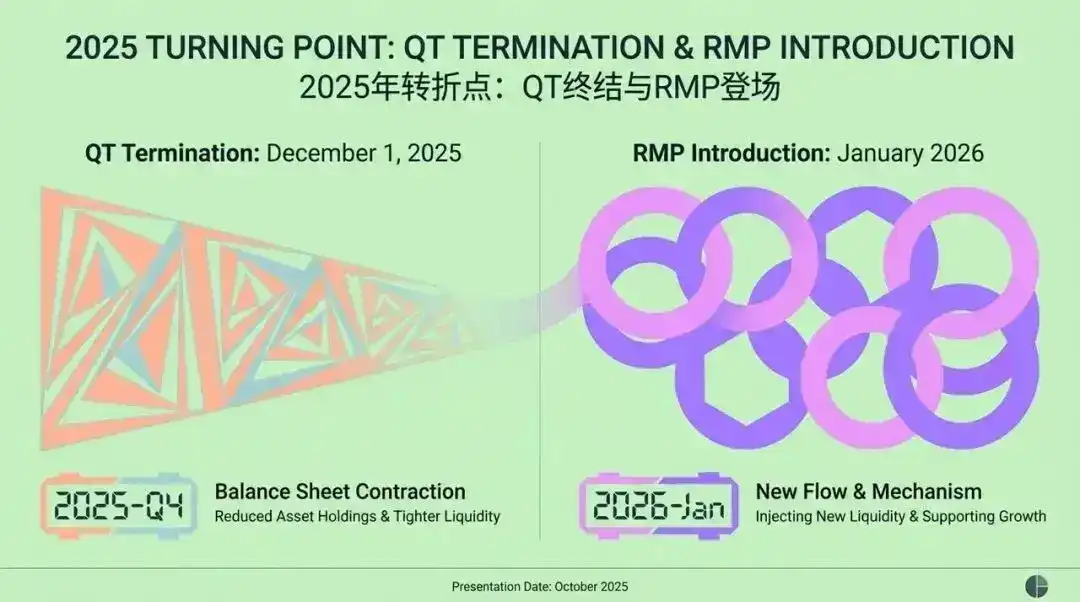
Federal Reserve’s Major Shift: From QT to RMP, How Will the Market Transform by 2026?
The article discusses the background, mechanism, and impact on financial markets of the Federal Reserve's introduction of the Reserve Management Purchases (RMP) strategy after ending Quantitative Tightening (QT) in 2025. RMP is regarded as a technical operation aimed at maintaining liquidity in the financial system, but the market interprets it as a covert easing policy. The article analyzes RMP's potential effects on risk assets, the regulatory framework, and fiscal policy, and provides strategic recommendations for institutional investors. Summary generated by Mars AI This summary was generated by the Mars AI model, and the accuracy and completeness of its content are still in the process of iterative improvement.
Trending news
MoreCrypto prices
More





