
Tom Lee Reveals: Market Crash Stemmed from 10/11 Liquidity Drought, Market Makers Selling Off to Fill "Financial Black Hole"

In a situation where there is no true central bank backstop and a lack of automatic deleveraging mechanism, the collapse affects the entire trading infrastructure rather than a single asset.
Original Title: "Tom Lee Reveals: Recent Plunge Due to Liquidity Exhaustion from 1011, Market Makers Selling Off in Bulk to Fill 'Financial Black Hole'"
Original Source: BlockTempo by BlockTempo
Bitcoin (BTC) price hovering around $86,000 seems indifferent to the "Trump Rally," but the actual driving force behind the trend is not policy expectations, but rather the liquidity black hole left by the October 11 clearing storm. Tom Lee, co-founder of Fundstrat and chairman of BitMine, pointed out on CNBC that large market makers lost as much as $19-20 billion on that day, with even the lubricant intended to stabilize the market being hurt, thus triggering a series of mechanical sell-offs.
Market Maker Wound: Balance Sheet Explodes with Black Hole
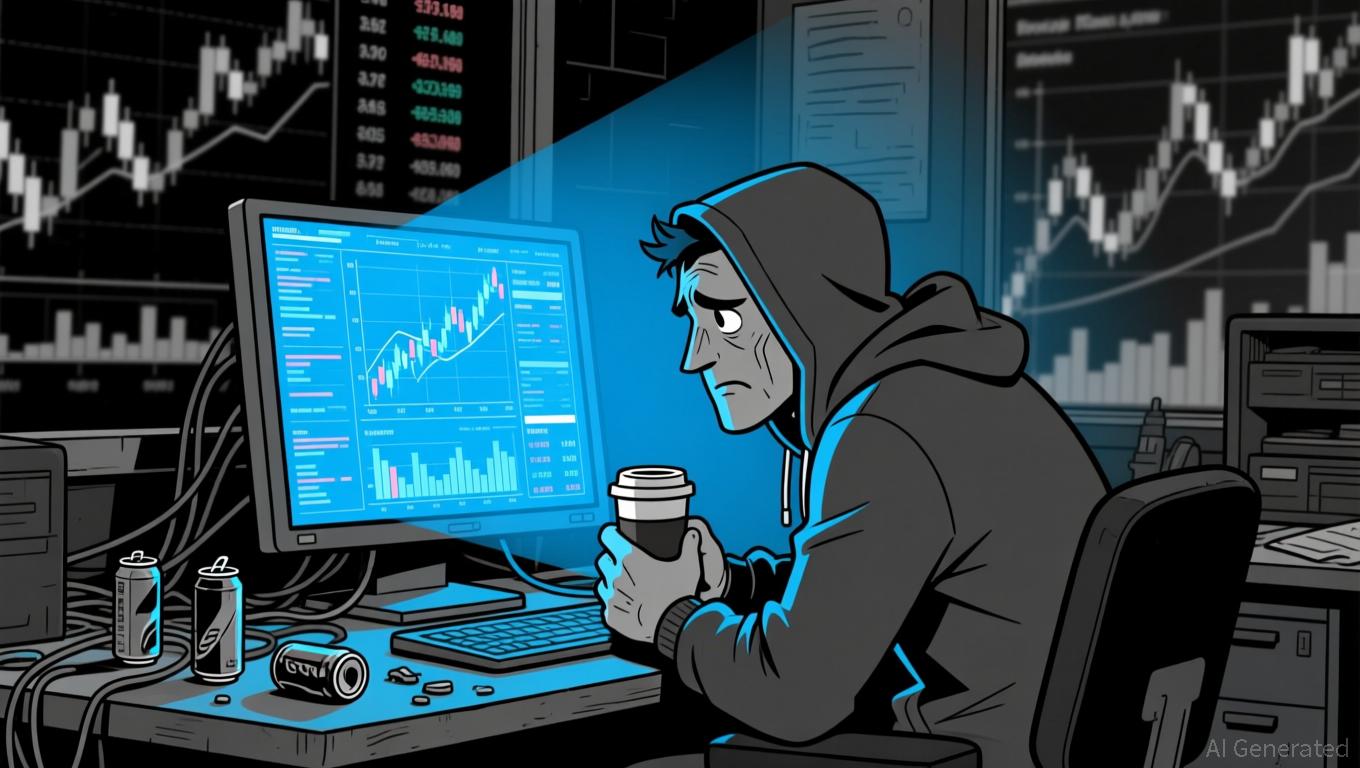
According to Tom Lee's analysis, the one-sided trend on October 11 not only swept away excessive leverage but also dragged market makers down. These institutions typically profit from high-frequency trading spreads, acting as a sort of "invisible central bank." However, the violent fluctuations caused risk models to malfunction, leading to holes in the balance sheet. To stop the bleeding, market makers had to urgently recoup funds, equivalent to removing the market's last safety net.
Dry Order Book: Crypto Quantitative Tightening
After the fund outflows, the order book depth shrank rapidly, with liquidity evaporating by 98% at its worst. This "crypto version of quantitative tightening" is not a central bank decision but a survival instinct. When order books are thin, a small amount of selling is enough to break through price levels, triggering more forced liquidations. Opportunistic traders pushed prices down, creating a vicious cycle where prices no longer reflect asset values, only the failure of market mechanisms.
Lee stated:
"Market makers are actually like the (cryptocurrency) central banks. When their balance sheets are damaged, liquidity tightens, and the market becomes fragile."
In the absence of a true central bank backstop and a lack of automatic deleveraging mechanisms, the collapse affects the entire trading infrastructure, not just a single asset.
Recovery Progress: Week 6 of the Ecosystem
Historical experience shows that pure liquidity crises usually take about eight weeks to ease. We are currently in the sixth week, with market makers rebuilding firewalls through deleveraging, recapitalization, and hedging. While the market's "ecosystem" is still murky, the most intense period of bleeding seems to have passed.
Some institutions have positioned themselves early. BitMine Immersion Technologies bought an average of 54,000 ETH during the plunge period for approximately $173 million, showing that smart money sees this event as a liquidity shortage rather than a cycle reversal.
Investor's Current Position
Liquidity is like the oxygen of the market. Once it flows back, prices tend to bounce back faster. With market makers' balance sheets gradually healing and the possibility of the new Trump administration bringing in policy innovation, Bitcoin and general cryptocurrency assets may experience a strong "recovery rebound." The current challenge for investors is to have the patience to distinguish signals from noise: do not mistake mechanical failures for fundamental deterioration, and do not abandon positions in the darkest moments.
In summary, the flash crash on October 11 was a structural short circuit that severely injured the market's invisible central bank. Market maker's bloodletting period forced liquidity to dry up, causing price distortion. If history repeats itself, as the order book fills up again after Thanksgiving, investors may witness another wave of kinetic energy flow back. Faced with still fragile market walls, prudent allocation and risk control remain key steps.
Disclaimer: The content of this article solely reflects the author's opinion and does not represent the platform in any capacity. This article is not intended to serve as a reference for making investment decisions.
You may also like
PENGU USDT Sell Alert and Stablecoin Price Fluctuations: Evaluating Algorithmic Dangers Amid Changing Cryptocurrency Markets
- PENGU USDT's 2025 volatility reignited debates on algorithmic stablecoin fragility amid regulatory uncertainty and post-UST market skepticism. - Technical analysis showed conflicting signals: overbought MFI vs bearish RSI divergence, with critical support/resistance levels at $0.010-$0.013. - $66.6M team wallet outflows and 32% open interest growth highlighted liquidity risks, while UST's collapse legacy exposed algorithmic design flaws. - Investors increasingly favor fiat-backed alternatives like USDC ,

HYPE Token Experiences Rapid Growth in December 2025: Evaluating Authenticity and Investment Opportunities Amidst an Unstable Post-ETF Cryptocurrency Landscape
- HYPE token surged in Dec 2025 amid post-Bitcoin ETF crypto optimism , raising questions about its investment legitimacy. - Hyperliquid's 72.7% decentralized trading volume share and $106M monthly revenue highlight its DeFi infrastructure strength. - Institutional backing from Paradigm and a $1B DAT fund signals confidence, though major exchange listings remain pending. - Price volatility, token unlocks, and mixed expert opinions underscore risks, with potential $53–$71 targets contingent on market condit
LUNA Falls by 5.77% Over 24 Hours Despite Fluctuating Medium-Term Performance
- LUNA fell 5.77% in 24 hours to $0.1512, but rose 47.52% in 7 days and 105.96% in 30 days. - However, it still faces a 64.14% annual loss, highlighting crypto market volatility and long-term risks for investors. - The price swing reflects sensitivity to macroeconomic shifts and sentiment, with analysts noting ongoing uncertainty in forecasts. - Investors are weighing recent resilience against regulatory challenges and institutional behavior shifts, monitoring if the drop signals a bearish trend or tempora
The Downfall of ChainOpera AI Token: An Alert for AI-Based Cryptocurrency Investments
- ChainOpera AI (COAI) token's 96% collapse in late 2025 highlights systemic risks in AI-driven crypto assets, prompting reevaluation of governance and regulatory frameworks. - Centralized ownership (88% by top 10 holders) and governance flaws at C3.ai exacerbated volatility, undermining decentralization and investor trust. - The crisis triggered sector-wide sell-offs, shifting capital to meme coins, while 2025 regulatory penalties rose 417% to $1.23B, intensifying scrutiny. - Experts warn speculative AI-c

Trending news
MoreCrypto prices
More





