
THORWallet Combines Swiss Bank Account with DeFi Features in Crypto Wallet

As new solutions arise to connect conventional finance with decentralized networks, the lines between the two continue to blur. THORWallet, a self-custodial DeFi wallet, is leading the charge by combining the capabilities of decentralized finance into one mobile application. This includes offering Swiss banking services and a global MasterCard.
Complete Financial Ecosystem at Your Fingertips
THORWallet’s new announcement states that it is not only a wallet but a fully functioning financial ecosystem built on five pillars: a Swiss bank account, DeFi terminal, travel card, remittance engine, and user-owned ecosystem. This represents a pivotal moment in tackling one of the most difficult problems in the cryptocurrency arena, providing a way to issue digital assets to customers in the real world.
In April 2025, the platform unveiled Swiss crypto banking services, in addition to a Visa debit card service, which was a key advancement toward a complete crypto neo-banking solution. Users can now make purchases using their THORWallet debit card like traditional cardholders without losing custody of their crypto holdings.
What distinguishes this product offering is the inclusion of Swiss-based banking accounts connected to fiat accounts in CHF, USD, EUR and GBP, which allows for the multi-currency feature useful for its international users. The Swiss banking element utilizes the strong financial regulatory environment from Switzerland to provide stability and confidence to users.
Cross-Chain Swaps and MasterCard Integration
THORWallet is fundamentally a top-notch DeFi platform with THORChain technology at its core. The THORWallet has processed a remarkable lifetime volume of over $1.2 billion and has been downloaded over 120,000 times, thus building a name as one of the major components of the cross-chain DeFi space.
The wallet has a cross-chain swap capability that removes the need for either wrapped tokens, or using traditional blockchain bridges, so users can directly swap native Bitcoin, Ethereum, Solana, and the major assets across blockchains. In June 2025, THORWallet made history by supporting the first-ever native XRP to ETH swap in a mobile wallet.
THORWallet has become a spending platform, rather than just a storage vehicle, by working with MasterCard. This card allows spending in USD, CHF, EUR, and RMB in 100+ countries and works with Google Pay and Apple Pay at 40 million merchants globally. This is a departure from many crypto cards that require continuous manual transactions. THORWallet uses a MasterCard to draw funds directly from user’s Swiss bank accounts, where they can top up with USDC, ETH and FIAT cash.
Security and Strategic Growth
THORWallet uses Threshold Signature Scheme (TSS) technology in its multi-signature approach offering institutional-grade security in a mobile environment. This method eliminates single points of failure traditionally associated with hardware wallets.
Due to the wallet’s non-custodial design, customers always have complete access to their money through their private keys, no matter what operational hurdles the company faces. This is a huge difference from custodial exchanges; if the exchange has an operational problem, an individual’s funds could be frozen, or they simply could be unrecoverable.
THORWallet’s aspirations are greater than just the product’s features. In October 2025, THORWallet’s adoption of Cointelegraph Accelerator allowed for global media access, strategic mentorship, and a much larger Web3 network. The project has also received strategic support and financial backing such as a $2 million investment from JPTHOR, which is assisting development of new features and the larger vision of onboarding mainstream users to DeFi on the platform.
Conclusion
THORWallet’s unique approach deals with the question of how to truly expose DeFi to mainstream consumers who still rely on a banking institution. The platform merges the security of self-custody with the user experience of banking, so the user can feel comfortable using cryptocurrency with the bridging of these two historic financial paradigms. THORWallet’s vision stands out as the most compelling example of an integrated model of financial applications using traditional and decentralized systems.
Disclaimer: The content of this article solely reflects the author's opinion and does not represent the platform in any capacity. This article is not intended to serve as a reference for making investment decisions.
You may also like
Hyperliquid (HYPE) Price Fluctuations: Is This the Next Era for Decentralized Trading?
- Hyperliquid (HYPE) surged 23% to $56 in late 2025, driven by its hybrid CLOB model bridging DeFi and centralized trading. - Institutional confidence grew via 425,000 HYPE staked and HIP-3 fee cuts, enhancing liquidity and governance. - Token unlocks and $600M buybacks stabilized markets, though 3 manipulation incidents exposed liquidity risks. - Regulatory clarity (CLARITY Act/MiCA) and AI-driven upgrades position HYPE for $71–$86 by 2026–2028, pending macroeconomic shifts.

The Growing Enthusiasm for Hyperliquid and Cryptocurrency Derivatives
- Hyperliquid leads crypto derivatives shift via stablecoin integration and retail-friendly infrastructure, expanding access for SMBs and individual traders. - U.S. and India drive retail adoption with regulatory clarity and grassroots participation, as stablecoins dominate 93% of market liquidity. - Speculative trading risks rise amid 2025 market corrections and regulatory crackdowns, linking crypto behavior to gambling-like financial distress patterns. - Exchange innovation and academic interest in block

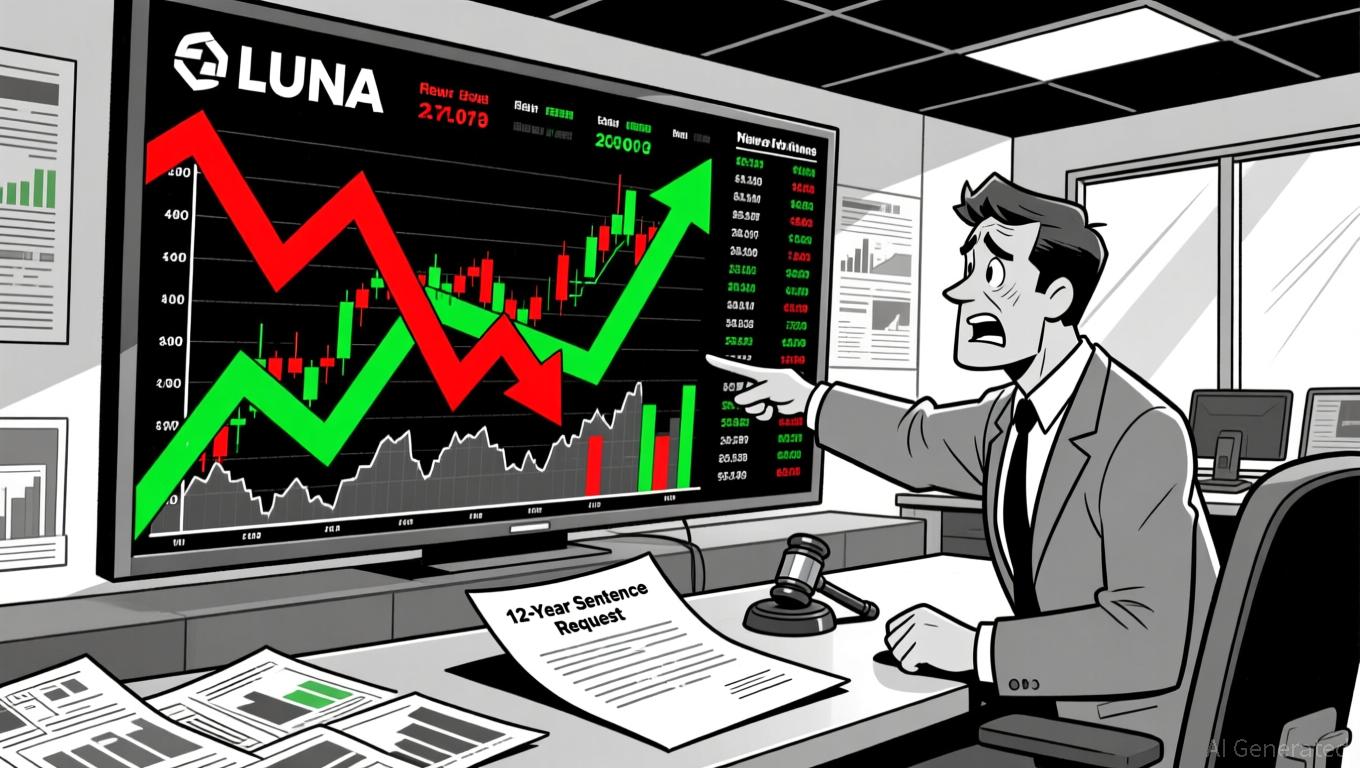
Luna Jumps 46.22% in a Week Following Legal Action Reports
- LUNA surged 5.67% in 24 hours, driven by prosecutors' 12-year prison request for Terra founder Do Kwon. - Kwon faces charges over TerraUSD's collapse, which erased $40B, with prosecutors calling his actions "colossal in scope." - Market reacted strongly: Luna Classic jumped 130% while LUNA rose 70% amid renewed Terra ecosystem interest. - Sentencing on Dec 11 could reshape Terra's future, with legal outcomes potentially influencing crypto regulatory frameworks. - Investors warned of persistent volatility
AI Token Price Fluctuations and Investor Prudence: Insights from the ChainOpera Collapse and Strategies for Building Resilience
- ChainOpera AI's 2025 collapse exposed systemic risks in centralized crypto projects with opaque AI models and governance. - The token lost 90% of value due to liquidity imbalances, unaudited algorithms, and regulatory uncertainty under the U.S. CLARITY Act. - Post-crash lessons emphasize transparent governance, real-world utility, and compliance with frameworks like NIST AI RMF and ISO/IEC 42001. - Projects like ASI and Ocean Protocol demonstrate resilience through decentralized models, auditable systems

Trending news
MoreCrypto prices
More





