
Iowa mink release triggers environmental disaster and ignites discussion over federal anti-terrorism legislation
- Iowa farmers race to recapture nearly 2,000 mink released in suspected anti-fur protest, risking animal deaths and ecological harm. - Fur Commission USA condemns the act as federal "terrorism" under AETA, citing past charges for similar releases disrupting mink farming. - Over 60% of mink recovered by Friday, but remaining animals face 24–48 hour survival window due to lack of resources. - U.S. mink farming industry generates $300M annually but faces decline, with animal rights groups criticizing inhuman
Farmers in Iowa are urgently trying to recover close to 2,000 mink that were set free in what authorities suspect was an anti-fur demonstration, an act the Fur Commission USA has labeled a "terrorist act" under federal statutes, according to
This event has sparked renewed discussion about animal rights activism and the financial consequences for the mink industry. The Fur Commission USA, representing American mink farmers, noted that one or two such incidents happen each year, usually motivated by anti-fur campaigners. "Setting farm-raised mink loose into the wild actually causes harm to the animals and upsets the balance of local ecosystems," said Challis Hobbs, the commission’s executive director. Some of the freed mink have already killed ducks and geese on the property, adding to the farmer’s losses.
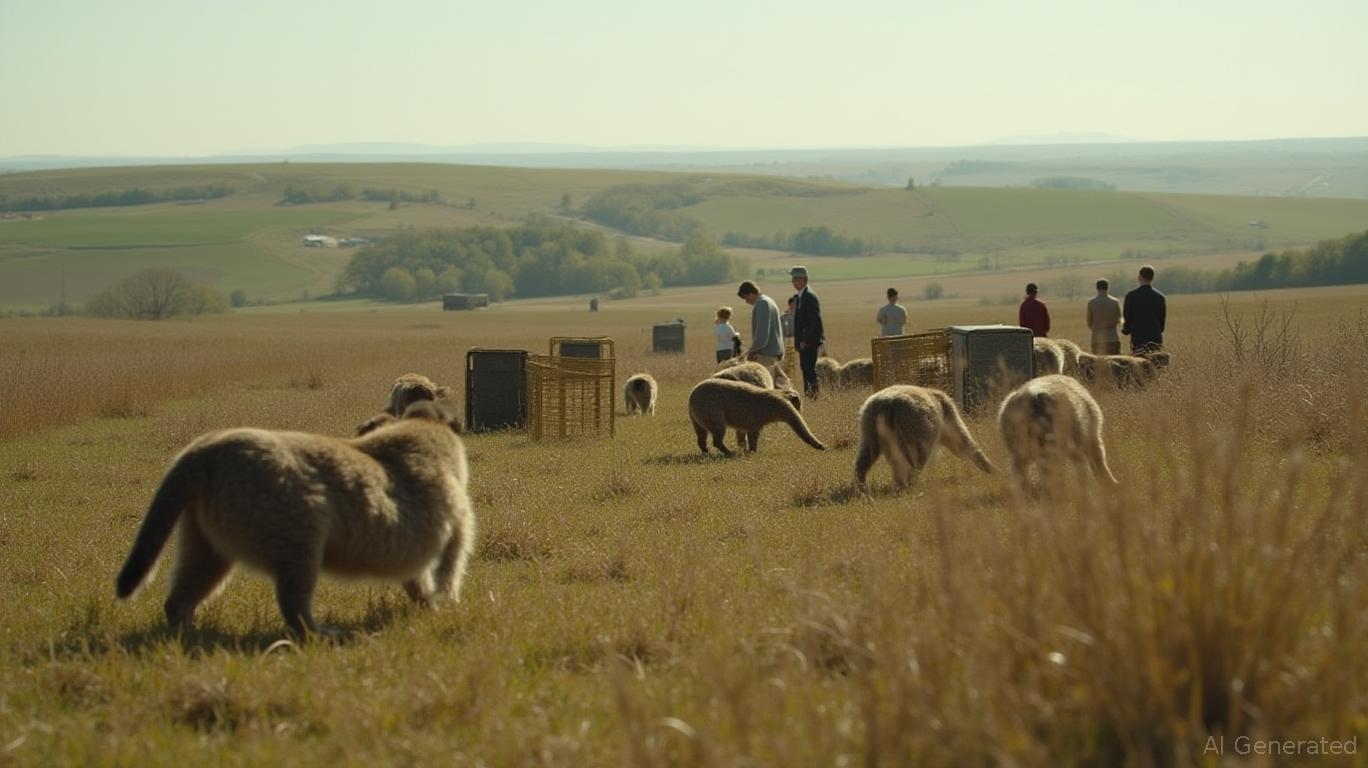
Under the Animal Enterprise Terrorism Act (AETA), federal law classifies such acts as terrorism if they are intended to "obstruct or destroy" animal-related businesses. Hobbs mentioned that previous mink releases have resulted in charges under this law, but as of Friday, no suspects had been apprehended. Sgt. Todd Denton of the Harrison County Sheriff's Office declined to provide details about the ongoing investigation, and the farm owner, via Hobbs, would not speak to the media.
Although the U.S. mink industry is smaller than it once was, it still plays a significant economic role. According to Fortune, there are about 275 mink farms in 23 states, producing roughly 3 million pelts each year with a value exceeding $300 million. However, output has dropped over the last ten years, with only 771,000 pelts produced in 2024. Animal welfare organizations, such as the Animal Legal Defense Fund, maintain that mink farming is cruel and poses health hazards, pointing to disease outbreaks like avian flu as evidence.
Farmers are now using live traps and working around the clock to retrieve the animals, but their chances of success are dwindling. "We’re running out of time," Hobbs warned. "The longer these mink are out in the wild, the greater the risk they’ll die—or become a danger to native species and other farm animals."
Disclaimer: The content of this article solely reflects the author's opinion and does not represent the platform in any capacity. This article is not intended to serve as a reference for making investment decisions.
You may also like
The Financial Wellness Aspect: The Influence of Investor Actions on Market Results
- Behavioral economics integrates psychology to explain how emotional, intellectual, and environmental wellness shape investor decisions and market outcomes. - Emotional resilience reduces cognitive biases like loss aversion, while intellectual engagement through AI tools improves long-term investment returns according to 2024-2025 studies. - Environmental factors such as ESG frameworks and workplace wellness programs demonstrate measurable economic benefits, including 20% higher productivity and reduced f

Regulatory Changes in U.S. Agriculture: The Impact of USDA Policy Decisions on Long-Term Investments in Livestock and Poultry Industries
- USDA’s 2023–2025 Organic Livestock and Poultry Standards (OLPS) impose stricter animal welfare rules, with phased compliance until 2029 to ease small producers’ adjustments. - Compliance costs for organic producers are high initially but projected to yield $59.1–$78.1 million annual benefits via enhanced consumer trust and premium pricing. - Investors favor scalable, tech-driven operations amid OLPS-driven capital shifts, though small producers face compliance challenges and market exit risks in poultry

ZK Atlas Enhancement: Marking a Milestone for Scalable Blockchain Frameworks
- ZKsync's 2025 Atlas Upgrade revolutionizes blockchain with 43,000 TPS, $0.0001 per-transaction costs, and sub-second finality via Airbender zkVM. - Modular EVM compatibility attracts Deutsche Bank , Sony , and $15B institutional investment, accelerating DeFi, NFTs, and cross-border payments. - ZK rollups' TVL surges to $28B, with 60.7% CAGR projected through 2031, driven by Bitcoin ETF inflows and $7.59B ZKP market growth by 2033. - Regulatory clarity under U.S. GENIUS Act and EU MiCA accelerates adoptio

ZK (Zero-Knowledge) Technology and Its Rapidly Growing Market Attention
- Zero-knowledge (ZK) technology is revolutionizing blockchain and fintech by enabling scalable, private, and compliant systems, with the ZKP market projected to grow from $1.535B in 2025 to $7.585B by 2033 at 22.1% CAGR. - Institutional adoption by firms like Goldman Sachs , Walmart , and HSBC highlights ZK's role in confidential transactions and supply chain transparency, supported by regulatory frameworks like the U.S. GENIUS Act and EU MiCA. - Enterprise platforms (Quorum, Hyperledger Fabric-X) and inn

Trending news
MoreCrypto prices
More





