
Bitcoin Treasury Craze Fades as Investors Grow Selective Amid Market Saturation

Quick Breakdown
- Investor enthusiasm for Bitcoin treasury firms is cooling amid mNAV declines and market saturation.
- Analysts warn that only firms with unique strategies and sustainable models will survive the next phase.
- Despite bubble concerns, experts say Bitcoin treasuries mark a new chapter in corporate finance innovation.
Investor euphoria over Bitcoin treasuries begins to fade
The excitement surrounding Bitcoin treasury companies is cooling as investors become more selective, signaling an end to the initial frenzy around Bitcoin-stacking firms. Despite over 200 publicly listed Bitcoin treasury firms worldwide, many are witnessing steep declines in their market net asset values (mNAVs), exposing cracks in the once-hyped strategy.
David Bailey, CEO of KindlyMD and head of Bitcoin-focused Nakamoto Holdings, told CNBC that the market is “getting more sophisticated” in distinguishing between firms with genuine utility and those merely replicating existing playbooks.
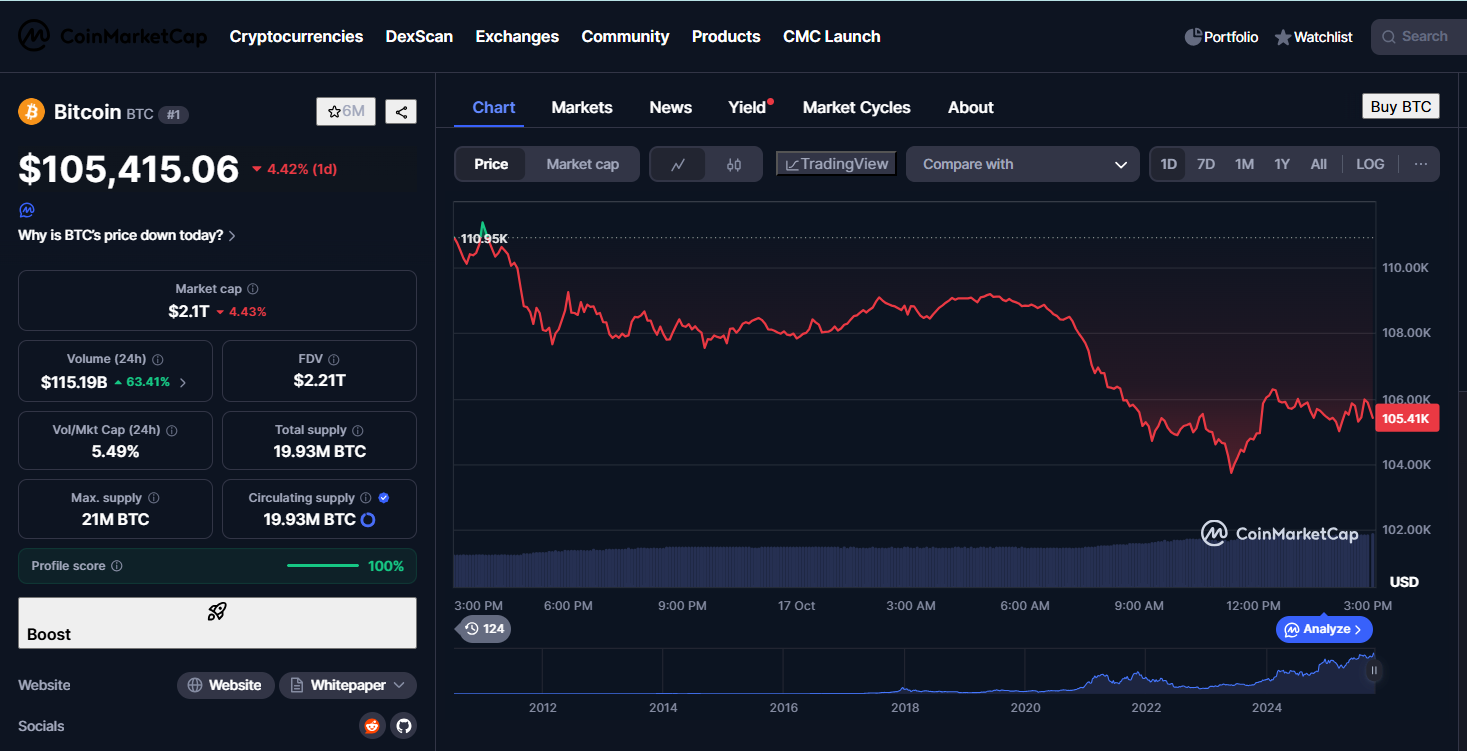 Bitcoin is down 9.90% over the past seven days. Source: CoinMarketCap
“What’s the edge?” — why new bitcoin treasuries are losing steam
Bailey argued that companies entering the Bitcoin treasury space now need a clear purpose and competitive edge to stay relevant. “It’s kind of like, what’s the edge? Why are you needed?” he said, adding that the market can no longer sustain numerous firms executing identical strategies.
He suggested that future success stories will stem from firms targeting underserved international markets or integrating Bitcoin strategies into broader business operations. Bailey pointed to Michael Saylor’s MicroStrategy model, which is expanding into credit markets, as a strong example of innovation in the sector.
Bailey’s own company, Nakamoto Holdings, merged with healthcare firm KindlyMD in August to create a public Bitcoin treasury vehicle aiming to accumulate up to 1 million BTC. However, its shares have seen turbulent performance—dropping 55% in a single day in September and currently trading at $0.76.
Market maturity and a potential bubble
As of now, public Bitcoin treasuries collectively hold $113.8 billion worth of BTC, data from BitcoinTreasuries.net shows. Yet, analysts warn that market saturation is putting pressure on valuations. Standard Chartered recently noted that mNAV compression among smaller treasuries has heightened risks across the sector.
Meanwhile, David Bailey is seeking to raise between $100 million and $200 million for a political action committee (PAC) focused on promoting Bitcoin-friendly policies in the United States. Breed Capital, a venture firm, predicted that only a handful of Bitcoin treasury companies will survive the coming consolidation, while Glassnode’s lead analyst James Check described the model’s lifespan as “far shorter than most expect.”
Disclaimer: The content of this article solely reflects the author's opinion and does not represent the platform in any capacity. This article is not intended to serve as a reference for making investment decisions.
You may also like
Is the moat of public blockchains only 3 points? Alliance DAO founder's remarks spark heated debate in the crypto community
Instead of worrying about "moats," perhaps we should focus more on how cryptocurrencies can meet the real needs of more market users faster, at lower cost, and with greater convenience.

Digital Finance Game: Unveiling the US Cryptocurrency Strategy

Glassnode: Bitcoin weakly fluctuates, is major volatility coming?
If signs of seller exhaustion begin to appear, it is still possible in the short term for bitcoin to move towards the $95,000 level and the short-term holder cost basis.
Axe Compute (NASDAQ: AGPU) completes corporate restructuring (formerly POAI), enterprise-level decentralized GPU computing power Aethir officially enters the mainstream market
Predictive Oncology officially announced today that it has changed its name to Axe Compute and will trade on Nasdaq under the ticker symbol AGPU. This rebranding marks Axe Compute's transition into an enterprise-level operator, officially commercializing Aethir's decentralized GPU network to provide robust, enterprise-grade computing power services for AI companies worldwide.
Trending news
MoreCrypto prices
More





