
SEC Adjusts Approach to Crypto Regulation: Balancing Innovation and Safeguarding Investors
- The U.S. SEC shifted from Biden-era crypto enforcement to Trump's innovation-focused policies, sparking debates over regulatory balance. - Gensler's tenure saw 125 crypto enforcement actions and a $4.5B Terraform settlement, criticized for stifling innovation with outdated frameworks. - Trump's 2025 executive order banned CBDCs and revoked SAB 121, aiming to position the U.S. as a crypto hub while facing transparency controversies. - Congressional efforts to repeal SAB 121 and SEC's IT mishap deleting Ge
The U.S. Securities and Exchange Commission (SEC) has seen a significant shift in its stance on cryptocurrency oversight, moving away from the Biden administration’s enforcement-centric tactics to a more innovation-driven approach under President Donald Trump. This change has sparked renewed discussions about the SEC’s function in the crypto industry, especially following FTX founder Sam Bankman-Fried’s assertions that the SEC under Biden specifically targeted him. In reality, the situation is more complex, reflecting broader regulatory changes rather than isolated actions.
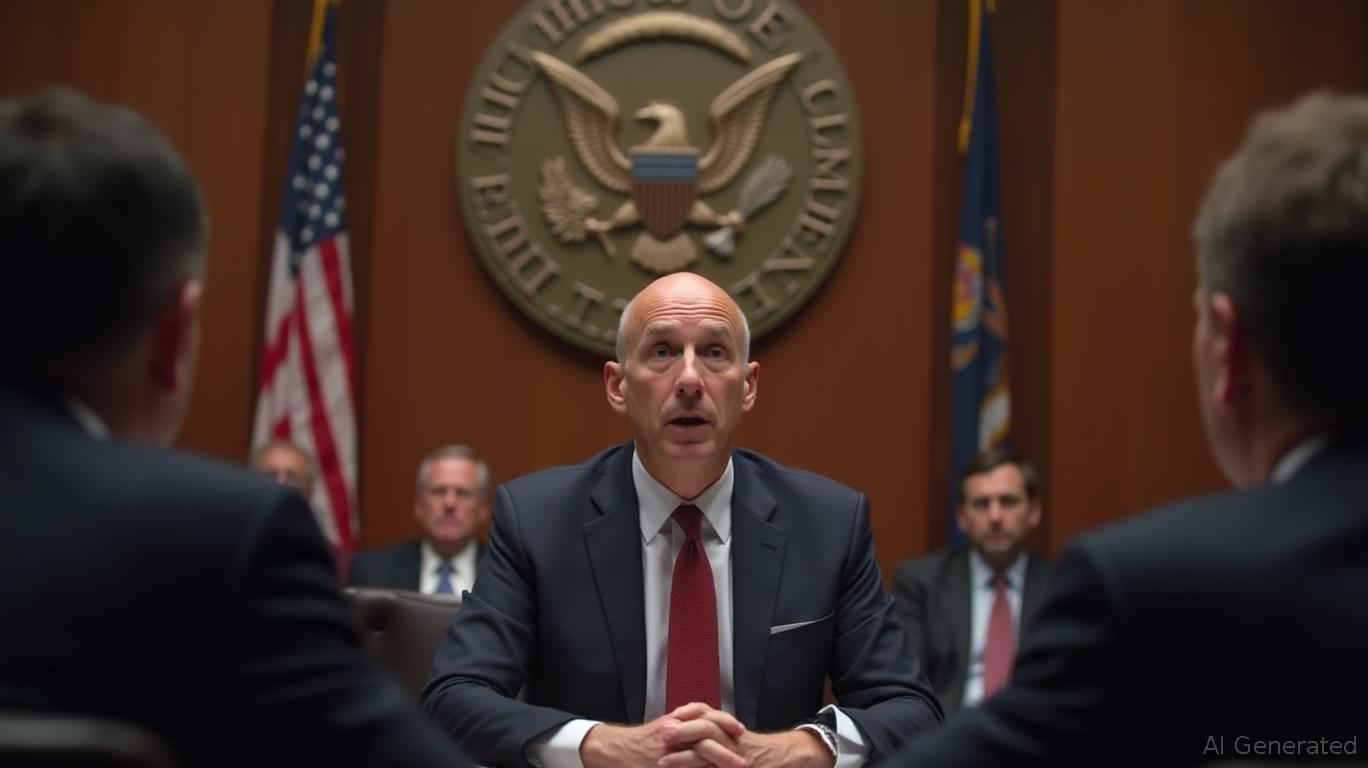
During Gary Gensler’s tenure as chair, the SEC took a hardline stance against crypto companies, including a notable $4.5 billion settlement with Terraform Labs in 2025. This case, which revolved around the failure of the algorithmic stablecoin UST and its associated governance token
The Trump administration’s executive order on digital financial technology, issued in January 2025, marked a clear break from previous policy. By banning central bank digital currencies (CBDCs) and emphasizing the need for a national regulatory structure for digital assets, the administration signaled strong support for crypto. Acting Chair Mark Uyeda and newly appointed Chair Paul Atkins, a former SEC commissioner with significant industry connections, have since dropped several enforcement cases against companies such as
Nevertheless, the transition has not been free of controversy. A recent investigation found that the SEC’s IT department accidentally erased almost a year’s worth of text messages from Gensler’s phone due to a flawed policy, raising concerns about transparency during the Biden administration’s enforcement period. The deleted messages included conversations about crypto cases, such as the Terraform lawsuit and a significant financial services settlement, making it harder for the SEC to comply with Freedom of Information Act (FOIA) requests.
The issue of regulatory clarity has also become a point of contention in Congress. In June 2025, the House voted to overturn SAB 121, with 21 Democrats joining Republicans to oppose the policy’s effects on crypto banking. President Biden threatened to veto the measure, arguing it would weaken consumer protections, but the vote demonstrated increasing bipartisan support for a more adaptable regulatory framework. Meanwhile, the SEC’s Crypto Task Force continues to organize roundtable discussions on subjects like decentralized finance (DeFi), with Commissioner Hester Peirce stating that the agency should not regulate code-based DeFi platforms.
As the SEC faces this period of regulatory change, the crypto community remains split. While the Trump administration’s initiatives have reduced some regulatory burdens, ongoing enforcement threats and unresolved legal issues—such as how tokens are classified under the Howey Test—continue to influence the sector. At present, the SEC’s dual emphasis on fostering innovation and protecting investors points to a revised, yet still unsettled, regulatory approach to digital assets.
---
Disclaimer: The content of this article solely reflects the author's opinion and does not represent the platform in any capacity. This article is not intended to serve as a reference for making investment decisions.
You may also like
SOL Price Forecast and Key Drivers in Late 2025: Evaluating Solana’s Core Improvements and Ecosystem Growth
- Solana's 2025 upgrades (Firedancer, Alpenglow) enhance scalability, achieving 870.6 TPS and 16-month uptime, boosting institutional confidence. - Ecosystem growth accelerates with $10.2B DeFi TVL, 17,708 developers, and partnerships like Western Union expanding real-world use cases. - Price analysis shows SOL near $133 support level, with bullish indicators and ETF inflows suggesting potential $150–$500 range by late 2025. - Historical correlations link upgrades to 400%+ price surges, positioning Solana

Bitcoin Leverage Liquidations Spike in Early December 2025: An Important Lesson on Managing Risks in Unstable Markets
- Early December 2025 saw over $1B in leveraged Bitcoin bets liquidated as prices dropped below $86,000, with major exchanges reporting losses exceeding $160M each. - Sharp price swings and macroeconomic pressures like Japan's hawkish signals triggered cascading liquidations, exposing systemic risks in high-leverage crypto trading. - Institutional investors remained resilient amid the selloff, contrasting retail traders' margin calls and highlighting crypto ETF inflows as stabilizing factors during market

Hyperliquid's Growing Popularity and Trading Volume: Evaluating Its Potential as a Lasting DeFi Investment
- Hyperliquid dominates 2025 DeFi perpetuals with $2.74T volume, rivaling Coinbase via HyperBFT's 200k TPS and sub-second finality. - Market share dropped from 73% to 38% as competitors like Aster emerged, though Hyperliquid maintains 62-63% Perp DEX open interest. - Governance innovations (HIP-1/3) enable permissionless listings while 93% fee buybacks and $5B TVL boost HYPE token value. - Regulatory risks and $4.9M security loss highlight vulnerabilities despite BlackRock/Stripe partnerships and SEC ETF a

PENGU Token's Latest Price Rally and Technical Evaluation
- PENGU token surged past $0.0100 in late 2025, driven by Bitcoin rebound, whale accumulation, and Pudgy Penguins' project developments. - Technical analysis shows overbought RSI (73.76) and key support/resistance levels at $0.012-$0.0135, signaling potential volatility. - Market psychology blends speculative FOMO with strategic utility growth through "Pudgy Party" and NHL partnerships, though macro risks like Fed policy remain critical. - Analysts caution investors to balance short-term momentum with long

Trending news
MoreCrypto prices
More






