
Christine Lagarde Questions Bitcoin’s Value as the Euro Weakens

Recently Christine Lagarde, the president of the European Central Bank, weighed in on the tension between traditional finance and technology solutions. She argued that “there is no underlying value to Bitcoin,” constraining it to the realm of speculation – not money.
Lagarde’s remarks arrive at a time when the Euro has lost over 40% of its purchasing power since 2002. As inflation pressures mount and central banks fight to retain credibility and relevance, the debate around fiat money’s survival in a decentralized world grows stronger. The comparison between Bitcoin and the Euro on inflation and value preservation has never felt more significant.
JUST IN: 🇪🇺 European Central Bank’s President Christine Lagarde says, "There is no underlying value” to #Bitcoin
— Bitcoin Magazine (@BitcoinMagazine) October 7, 2025
Meanwhile, the Euro has lost over 40% of its purchasing power in the last twenty years. pic.twitter.com/gHhuvwSKpY
ECB’s Stance on Bitcoin: An Asset Without “Intrinsic Value”?
Comments made by Lagarde are in line with the ECB’s long-established view in regard to skepticism towards crypto. Meanwhile, the ECB considers that digital assets, such as Bitcoin, jeopardize financial stability and lack the legal legitimacy as traditional money. Lagarde characterized Bitcoin as a speculative instrument driven by speculation rather than a secure method of value retention over time.
Some analysts argue this view ignores the flaws in the current financial system. The Euro’s purchasing power has declined sharply over the past 20 years, eroding household savings and confidence in the currency. When comparing the ECB’s monetary policy with Bitcoin’s growing acceptance, conditions now encourage a deeper debate about Bitcoin’s value as a unit of account versus the Euro’s role as a medium of exchange.
Lagarde’s Remarks Reflect a Larger Fear
BThe core problem that supports Lagarde’s forceful statement is a larger institutional problem with losing monetary authority. Central banks now face difficulties retaining control over liquidity and inflation as Bitcoin becomes more prevalent. The idea of citizens switching to decentralized currency establishes skepticism about traditional systems of authority based on fiat money.
The European Central Bank is still working on its own Euro digital project, although, public perception is still yet to be seen. Many depict central banking digital currencies as a form of surveillance and control, while cryptocurrencies represent financial autonomy and independence.
Can the Euro Compete in a Decentralized Future?
With growth in Europe slowing, debt rising and purchasing power declining, pressure to innovate within the financial system is mounting. Although Lagarde’s comments may give policymakers some comfort, the markets continue to build a transition toward digital assets that incorporate transparency, security, and independence.
If the Euro keeps weakening in the coming months, public confidence may shift further toward Bitcoin and other decentralized assets. The ECB must now decide whether to adapt to these advancements or maintain its resistance, as its response could shape the future balance of the global financial system.
Disclaimer: The content of this article solely reflects the author's opinion and does not represent the platform in any capacity. This article is not intended to serve as a reference for making investment decisions.
You may also like
A decade-long tug-of-war ends: "Crypto Market Structure Bill" sprints to the Senate
At the Blockchain Association Policy Summit, U.S. Senators Gillibrand and Lummis stated that the "Crypto Market Structure Bill" is expected to have its draft released by the end of this week, with revisions and hearings scheduled for next week. The bill aims to establish clear boundaries for digital assets by adopting a classification-based regulatory framework, clearly distinguishing between digital commodities and digital securities, and providing a pathway for exemptions for mature blockchains to ensure that regulation does not stifle technological progress. The bill also requires digital commodity trading platforms to register with the CFTC and establishes a joint advisory committee to prevent regulatory gaps or overlapping oversight. Summary generated by Mars AI. The accuracy and completeness of this summary, generated by the Mars AI model, is still being iteratively updated.

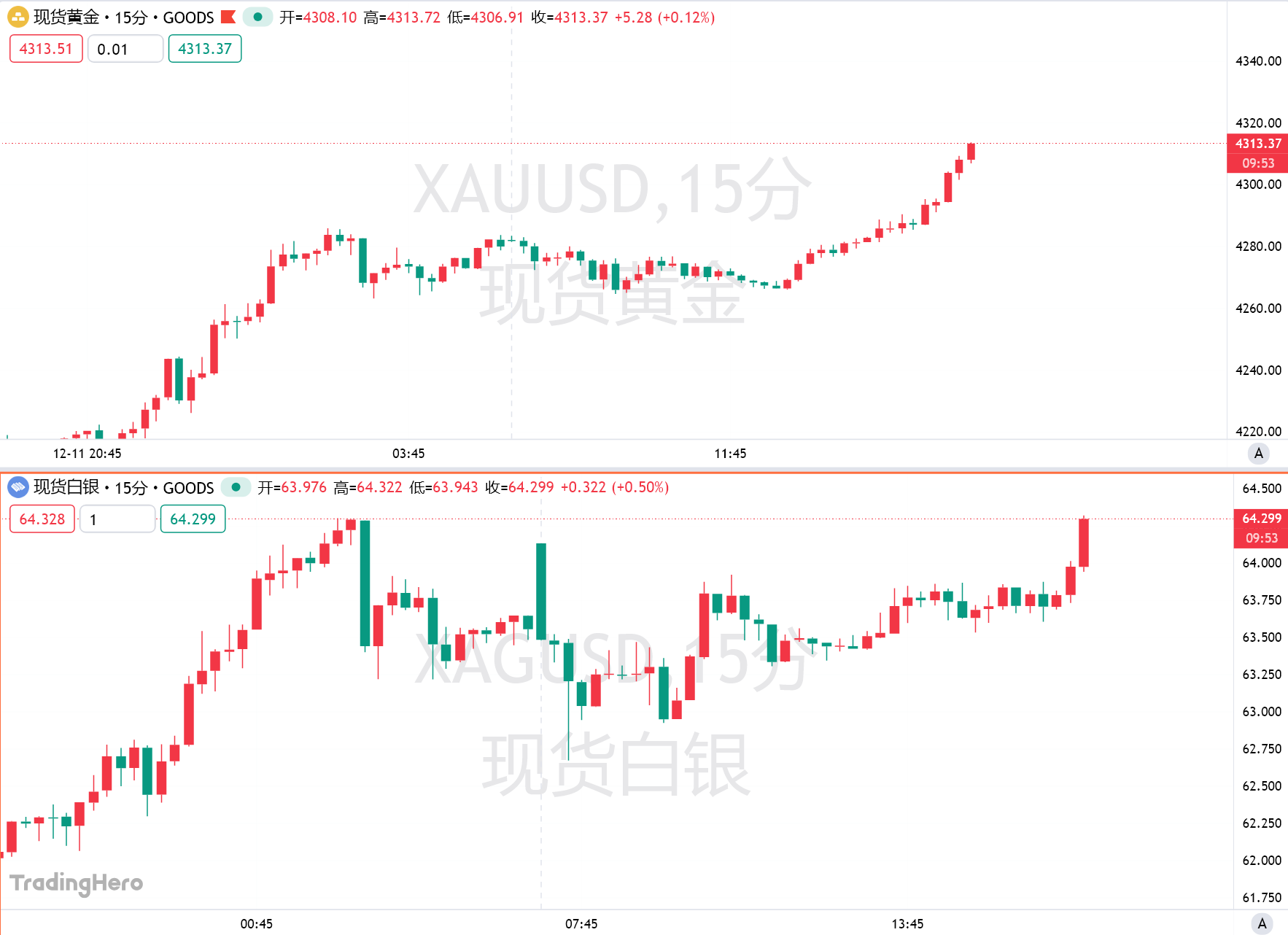
Gold surpasses the $4,310 mark—Is the "bull frenzy" returning?
Boosted by expectations of further easing from the Federal Reserve, gold has risen for four consecutive days. Technical indicators show strong bullish signals, but there remains one more hurdle before reaching a new all-time high.
Trend Research: Why Are We Still Bullish on ETH?
Against the backdrop of relatively accommodative expectations in both China and the US, which suppress asset downside volatility, and with extreme fear and capital sentiment not yet fully recovered, ETH remains in a favorable "buy zone."

Trending news
MoreCrypto prices
More





