
Staking the Claim: Solana ETFs Connect DeFi with Traditional Finance
- SEC nears decision on Solana ETFs, with 90% approval probability by October 2025. - Major firms like Fidelity and Grayscale added staking features to align with updated regulatory frameworks. - Accelerated 75-day approval timelines and institutional demand for yield-driven crypto products highlight market readiness. - Staking integration bridges DeFi and TradFi, enabling passive income alongside price exposure for investors. - Potential approval could catalyze Ethereum ETFs and reshape institutional cryp

The U.S. Securities and Exchange Commission (SEC) is approaching a verdict on spot
The updated S-1 documents from these companies show a unified approach to addressing the SEC’s earlier concerns, such as asset custody and validator centralization. For example, Fidelity’s proposal details specific staking methods to produce yield, while Grayscale aims to transform its current Solana Trust into an ETF. Some amendments, labeled as “Amendment No. 4,” indicate ongoing discussions between the SEC and issuers, with regulators requesting further information as soon as August 2025 title3 [ 3 ]. Industry observers, including ETF Store president Nate Geraci, believe approvals could come within two weeks, pointing to the SEC’s recent fast-tracking of Ethereum-related ETFs and the coordinated efforts of applicants title4 [ 4 ].
The regulatory landscape has evolved considerably, as the SEC’s adoption of “generic listing standards” for commodity ETFs has lowered entry barriers. This shift has accelerated the review of Solana ETF proposals, providing a clearer and faster path to approval compared to earlier crypto ETF attempts. The SEC’s new openness to staking as a feature within ETFs marks a significant change from its previous reservations about reward classification and asset custody. Incorporating staking into ETFs bridges the gap between decentralized finance (DeFi) and traditional finance (TradFi), giving investors both market exposure and passive income opportunities title5 [ 5 ].
Market trends further reinforce the likelihood of approval. Solana’s value has climbed 30% in 2024, and early Solana ETF offerings, like REX-Osprey’s staking fund, have attracted over $300 million in managed assets. In Europe, Bitwise’s staking ETP drew $60 million in investments within just five days, highlighting strong global interest. Analysts note that Solana’s high throughput (65,000 transactions per second) and its widespread use in DeFi and NFTs make it appealing for institutional investors title6 [ 6 ]. Should these ETFs gain approval, they could make Solana more accessible to both individual and institutional investors, while also boosting liquidity and improving price discovery.
The possible green light for Solana ETFs could have far-reaching effects on the broader crypto market. It may encourage similar filings for Ethereum and other proof-of-stake blockchains, changing how investors interact with digital assets. The SEC’s acceptance of staking as a valid investment component could open the door to more yield-focused products across various networks, supporting a more developed institutional market. Nonetheless, challenges persist, such as regulatory debates over whether Solana should be classified as a commodity or a security, and the need for secure custody solutions. Despite these obstacles, the growing momentum behind Solana ETFs signals a wider recognition of crypto assets as a core part of mainstream finance title7 [ 7 ].
Disclaimer: The content of this article solely reflects the author's opinion and does not represent the platform in any capacity. This article is not intended to serve as a reference for making investment decisions.
You may also like
Privacy Coins and Market Fluctuations: Uncovering the Factors Behind ZEC's Latest Price Jump
- Zcash (ZEC) surged 700% in late 2025 driven by institutional backing and network upgrades like the Zashi wallet. - Regulatory pressures and market fragmentation intensified as exchanges delisted privacy coins and liquidity shifted to decentralized platforms. - ZEC's volatility reflects macroeconomic tailwinds and speculative demand, but its long-term viability hinges on balancing privacy with regulatory compliance. - Institutional adoption of privacy coins accelerated in 2025, yet fragmented markets and
Why Dash (DASH) Is Soaring as Institutions Embrace It and Privacy Concerns Fuel Demand
- Dash (DASH) surged 150% in June 2025, driven by institutional adoption and privacy-focused demand. - Institutional ownership reached 90.64% after AGF Management's $7.79M investment and DoorDash's $450M partnership. - Dash Platform 2.0 enhanced scalability while PrivateSend usage grew 25% YoY amid rising privacy needs. - Regulatory challenges persist under EU MiCA and SEC scrutiny, prompting multi-jurisdictional compliance strategies. - DeFi integration and Latin American adoption expanded DASH's utility
ZK Atlas Upgrade: Pioneering the Future of Blockchain Infrastructure for Enhanced DeFi Scalability
- ZKsync's 2025 Atlas Upgrade revolutionizes DeFi scalability via zero-knowledge rollups, boosting transaction throughput to 43,000 TPS and slashing costs to $0.0001 per transfer. - Modular architecture with Atlas Sequencer and Airbender Prover enables real-time execution, while zkSync OS supports EVM/WASM compatibility and cross-chain liquidity unification. - Post-upgrade DeFi metrics show 300% transaction volume growth and $0.28–$1.32 ZK token price projections, positioning ZKsync as a key Layer 2 infras

Bloomberg: Power Theft Exceeds $1 Billion as Malaysia Bitcoin Mining Rigs Overwhelm
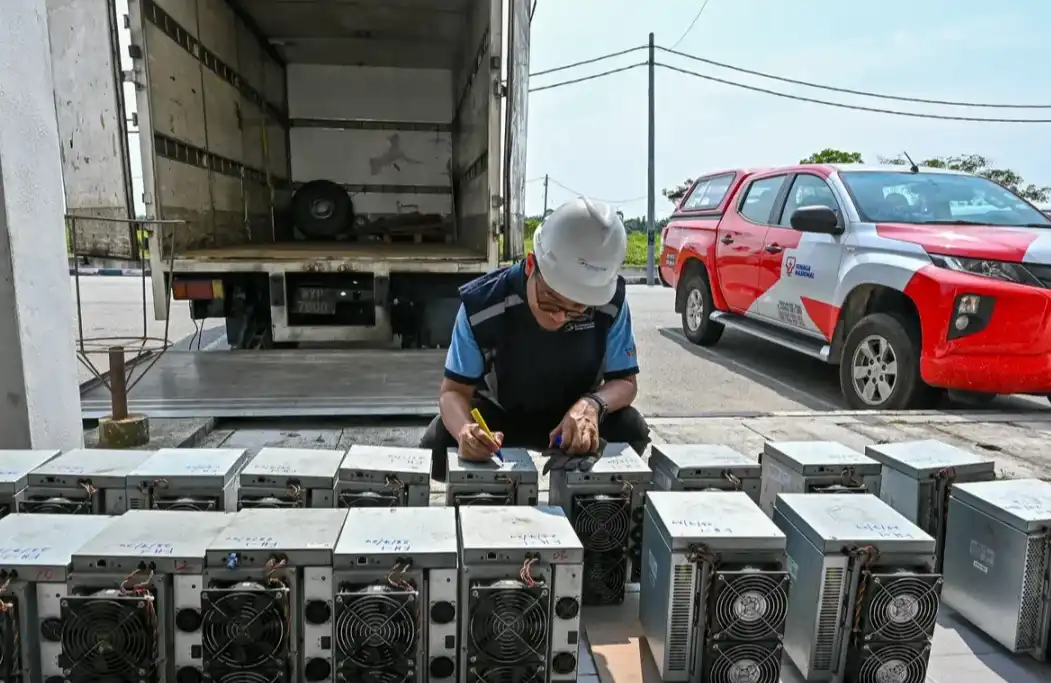
Malaysia has uncovered approximately 14,000 illegal cryptocurrency mining sites in the past five years, causing the state-owned power company losses of over $1.1 billion. In response, the local government established a special committee in November 2025 to consider a total ban on mining,
Trending news
MoreCrypto prices
More





