
Altcoins Face Challenges: Regulatory Issues and Liquidity Constraints Hamper Uptober Progress
- Altcoins struggle during Uptober despite $1.7B Bitcoin ETF inflows, as liquidity constraints and regulatory shifts dampen momentum. - Mutuum Finance (MUTM) faces liquidity bottlenecks despite $16.23M raised in its presale, with rising token prices deterring early adopters and regulatory scrutiny over its lending model. - U.S. GENIUS Act and EU MiCA framework increase compliance costs for altcoins, pushing innovation to jurisdictions like Singapore and UAE. - Delayed CLARITY Act creates legal ambiguity, d

Despite the buzz around Uptober, altcoins have remained largely stagnant as traders contend with shrinking liquidity and shifting regulatory conditions. Although
Recent regulatory shifts in the U.S. and EU have added more uncertainty for altcoins. The U.S. enacted the GENIUS Act in July 2025, introducing strict reserve rules for stablecoins and barring the Federal Reserve from launching a CBDC without Congress’s approval. Meanwhile, the EU’s Markets in Crypto-Assets (MiCA) regulation, fully in effect since late 2024, requires crypto service providers to obtain licenses, ensure transparency, and maintain capital reserves. These rules, intended to reduce systemic risks and fraud, have increased compliance burdens for smaller projects, prompting some to relocate to more accommodating regions like Singapore and the UAE.
Investors are also cautious about the CLARITY Act, which aims to define the regulatory boundaries between the SEC and CFTC but remains stalled in the Senate. The lack of progress has left legal uncertainties, discouraging institutional investment in altcoins. At the same time, the U.S. Treasury’s resistance to a retail CBDC and its advocacy for a Bitcoin strategic reserve reflect a dual approach: encouraging crypto adoption while enforcing measures to prevent excessive speculation.
Analysts believe that for altcoins to rebound, both liquidity and regulatory issues must be addressed. For projects like MUTM, success depends on proving real-world value—such as through its Layer-2 lending system and staking incentives—while adapting to stricter compliance standards. Still, the overall market remains hesitant. With
Disclaimer: The content of this article solely reflects the author's opinion and does not represent the platform in any capacity. This article is not intended to serve as a reference for making investment decisions.
You may also like
Inside the rise of institutional tokenization: key insights from Brickken’s AMA

The Revival of Industrial Properties in Webster, NY After the Xerox Era
- Webster , NY, is transforming its former Xerox campus into a high-tech industrial hub via a $9.8M FAST NY grant and private investments. - Infrastructure upgrades, including road realignment and sewer expansion, aim to create 250+ jobs and attract firms like fairlife® by 2026. - Residential property values rose 10.1% annually, while zoning reforms reduced industrial vacancy to 2%, showcasing infrastructure-driven economic synergy. - The project aligns with R.W. McNeel’s principles of long-term value crea

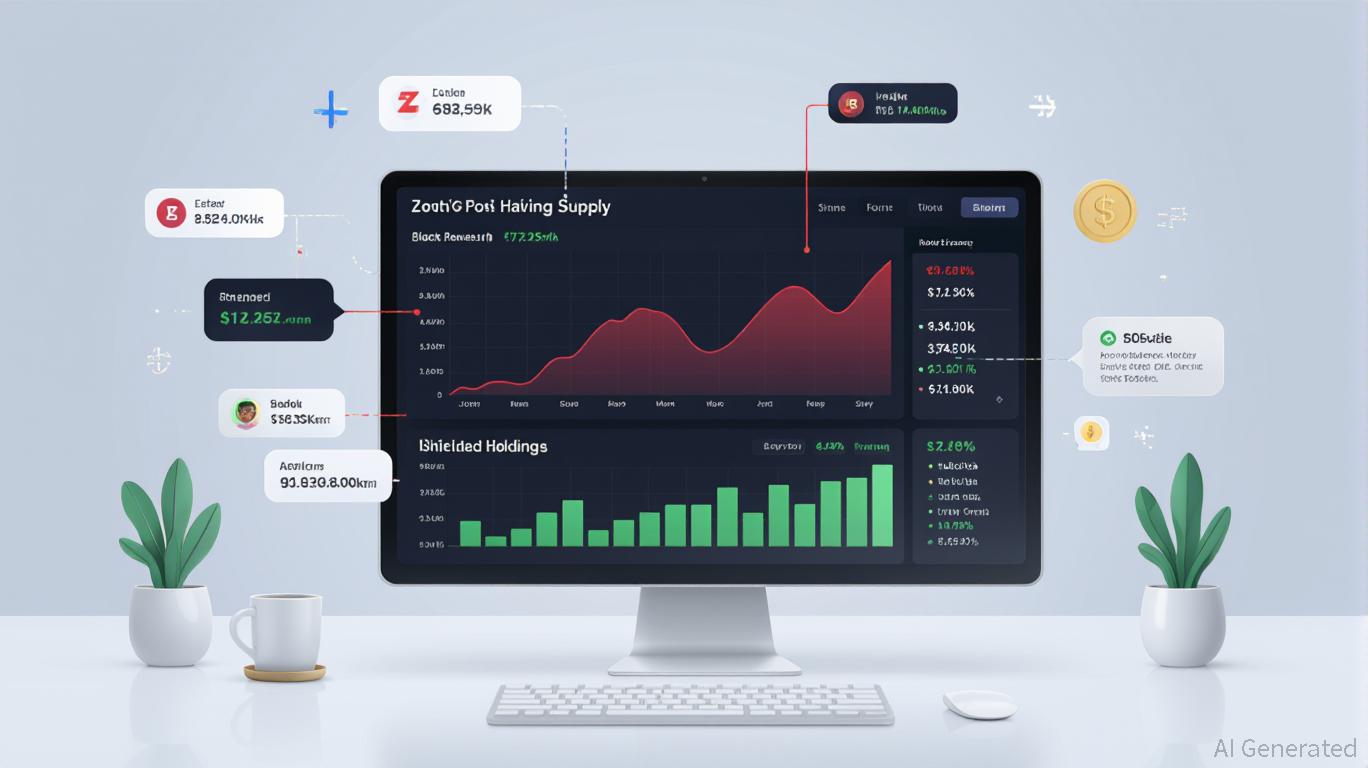
Zcash Halving and Its Effects on Cryptocurrency Value: Understanding Market Sentiment and Supply Changes After the Halving
- Zcash's 2025 halving cut block rewards to 0.78125 ZEC, triggering a 700% price surge driven by FOMO and institutional adoption. - Institutional investments like Grayscale's $137M Zcash Trust and regulatory clarity via the U.S. Clarity Act boosted its legitimacy as a privacy-focused asset. - Shielded pools (27-30% of ZEC) and the Blossom upgrade's 75-second block time enhance scarcity, but miner selling pressure risks short-term volatility. - Zcash's long-term potential hinges on balancing privacy utility
The Federal Reserve's Change in Policy and Its Unexpected Effect on Solana's Rise
- Federal Reserve's 2025 rate cut and QT end injected $72.35B liquidity, briefly boosting Solana by 3.01%. - October 2025's $19B liquidation and government shutdown exposed crypto liquidity fragility, eroding investor confidence. - Solana's 6.1% price drop and 4.7% TVL decline in November 2025 highlighted macroeconomic policy's volatile impact on crypto markets. - Upcoming December FOMC meeting (87% rate cut chance) could reignite risk appetite or trigger corrections, mirroring October's 20% price drop. -
Trending news
MoreCrypto prices
More





