
ZachXBT: North Korean IT workers responsible for over 25 cyber attacks in crypto

On-chain sleuth ZachXBT claims that North Korean IT workers are responsible for at least 25 incidents of hacking and ransomware exploitations related to companies in the crypto industry.
- ZachXBT claims that at least 25 attacks and exploitation incidents in the crypto sphere have been linked to North Korean IT workers.
- Many U.S. crypto firms have been warned against hiring North Korean IT workers who may be trying to gain insider access.
In a post responding to Amjad Masad, CEO of AI coding platform Replit, blockchain investigator ZachXBT highlighted how North Korean IT workers have been responsible for a large number of crypto-related hacks and extortion schemes involving crypto firms.
On Sept. 25, Masad shared a video on X showing how North Korean remote workers, more often in the field of IT, used AI filters and interview cheat tools in order to get jobs in major U.S. crypto firms.
“Just learning that North Korea flooded US market with remote IT workers, not to infiltrate or spy, but to make money for the DPRK! They use AI filters and AI interview cheating tools to get jobs,” said Masad in his latest post.
ZachXBT disagreed with Masad, stating that these efforts were not harmless. A lot of North Korean IT workers that use AI to cheat interviews to get into U.S crypto companies could also be doing so with nefarious purposes in mind.
” “Not to infiltrate,” This is actually a common misconception. At minimum there’s 25+ instances of DPRK ITWs hacking or extorting teams for funds,” said ZachXBT.
To reinforce his point, the web3 sleuth shared past research that showed multiple crypto projects have fallen victim to attacks by North Korean hacking groups that infiltrated the firm from the inside. Based on his research, there have been at least 25 cybersecurity attacks and ransomware infiltrations in the crypto industry linked to North Korean remote workers.
“Granted all of those companies were related to crypto,” he added.
ZachXBT claims North Korean IT workers mostly use USDC
This is not the first time ZachXBT warned crypto firms against North Korean IT workers. Last July, the crypto sleuth highlighted the fact that North DPRK hackers have reportedly been using USDC ( USDC ) to funnel millions of funds in illicit payments. The allegations surfaced as Circle filed for a national trust bank charter, which would grant it authority to manage the reserves behind USD Coin.
The on-chain analyst criticized Circle’s approach, arguing the company has failed to address the issue despite the scale and transparency of the transactions. He claimed that the stablecoin issuer has failed to take action to detect or freeze the activity.
As more and more crypto firms and employees start to fall victim to hacks initiated by North Korean actors, more crypto figureheads have been warning the community against hiring remote workers from North Korea.
Most recently, former Binance head Changpeng “CZ” Zhao warned the crypto community of North Korean hackers disguising themselves as prospective employees in order to infiltrate top crypto companies.
One tactic he highlighted was the use of fake job applications, where operatives would pose as candidates for roles at crypto firms, specifically roles related to development, security, and finance, in order to gain insider access.
Another strategy he warned about was how they would often masquerade as recruiters, approaching existing employees under the guise of representing rival companies. According to CZ, during early interview stages these actors frequently claim there is a technical issue with Zoom, then they would ask potential victims to download a malicious “update” via a shared link.
Disclaimer: The content of this article solely reflects the author's opinion and does not represent the platform in any capacity. This article is not intended to serve as a reference for making investment decisions.
You may also like
Blockchain’s $6.8 Billion Bet: Will Advancements Outpace Its Security Risks?
- Terminal Finance's collapse exposed blockchain fintech vulnerabilities from delayed tech adoption and security flaws, triggering sector-wide scrutiny. - Naver-Upbit's $6.8B AI-blockchain merger faces challenges after Upbit's $36M Solana breach, mirroring 2019 North Korean-linked attacks. - Balancer's $116M hack revealed systemic DeFi risks, with debates over audit efficacy despite 11 prior security reviews. - Binance's legal troubles and BNB's price slump highlight market skepticism, while initiatives li
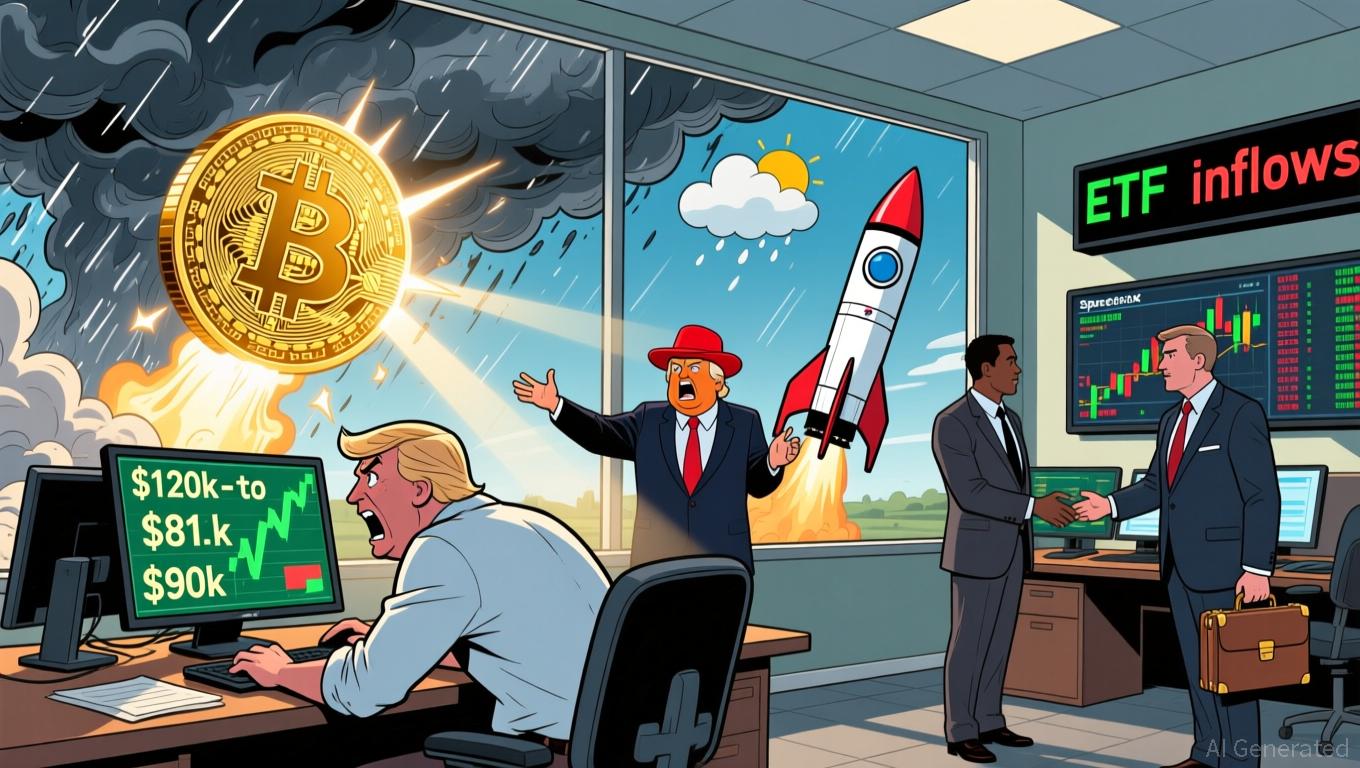
Bitcoin News Update: Krugman Links Bitcoin's Decline to Waning 'Trump Trade' Hype
- Bitcoin's 30% drop from October peak linked to fading "Trump trade" speculation, per Nobel laureate Paul Krugman, who frames it as speculative rather than stable value. - BlackRock's IBIT ETF regained $3.2B profit post-$90K rebound, while SpaceX's $105M BTC transfer sparks custodial strategy debates amid market volatility. - Naver's $10B Dunamu acquisition and corporate Bitcoin treasury moves highlight institutional crypto integration, despite $19B industry selloff and regulatory challenges. - Prediction
Bitcoin News Today: "Conflicting Whale Strategies Cast Uncertainty on Bitcoin's Path to $100K"
- Bitcoin's drop below $100,000 coincided with mixed whale strategies, including accumulation, shorting, and exchange deposits, signaling uncertain market direction. - Ethereum whales used 16.08 million DAI to buy 5,343 ETH at $3,010, while Bitcoin whales deposited 9,000 BTC, potentially signaling selling preparation. - Derivatives markets showed conflicting bets, with a $91M BTC short and $36.4M long flip, while ETF inflows ($84M total) hinted at institutional confidence amid macroeconomic risks. - Analys

Exchanges Call on SEC: Deny Exemptions to Maintain Fairness in the Market
- WFE warns SEC against broad crypto exemptions for tokenized stocks, citing risks to investor protections and market integrity. - Tokenized stocks lack dividend rights, voting access, and custody frameworks, creating "mimicked products" with weaker safeguards. - SEC's sandbox-style exemptions risk regulatory arbitrage, allowing crypto platforms to bypass rules enforced on traditional exchanges. - Global bodies like IOSCO warn tokenization amplifies data integrity and custody risks, urging unified standard
Trending news
MoreCrypto prices
More





