
Circle eyes deeper ties with Hyperliquid through potential native USDC launch

Stablecoin issuer Circle appears set to deepen its role in decentralized finance by preparing a native launch of USD Coin (USDC) on Hyperliquid’s Layer 1 chain, HyperEVM.
On Sept. 12, blockchain researcher MLM Blockchain flagged test transactions involving USDC on HyperEVM’s mainnet, suggesting that a native deployment could roll out in the coming weeks.
Adding to speculation, the same wallet connected to Circle recently acquired about $5 million worth of Hyperliquid’s HYPE token.
The purchase reinforced the view that Circle is positioning itself more deeply in the Hyperliquid ecosystem. If the launch goes live, HyperEVM would join 24 other networks that already support USDC, including Ethereum, Solana, and the XRP Ledger.
Circle’s USDC is the second-largest stablecoin in the industry, with a market capitalization of more than $72 billion. Hyperliquid, on the other hand, is the dominant decentralized perpetual exchange, controlling more than 60% of the market.
USDC situation on Hyperliquid
The potential launch follows a public statement from Circle CEO Jeremy Allaire, who wrote that the company intends to be “a major player and contributor” within the Hyperliquid ecosystem.
According to him:
“We are coming to the HYPE ecosystem in a big way. We intend to be a major player and contributor to the ecosystem. Happy to see others purchase new USD tickers and compete Hyper fast native USDC with deep and nearly instant cross chain interoperability will be well received.”
Yet Circle’s push comes as Hyperliquid prepares to introduce its native stablecoin, USDH. That project has drawn attention from major players such as Native Market, Paxos, OpenEden, and Agora, signaling a real challenge to Circle’s position.
Over the past year, Hyperliquid has relied heavily on Circle’s stablecoin to power its markets, with around $5.773 billion in USDC supply on the platform. That concentration means Hyperliquid accounts for roughly 8% of all USDC in circulation, making it one of Circle’s most dominant chains, according to DeFiLlama data.
So, should liquidity migrate to USDH, Circle could lose as much as $200 million in annual revenue, which might impact its business.
The post Circle eyes deeper ties with Hyperliquid through potential native USDC launch appeared first on CryptoSlate.
Disclaimer: The content of this article solely reflects the author's opinion and does not represent the platform in any capacity. This article is not intended to serve as a reference for making investment decisions.
You may also like
Research Report|In-Depth Analysis and Market Cap of Talus (US)

Five charts to help you understand: Where does the market go after each policy storm?
After this regulatory crackdown, is it a harbinger of an impending downturn, or the beginning of a new cycle where all negative news has been fully priced in? Let’s examine the trajectory after the storm through five key policy milestones.

Mars Morning News | The crypto market rebounds across the board, Bitcoin rises above $94,500; The "CLARITY Act" draft is expected to be released this week
The crypto market has fully rebounded, with bitcoin surpassing $94,500 and US crypto-related stocks rising across the board. The US Congress is advancing the CLARITY Act to regulate cryptocurrencies. The SEC chairman stated that many ICOs are not securities transactions. Whales are holding a large number of profitable ETH long positions. Summary generated by Mars AI. The accuracy and completeness of the content generated by the Mars AI model is still being iteratively updated.

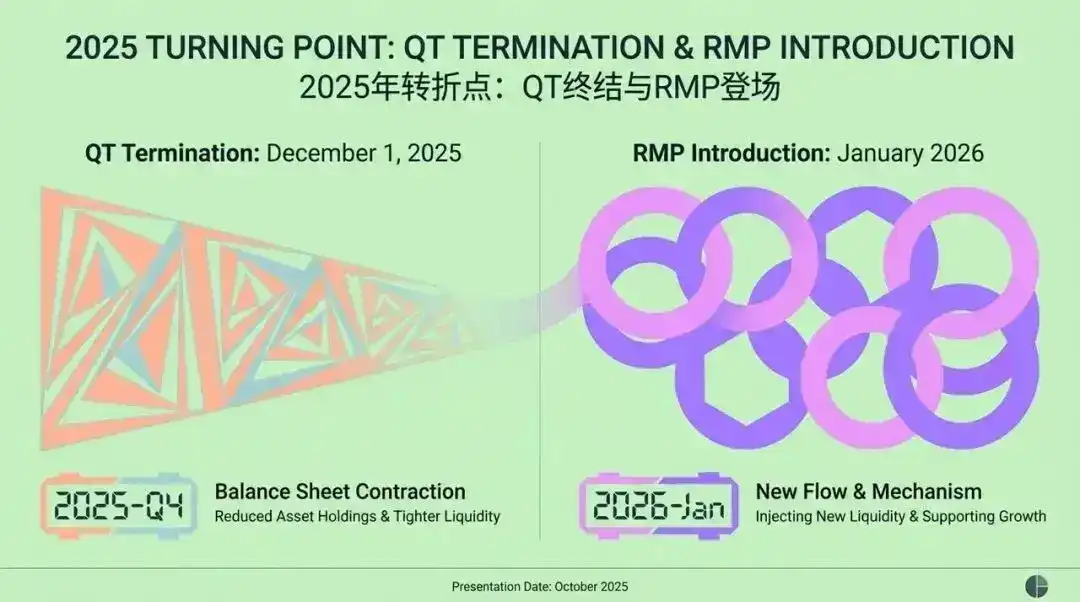
Federal Reserve’s Major Shift: From QT to RMP, How Will the Market Transform by 2026?
The article discusses the background, mechanism, and impact on financial markets of the Federal Reserve's introduction of the Reserve Management Purchases (RMP) strategy after ending Quantitative Tightening (QT) in 2025. RMP is regarded as a technical operation aimed at maintaining liquidity in the financial system, but the market interprets it as a covert easing policy. The article analyzes RMP's potential effects on risk assets, the regulatory framework, and fiscal policy, and provides strategic recommendations for institutional investors. Summary generated by Mars AI This summary was generated by the Mars AI model, and the accuracy and completeness of its content are still in the process of iterative improvement.
Trending news
MoreCrypto prices
More





