
The Evolution of Cross-Chain Engineering: From "Aggregated Bridges" to "Atomic Interoperability", What Kind of Future Are We Heading Towards?

Chainfeeds Guide:
How Web3 is evolving from a single "cross-chain bridge" to the ultimate goal of "seamless interoperability".
Source:
Author:
Bulu
Opinion:
Bulu: The Ethereum ecosystem has now entered an unprecedented multi-chain era. According to L2BEAT data, there are currently nearly a hundred L2s on Ethereum, not including other independent L1 public chains. For ordinary users, most have only used a small fraction of these chains, yet liquidity is severely fragmented. Funds that were originally concentrated on Ethereum have been split into isolated value islands, and the experience of transferring assets between different networks is as complex as international travel. Cross-chain operations require consideration of bridging time, gas consumption, cross-chain fees, as well as slippage and path uncertainty, which greatly increases the operational threshold. Therefore, just as DEX aggregators have become essential in the trading track, cross-chain bridge aggregators have also emerged. Their function is to automatically calculate the optimal path for users, simplifying cumbersome multi-step operations into one-click cross-chain + swap. For example, converting DAI from Arbitrum to ETH on Optimism—users only need to enter the starting and ending points, and the aggregator can automatically complete the cross-chain and swap. This marks the transition of the cross-chain experience from manual to automatic, greatly lowering the usage barrier and becoming an important evolutionary direction in the current cross-chain track. The core value of cross-chain aggregators lies in serving as an intelligent navigation system for users. They automatically compare all feasible paths and rank them based on three dimensions: maximizing output of target chain assets, minimizing gas costs, and shortest time, helping users quickly make the optimal choice. In traditional cross-chain paths, users might need to first use 1inch on Arbitrum to swap DAI for ETH, then transfer cross-chain to Optimism; or first transfer DAI cross-chain, then swap for ETH on Optimism. These operational logics are similar, but all require users to weigh trade amount, slippage, liquidity, and speed themselves. Cross-chain aggregators, however, hide all the complexity in the background, allowing users to complete fund transfers with a single confirmation. Beyond this, the cross-chain field is also exploring more fundamental technical paths, including message layer interoperability (such as LayerZero, IBC), state layer synchronization, and zero-knowledge cross-chain. All these solutions aim to break down the walls between chains and enable true "seamless interconnection" in the blockchain world. The Ethereum Foundation has also listed improving user experience and strengthening interoperability as one of its core strategies in recent Protocol Updates, aiming to make the cross-chain experience in the Ethereum ecosystem nearly imperceptible. In the developer community, two new approaches have recently attracted much attention. The first is the SCOPE protocol proposed by Ethereum researchers, aiming to rebuild synchronous composability and enable atomic interactions between L1 and L2. In the future, users may be able to call Aave on Arbitrum and Uniswap on Optimism in a single transaction—either all succeed or all fail—avoiding gas waste and intermediate state risks, unlocking complex strategies such as cross-L2 flash loans and one-click liquidation. The second approach is to use zero-knowledge proofs (ZK Proof) to enhance cross-chain verification security, replacing trust in validator nodes with mathematics. ZK solutions can quickly verify source chain events on the target chain, reducing trust costs. Some engineering approaches also attempt to combine TEE and AVS to balance speed and security, introducing ZK as a fallback when necessary. Overall, the cross-chain experience is evolving towards being faster, safer, and more invisible: users no longer need to care about the underlying protocol names, only experiencing second-level completion, mathematical guarantees, and seamless switching. This is precisely the ultimate vision for cross-chain—enabling users to focus on the value flow itself, rather than the barriers between chains.
Source of ContentDisclaimer: The content of this article solely reflects the author's opinion and does not represent the platform in any capacity. This article is not intended to serve as a reference for making investment decisions.
You may also like
A decade-long tug-of-war ends: "Crypto Market Structure Bill" sprints to the Senate
At the Blockchain Association Policy Summit, U.S. Senators Gillibrand and Lummis stated that the "Crypto Market Structure Bill" is expected to have its draft released by the end of this week, with revisions and hearings scheduled for next week. The bill aims to establish clear boundaries for digital assets by adopting a classification-based regulatory framework, clearly distinguishing between digital commodities and digital securities, and providing a pathway for exemptions for mature blockchains to ensure that regulation does not stifle technological progress. The bill also requires digital commodity trading platforms to register with the CFTC and establishes a joint advisory committee to prevent regulatory gaps or overlapping oversight. Summary generated by Mars AI. The accuracy and completeness of this summary, generated by the Mars AI model, is still being iteratively updated.

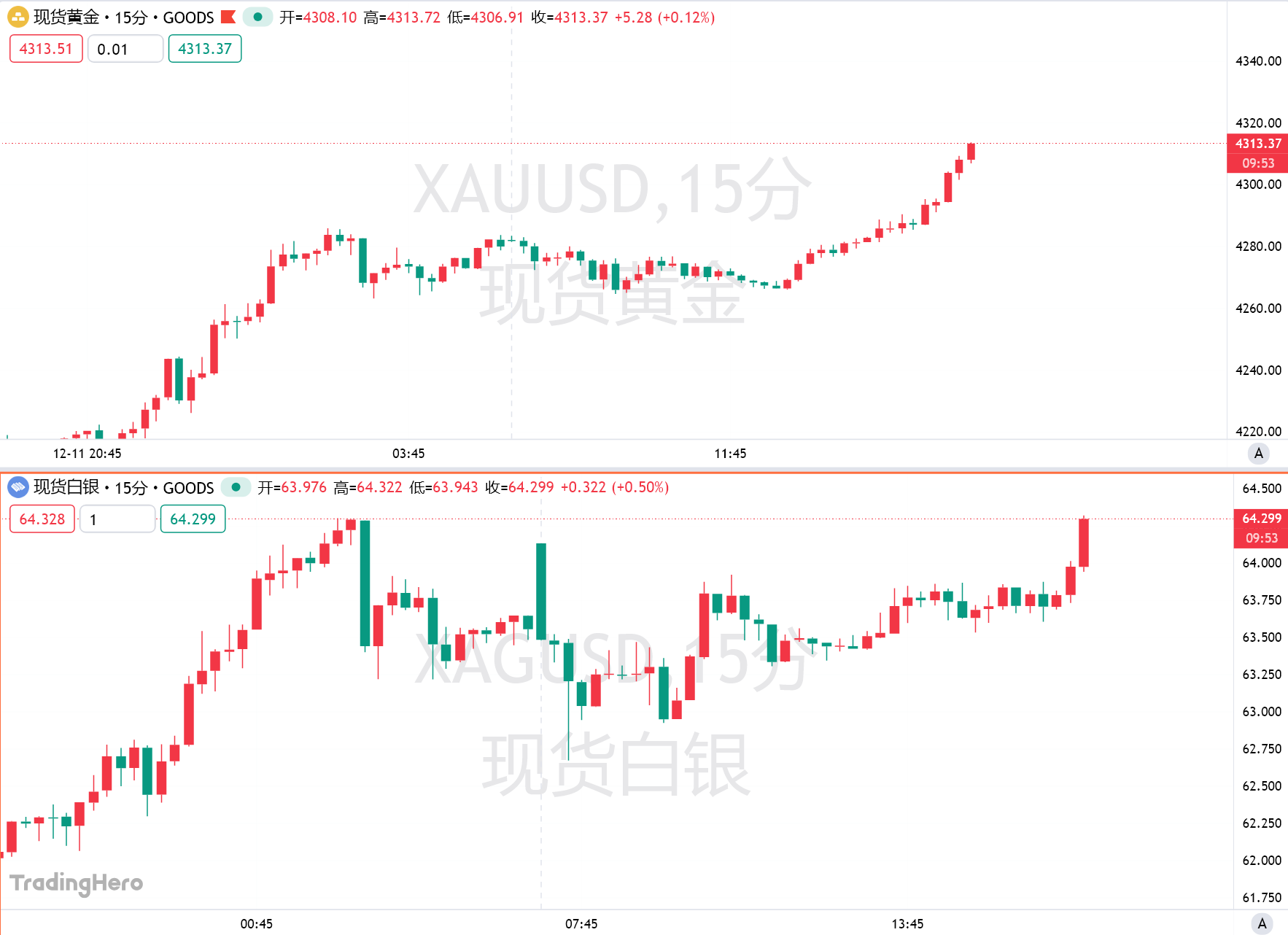
Gold surpasses the $4,310 mark—Is the "bull frenzy" returning?
Boosted by expectations of further easing from the Federal Reserve, gold has risen for four consecutive days. Technical indicators show strong bullish signals, but there remains one more hurdle before reaching a new all-time high.
Trend Research: Why Are We Still Bullish on ETH?
Against the backdrop of relatively accommodative expectations in both China and the US, which suppress asset downside volatility, and with extreme fear and capital sentiment not yet fully recovered, ETH remains in a favorable "buy zone."

Trending news
MoreCrypto prices
More





