
Tether’s Strategic Expansion of USDT on Bitcoin and RGB: A Catalyst for Bitcoin’s Evolution as a Transaction Layer
- Tether integrates USDT stablecoin on Bitcoin via RGB protocol, transforming it into a scalable, privacy-preserving transaction layer. - RGB protocol enables confidential asset issuance on Bitcoin without altering its core infrastructure, enhancing speed and privacy through off-chain data storage. - Tether's $4.9B Q2 2025 profit fuels infrastructure development, diversifying USDT's ecosystem beyond Ethereum to mitigate regulatory risks. - This shift accelerates Bitcoin's adoption as a payment rail, enabli
Bitcoin’s journey from a speculative asset to a foundational layer for global finance has long been constrained by its role as a store of value. Yet, recent developments—particularly Tether’s integration of its USDT stablecoin onto the Bitcoin network via the RGB protocol—signal a pivotal shift. This move transforms Bitcoin into a scalable, privacy-preserving transaction layer, addressing its historical limitations while accelerating institutional adoption.
The RGB protocol, a second-layer solution, enables confidential, user-controlled asset issuance on Bitcoin without altering its core infrastructure. By anchoring ownership proofs to the Bitcoin blockchain while storing sensitive data off-chain, RGB reduces congestion and enhances transaction speed and privacy. Tether’s deployment of USDT on this framework allows users to transact, hold, and send stablecoins alongside Bitcoin in the same wallet, effectively merging the functionalities of a reserve asset with a payment system. This integration leverages Bitcoin’s security and global reach to facilitate low-cost, instant payments via the Lightning Network, a critical step toward mainstream adoption.
Tether’s strategic move is underpinned by its financial strength. The company’s $4.9 billion Q2 2025 profit underscores its capacity to drive infrastructure development, including RGB-compatible wallets and cross-chain bridges. By diversifying USDT’s infrastructure beyond Ethereum and other centralized chains, Tether mitigates regulatory risks and aligns with broader industry trends favoring decentralized, interoperable systems. This shift also positions Bitcoin as a cross-chain bridge, enabling seamless value transfer between ecosystems while reinforcing its role as a “freer financial future” platform.
Institutional adoption is further catalyzed by Bitcoin’s evolving utility. The Lightning Network, which already processes 47% of Bitcoin’s on-chain transactions daily, gains a complementary stablecoin layer through USDT’s integration. This synergy addresses Bitcoin’s volatility while preserving its censorship-resistant properties, making it attractive for remittances, microtransactions, and institutional portfolios. For example, emerging markets with underdeveloped banking infrastructure could leverage USDT on Bitcoin to bypass traditional financial intermediaries, fostering financial inclusion.
Critics argue that RGB’s early-stage wallet development and regulatory scrutiny pose challenges. However, Tether’s dominance in the stablecoin market—USDT’s $86 billion market cap—provides a strong incentive for ecosystem actors to build compatible tools. The company’s CEO, Paolo Ardoino, has emphasized that this expansion is not merely technical but philosophical: it redefines Bitcoin as a platform for decentralized finance, where users transact without intermediaries.
The implications for Bitcoin’s transaction layer are profound. By enabling native stablecoin operations, RGB transforms Bitcoin from a “digital gold” narrative into a functional, multi-layered infrastructure. This evolution mirrors Ethereum’s shift from a settlement layer to a programmable platform, albeit with Bitcoin’s unparalleled security and decentralization. As institutional investors increasingly view Bitcoin as both a reserve asset and a payment rail, Tether’s USDT on RGB could become a linchpin in this new financial architecture.
Source:
[1] Tether's USDT Expansion into Bitcoin Ecosystem via RGB Protocol
[2] Tether Brings USDT to Bitcoin via RGB Protocol
[3] Tether’s Q2 2025 Profit and Market Capitalization
[4] Tether to Launch $86B USD₮ on Bitcoin via RGB Protocol
[5] Tether’s Expansion of USDT to Bitcoin Network: A Catalyst
[6] Tether Announces Plan to Bring USD₮ to RGB
[7] Layer by Layer: An In-Depth Exploration of Bitcoin's
[8] Bitcoin Transaction Networks: An Overview of Recent Results
[9] Tether Brings USDT to Bitcoin with RGB Protocol
[10] Tether’s Q2 2025 Profit and Market Capitalization
Disclaimer: The content of this article solely reflects the author's opinion and does not represent the platform in any capacity. This article is not intended to serve as a reference for making investment decisions.
You may also like
A decade-long tug-of-war ends: "Crypto Market Structure Bill" sprints to the Senate
At the Blockchain Association Policy Summit, U.S. Senators Gillibrand and Lummis stated that the "Crypto Market Structure Bill" is expected to have its draft released by the end of this week, with revisions and hearings scheduled for next week. The bill aims to establish clear boundaries for digital assets by adopting a classification-based regulatory framework, clearly distinguishing between digital commodities and digital securities, and providing a pathway for exemptions for mature blockchains to ensure that regulation does not stifle technological progress. The bill also requires digital commodity trading platforms to register with the CFTC and establishes a joint advisory committee to prevent regulatory gaps or overlapping oversight. Summary generated by Mars AI. The accuracy and completeness of this summary, generated by the Mars AI model, is still being iteratively updated.
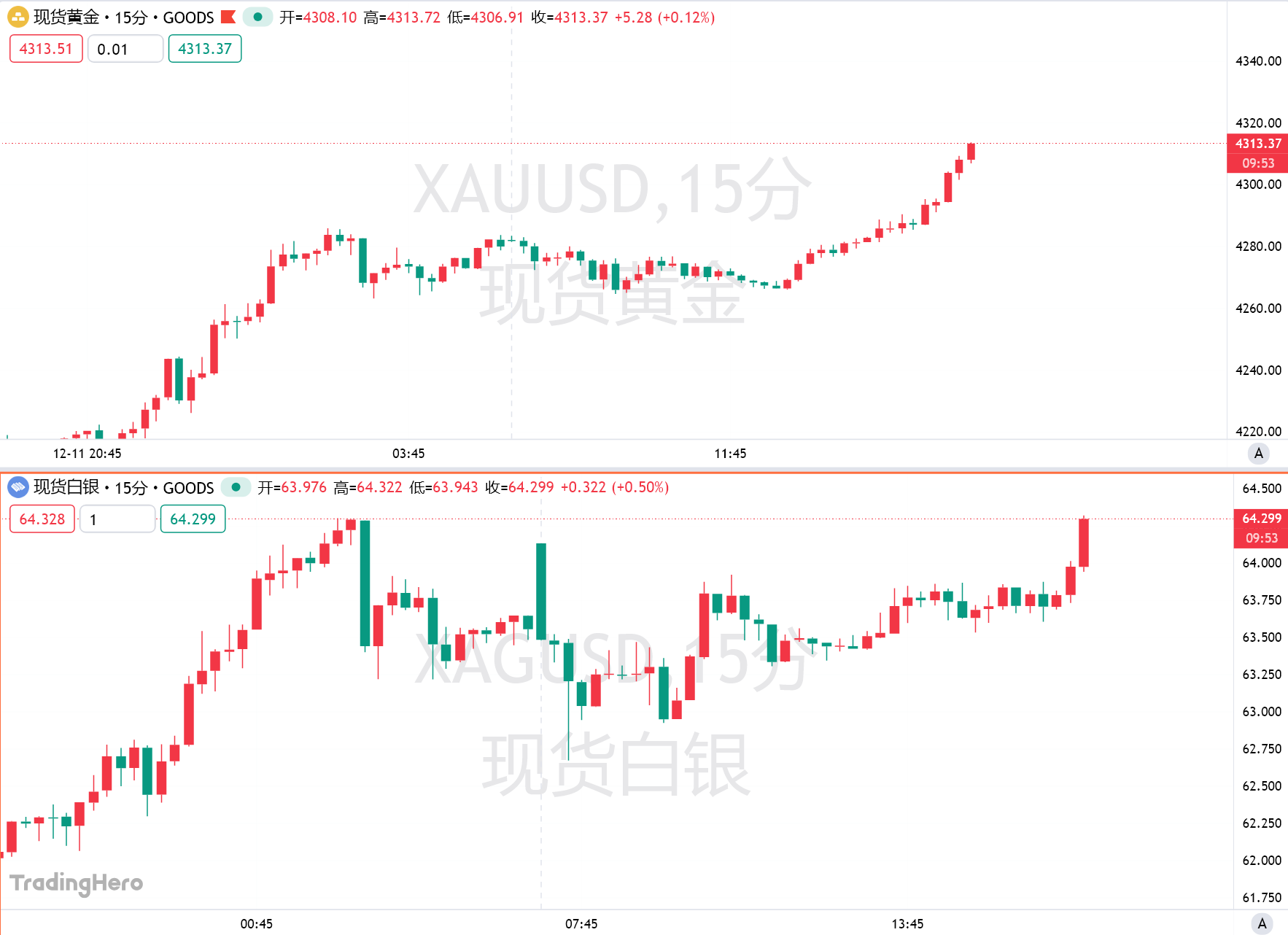
Gold surpasses the $4,310 mark—Is the "bull frenzy" returning?
Boosted by expectations of further easing from the Federal Reserve, gold has risen for four consecutive days. Technical indicators show strong bullish signals, but there remains one more hurdle before reaching a new all-time high.
Trend Research: Why Are We Still Bullish on ETH?
Against the backdrop of relatively accommodative expectations in both China and the US, which suppress asset downside volatility, and with extreme fear and capital sentiment not yet fully recovered, ETH remains in a favorable "buy zone."

Trending news
MoreCrypto prices
More





