
"Labubull Lacks Liquidity, Promises Too Much—Token6900 Offers Real Roadmap"
- Labubull ($LXB) raises red flags with no liquidity allocation, fake audits, and 80% APY staking promises, signaling potential rug pull risks. - Token6900 contrasts with transparent liquidity planning, verifiable audits, and realistic tokenomics, reducing scam indicators compared to Labubull. - Analysts warn investors to prioritize projects with clear governance and avoid hype-driven schemes like Labubull, which lacks intrinsic value and legal protections.
Labubull ($LXB), a cryptocurrency project marketed as a meme coin, has raised significant red flags among analysts and investors due to several unsustainable and potentially fraudulent practices. These concerns include the lack of liquidity allocation, email and whitelist harvesting, fake audit displays, and unrealistically high staking rewards. The project’s whitepaper also admits that the token has no intrinsic value, a stark contrast to the usual transparency expected in credible crypto initiatives. The absence of liquidity is particularly alarming, as it increases the risk of a rug pull—a scenario where developers drain liquidity pools and abandon the project, leaving investors with worthless tokens [1].
Whitelist signups are presented as a strategy to grow the community, yet the aggressive push for email collection appears to be more about data harvesting than genuine engagement. The project’s audit claims, which cite ongoing processes without producing verifiable reports, also raise doubts about its security and transparency. Meanwhile, the project’s website is criticized for its poor presentation, including spelling errors and misleading brand associations with major tech firms like Microsoft and AWS, none of which have any official ties to Labubull [1].
These issues position Labubull as a textbook example of a crypto scam, mirroring the classic playbook used in numerous rug pulls and honey pot schemes. The hype-driven marketing, unrealistic financial promises, and lack of tangible product or utility are all hallmarks of a speculative project that prioritizes short-term gains over long-term sustainability. Investors are warned that such projects are inherently risky and should be approached with caution [1].
In contrast, Token6900 has emerged as a project with a more transparent approach to liquidity and tokenomics. Unlike Labubull, Token6900 commits to allocating liquidity at launch, which significantly reduces the risk of a rug pull and ensures a fairer trading environment for investors. The project also presents a clearer breakdown of token supply, avoiding vague allocations that are common in scam projects. Additionally, Token6900 emphasizes verifiable audits and community-driven growth rather than relying on aggressive marketing tactics and unrealistic promises [1].
The key differentiator between Labubull and Token6900 lies in their approaches to transparency and sustainability. While Labubull hides liquidity details, inflates APYs, and harvests user data, Token6900 focuses on liquidity planning, realistic financial goals, and a more open roadmap. This distinction is critical for investors navigating the volatile meme coin market, where distinguishing between hype-driven traps and genuine opportunities can be challenging. Although Token6900 is not risk-free, it represents a more calculated attempt at building a sustainable crypto project compared to Labubull, which appears to be a scam waiting to unfold [1].
As the meme coin market continues to evolve, investors must remain vigilant and conduct due diligence on projects before committing capital. The comparison between Labubull and Token6900 underscores the importance of analyzing tokenomics, liquidity strategies, and governance structures in evaluating crypto projects. With the right research and caution, investors can better identify projects with strong fundamentals and avoid those with red flags that indicate potential fraud or failure [1].
Source:

Disclaimer: The content of this article solely reflects the author's opinion and does not represent the platform in any capacity. This article is not intended to serve as a reference for making investment decisions.
You may also like
Five charts to help you understand: Where does the market go after each policy storm?
After this regulatory crackdown, is it a harbinger of an impending downturn, or the beginning of a new cycle where all negative news has been fully priced in? Let’s examine the trajectory after the storm through five key policy milestones.

Mars Morning News | The crypto market rebounds across the board, Bitcoin rises above $94,500; The "CLARITY Act" draft is expected to be released this week
The crypto market has fully rebounded, with bitcoin surpassing $94,500 and US crypto-related stocks rising across the board. The US Congress is advancing the CLARITY Act to regulate cryptocurrencies. The SEC chairman stated that many ICOs are not securities transactions. Whales are holding a large number of profitable ETH long positions. Summary generated by Mars AI. The accuracy and completeness of the content generated by the Mars AI model is still being iteratively updated.

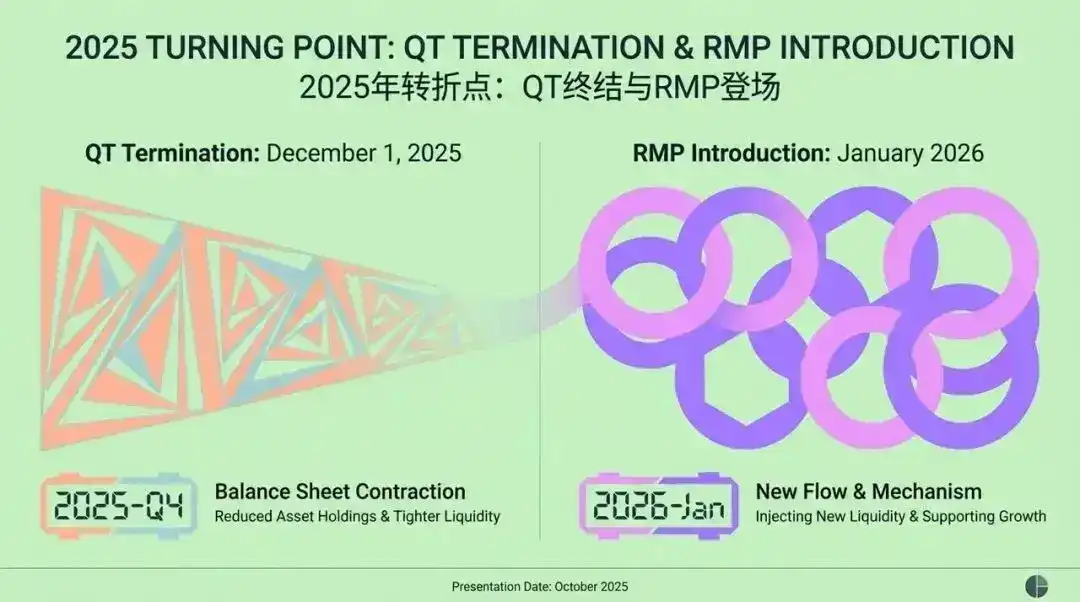
Federal Reserve’s Major Shift: From QT to RMP, How Will the Market Transform by 2026?
The article discusses the background, mechanism, and impact on financial markets of the Federal Reserve's introduction of the Reserve Management Purchases (RMP) strategy after ending Quantitative Tightening (QT) in 2025. RMP is regarded as a technical operation aimed at maintaining liquidity in the financial system, but the market interprets it as a covert easing policy. The article analyzes RMP's potential effects on risk assets, the regulatory framework, and fiscal policy, and provides strategic recommendations for institutional investors. Summary generated by Mars AI This summary was generated by the Mars AI model, and the accuracy and completeness of its content are still in the process of iterative improvement.
Rate Hike in Japan: Will Bitcoin Resist Better Than Expected?
Trending news
MoreCrypto prices
More





