
Flywheel tech startup ZOOZ secures $180M to launch its Bitcoin Reserve Strategy
Key Takeaways
- ZOOZ Power raised $180 million to implement a Bitcoin Reserve Strategy, becoming the first company dual-listed on Nasdaq and TASE to hold Bitcoin in its treasury.
- The majority of the new funds will be allocated to purchasing Bitcoin, strengthening ZOOZ's position as a treasury-focused innovator.
ZOOZ Power, an Israeli startup specializing in flywheel-based power boosters and energy management solutions, is raising $180 million in private investment to launch its Bitcoin Reserve Strategy, according to a Tuesday press release .
The company is set to become the first dual-listed company to hold Bitcoin as a core treasury asset. ZOOZ is currently listed on the Nasdaq exchange under the ticker symbol ZOOZ as well as on the Tel Aviv Stock Exchange (TASE) under the same ticker.
“We are positioning ourselves at the forefront of financial innovation while strengthening our financial resilience,” said Avi Cohen, Executive Chairman of ZOOZ, in a statement. “As the global financial infrastructure evolves, we believe in the transformative potential of digital assets as a growth opportunity. Incorporating Bitcoin into our treasury better aligns us with a digital future, and we believe that it will significantly enhance long-term shareholder value.”
As noted in the release, the private placement involves selling 180 million ordinary shares and pre-funded warrants at $1.00 per share to institutional investors, including Pantera Capital, FalconX, Arrington Capital, UTXO Management, ATW Partners, and Israeli investor Alex Rabinovitch.
Jordan Fried, a former founding team member of Hedera Hashgraph, will assume the role of Chief Executive Officer and Director on July 31. The company’s current CEO, Erez Zimerman, will continue to lead ZOOZ Power’s flywheel-based solutions division.
Fried said ZOOZ aims to become a dual-listed Bitcoin treasury pioneer, giving US and Israeli investors easier access. He said the company will use its listing advantages to scale Bitcoin holdings and position its treasury as a strategic growth asset.
“We see our treasury evolving into a strategic asset that drives growth, stability, and differentiation. Bitcoin has delivered approximately 82% CAGR over the past decade,” he noted.
The company plans to use approximately 95% of the net proceeds to execute its Bitcoin treasury strategy after repaying about $3 million in outstanding promissory notes. The remaining funds will be allocated for general corporate purposes.
ZOOZ also announced an initial private placement expected to close on July 31, 2025, involving the sale of 2.5 million ordinary shares at $2.00 per share, with accompanying warrants. This placement is expected to generate $5 million in gross proceeds.
Disclaimer: The content of this article solely reflects the author's opinion and does not represent the platform in any capacity. This article is not intended to serve as a reference for making investment decisions.
You may also like
Research Report|In-Depth Analysis and Market Cap of Talus (US)

Five charts to help you understand: Where does the market go after each policy storm?
After this regulatory crackdown, is it a harbinger of an impending downturn, or the beginning of a new cycle where all negative news has been fully priced in? Let’s examine the trajectory after the storm through five key policy milestones.

Mars Morning News | The crypto market rebounds across the board, Bitcoin rises above $94,500; The "CLARITY Act" draft is expected to be released this week
The crypto market has fully rebounded, with bitcoin surpassing $94,500 and US crypto-related stocks rising across the board. The US Congress is advancing the CLARITY Act to regulate cryptocurrencies. The SEC chairman stated that many ICOs are not securities transactions. Whales are holding a large number of profitable ETH long positions. Summary generated by Mars AI. The accuracy and completeness of the content generated by the Mars AI model is still being iteratively updated.

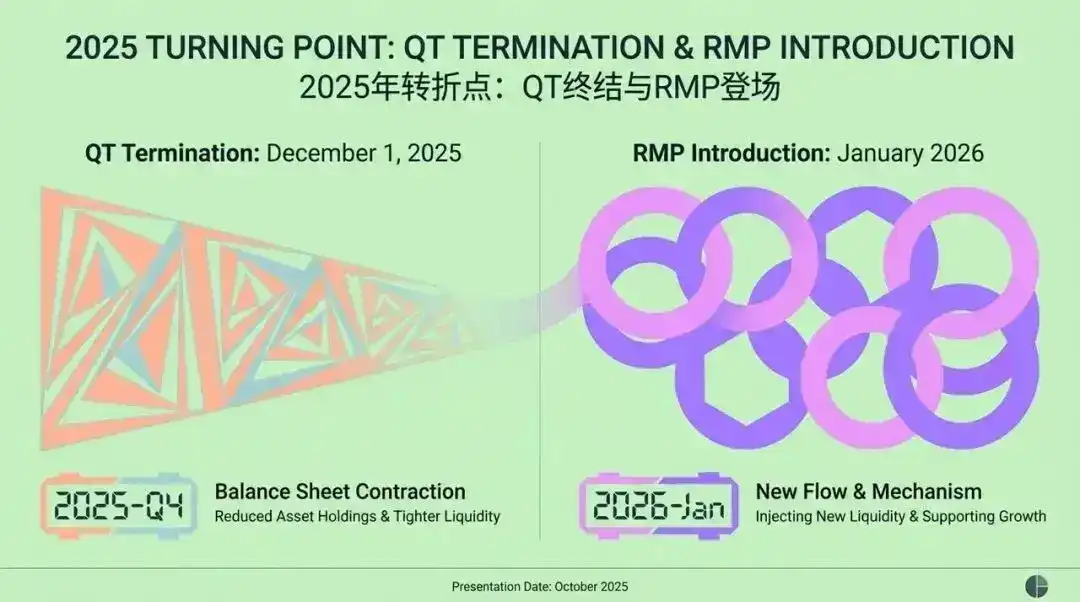
Federal Reserve’s Major Shift: From QT to RMP, How Will the Market Transform by 2026?
The article discusses the background, mechanism, and impact on financial markets of the Federal Reserve's introduction of the Reserve Management Purchases (RMP) strategy after ending Quantitative Tightening (QT) in 2025. RMP is regarded as a technical operation aimed at maintaining liquidity in the financial system, but the market interprets it as a covert easing policy. The article analyzes RMP's potential effects on risk assets, the regulatory framework, and fiscal policy, and provides strategic recommendations for institutional investors. Summary generated by Mars AI This summary was generated by the Mars AI model, and the accuracy and completeness of its content are still in the process of iterative improvement.
Trending news
MoreCrypto prices
More





