
Mastercard backs stablecoins post-GENIUS Act, but not as decentralized money

Mastercard publicy embraced stablecoins following the passage of the Genius act, but sees itself at the core of the system.
The Genius Act is already having a tangible impact on the discourse around stablecoins. Following its passage, the payments giant Mastercard publicly embraced stablecoins , signalling that the legislation cleared a major roadblock to expansion. Still, Mastercard’s vision is not one of decentralized money.
“Stablecoins are at a turning point. The passage of the GENIUS Act by the U.S. Congress signals a new era of regulatory clarity and confidence in digital assets,” Jesse McWaters, Executive Vice President at Mastercard stated.
Stablecoins are already finding real-world uses, McWaters underlined, especially in cross-border payments. Whether its international B2B payments or remittances, stablecoins offer a low cost and fast alernative to traditional banking transfers and other payment methods.
Mastercard’s bid to dominate stablecoins
Still, McWaters believes that stablecoins are missing a key factor, which is an intermediary, like the one that Mastercard is. Calling Mastercard “one of the world’s most trusted payments networks,” Mastercard hopes to become a key centralized intermediary in a stablecoin ecosystem.
“But to move from niche to mainstream, stablecoins need more than speed and programmability. They need to be embedded in systems that people trust — systems that protect users, resolve disputes and work seamlessly across borders and platforms,” McWaters stated. “That’s where Mastercard comes in,” he added.
The payments giant has already launched several stablecoin focused initiatives. These include Mastercard Multi-Token Network and Mastercard Crypto Credential, which add compliance and user protection features.
Mastercard’s vision is a move away from the trustless systems of peer to peer payments. Instead, the firm is applying the approach that already works for credit card payments. Still, the firm’s legacy business model is not without criticism. Notably, the credit card company faced numerous legal challenges over unfair treatment of merchants and credit card users.
Disclaimer: The content of this article solely reflects the author's opinion and does not represent the platform in any capacity. This article is not intended to serve as a reference for making investment decisions.
You may also like
"Validator's Pendle" Pye raises $5 million, enabling SOL staking yields to be tokenized
There are truly no creative bottlenecks in the financialization of Web3.

DiDi has become a digital banking giant in Latin America
DiDi has successfully transformed into a digital banking giant in Latin America by addressing the lack of local financial infrastructure, building an independent payment and credit system, and achieving a leap from a ride-hailing platform to a financial powerhouse. Summary generated by Mars AI. This summary was produced by the Mars AI model, and its accuracy and completeness are still being iteratively improved.

Fed rate cuts in conflict, but Bitcoin's "fragile zone" keeps BTC below $100,000
The Federal Reserve cut interest rates by 25 basis points, but the market interpreted the move as hawkish. Bitcoin is constrained by a structurally fragile range, making it difficult for the price to break through $100,000. Summary generated by Mars AI This summary was generated by the Mars AI model, and the accuracy and completeness of its content are still being iteratively updated.

Full text of the Federal Reserve decision: 25 basis point rate cut, purchase of $4 billion in Treasury bills within 30 days
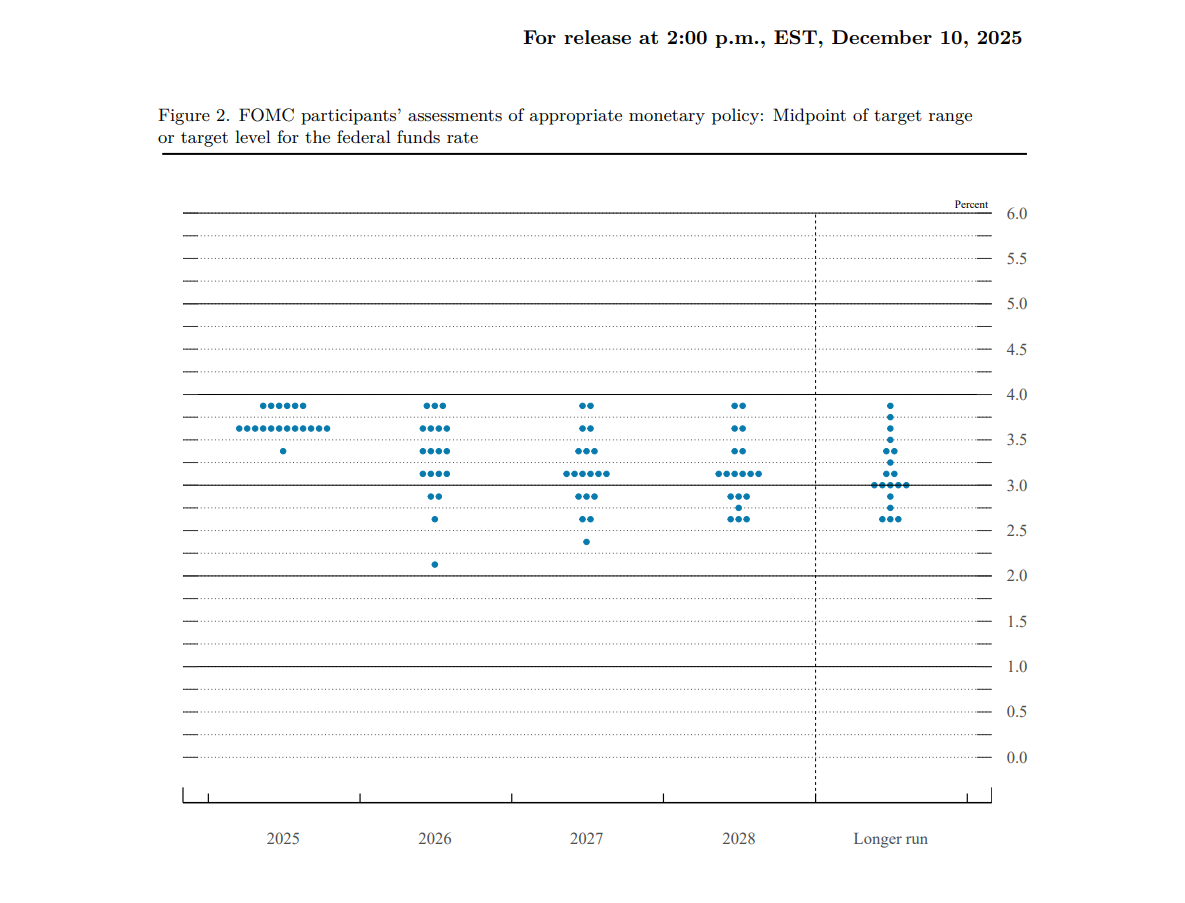
The Federal Reserve cut interest rates by 25 basis points with a 9-3 vote. Two members supported keeping rates unchanged, while one supported a 50 basis point cut. In addition, the Federal Reserve has restarted bond purchases and will buy $40 billion in Treasury bills within 30 days to maintain adequate reserve supply.
Trending news
MoreCrypto prices
More





