
Bitcoin rally shows room to run toward $130,000 before demand cools off

Bitcoin’s (BTC) move into new all-time highs leaves statistical room for it to reach $130,000 before historical demand exhaustion zones, according to a July 16 report by Glassnode.
Bitcoin broke out of a multi-week range of $100,000 to $110,000 and printed a new high near $122,000, clearing dense cost-basis clusters where buyers had concentrated between $93,000 and $97,000 and $104,000 and $110,000.
Investors who built positions in those bands now anchor potential pullback support as price discovery resumes above prior resistance, giving traders a reference ladder for downside tests should momentum fade.
Positioning above heavy cost bands
The report examined its Cost Basis Distribution Heatmap and found concentrated acquisition in the two lower zones that Bitcoin just cleared. Clearing those supply shelves often converts them into support, as previously underwater or flat‑PnL holders turn into defenders of entry cost.
With spot now well above both clusters, desks tracking downside absorption will watch whether bids reappear if Bitcoin revisits the $104,000 to $110,000 band.
Profit saturation builds
The report also assessed Glassnode’s Cost-Basis Distribution Quantiles, which showed a spot above the 95th percentile level at $107,400. This places the bulk of the circulating supply in profit.
Furthermore, the report stated that sharp bursts above this percentile in prior cycles drew heavier profit-taking as a widening investor base captured gains, raised aggregate cost bases, and created more price-sensitive ownership structures.
That dynamic can lead to top-heavy conditions when repeated on a larger scale.
Bitcoin rose to $122,600 and then retraced to $115,900 as investors sold into strength once the price extended more than one standard deviation above the Short-Term Holder (STH) cost basis.
Historical studies in the report indicate that STH+1 frequently serves as a tactical resistance zone during speculative phases.
The report identified the next resistance at the STH+2 band near $136,000. Traders eyeing a psychological $130,000 level view it as an intermediate waypoint within that statistical range.
Demand exhaustion risk
Short‑term holder conditions now sit in the early overheated zone. The report measured 95% of STH supply in profit, more than one standard deviation above the long‑term mean of 88% and the third such break since early May 2025.
It concluded that repeated excursions into overheated profit realization territory have historically preceded broader market demand exhaustion.
The post Bitcoin rally shows room to run toward $130,000 before demand cools off appeared first on CryptoSlate.
Disclaimer: The content of this article solely reflects the author's opinion and does not represent the platform in any capacity. This article is not intended to serve as a reference for making investment decisions.
You may also like
"Validator's Pendle" Pye raises $5 million, enabling SOL staking yields to be tokenized
There are truly no creative bottlenecks in the financialization of Web3.

DiDi has become a digital banking giant in Latin America
DiDi has successfully transformed into a digital banking giant in Latin America by addressing the lack of local financial infrastructure, building an independent payment and credit system, and achieving a leap from a ride-hailing platform to a financial powerhouse. Summary generated by Mars AI. This summary was produced by the Mars AI model, and its accuracy and completeness are still being iteratively improved.

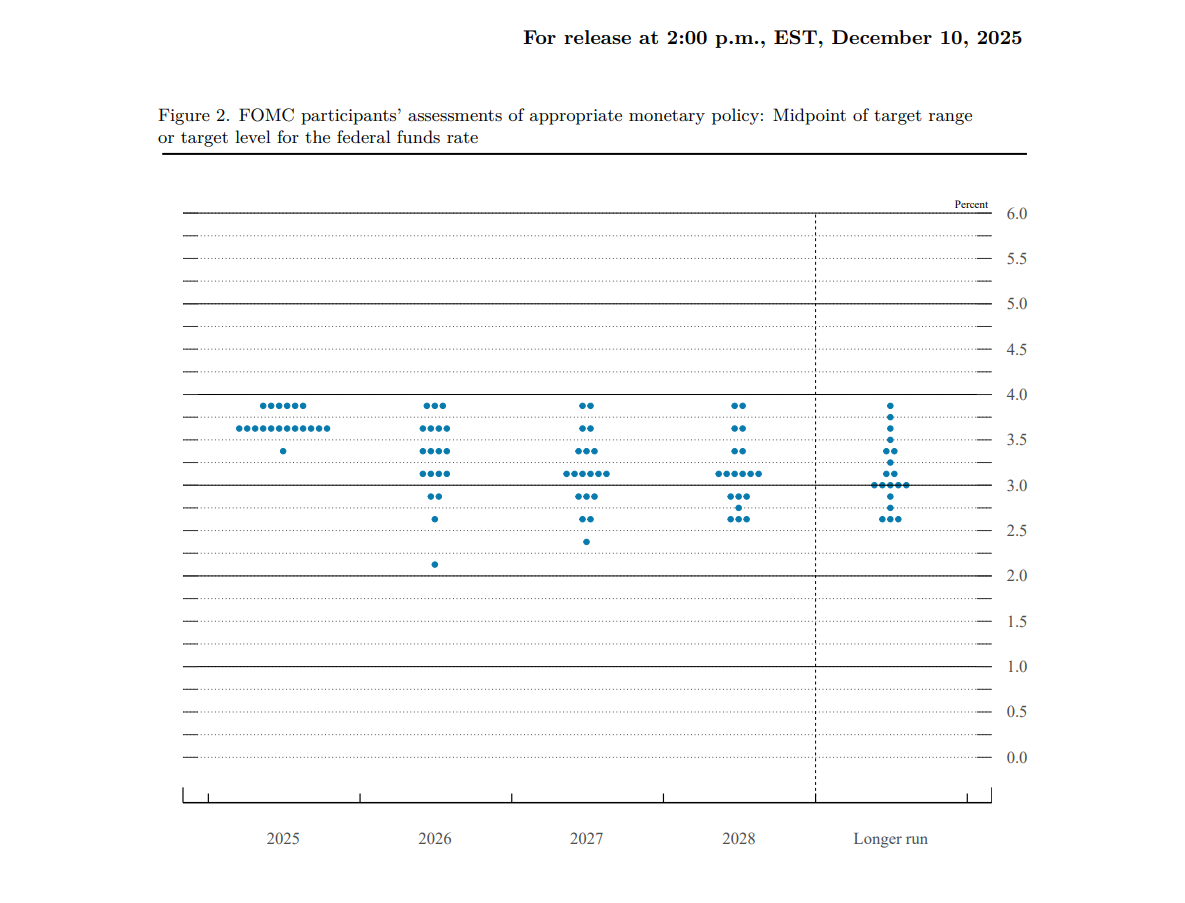
Fed rate cuts in conflict, but Bitcoin's "fragile zone" keeps BTC below $100,000
The Federal Reserve cut interest rates by 25 basis points, but the market interpreted the move as hawkish. Bitcoin is constrained by a structurally fragile range, making it difficult for the price to break through $100,000. Summary generated by Mars AI This summary was generated by the Mars AI model, and the accuracy and completeness of its content are still being iteratively updated.

Full text of the Federal Reserve decision: 25 basis point rate cut, purchase of $4 billion in Treasury bills within 30 days
The Federal Reserve cut interest rates by 25 basis points with a 9-3 vote. Two members supported keeping rates unchanged, while one supported a 50 basis point cut. In addition, the Federal Reserve has restarted bond purchases and will buy $40 billion in Treasury bills within 30 days to maintain adequate reserve supply.
Trending news
MoreCrypto prices
More





