
North Korean Nationals Charged in Georgia for $1 Million Crypto Theft from Blockchain Firms
 2025/07/04 19:55
Four North Korean nationals have been charged in Georgia with wire fraud and money laundering after allegedly infiltrating U.S. and Serbian blockchain companies as fake remote IT workers and stealing nearly $1 million in cryptocurrency, U.S. prosecutors revealed on Monday.
According to the U.S. Department of Justice (DOJ), Kim Kwang Jin, Kang Tae Bok, Jong Pong Ju, and Chang Nam Il concealed their North Korean citizenship by posing as freelance developers using stolen and fabricated identities. The group initially operated out of the United Arab Emirates in 2019 before landing jobs at an Atlanta-based blockchain startup and a Serbian virtual token company between late 2020 and mid-2021.
 Source: FBI
Prosecutors stated that Kim and Jong submitted fraudulent documents to secure these positions, enabling them to access critical internal systems. U.S. Attorney Theodore S. Hertzberg described the tactic as a “unique threat” for companies hiring remote IT staff.
Once employed, the defendants exploited their insider access. In February 2022, Jong siphoned approximately $175,000 worth of crypto from company systems. The following month, Kim manipulated the smart contract source code to steal approximately $740,000. Investigators said the stolen funds were laundered through crypto mixers and sent to exchange accounts controlled by Kang and Chang, which had been created with fake Malaysian IDs.
The charges were filed under the DOJ’s DPRK RevGen: Domestic Enabler Initiative, launched in 2024 to dismantle North Korea’s revenue-generating operations and their US-based enablers.
In a related crackdown, federal agents recently conducted coordinated raids across 16 states, seizing nearly 30 financial accounts, around 200 computers from “laptop farms,” and over 20 fraudulent websites. Additionally, the U.S. DOJ launched an investigation into a data breach at Coinbase involving contracted customer service agents based in India, who allegedly accepted bribes to grant unauthorized access to sensitive user data.
Just last month, the DOJ filed a civil forfeiture complaint to seize over $7.7 million in crypto allegedly earned by North Korean IT operatives posing as remote blockchain developers through similar identity fraud schemes.
Disclaimer: The content of this article solely reflects the author's opinion and does not represent the platform in any capacity. This article is not intended to serve as a reference for making investment decisions.
You may also like
"Validator's Pendle" Pye raises $5 million, enabling SOL staking yields to be tokenized
There are truly no creative bottlenecks in the financialization of Web3.

DiDi has become a digital banking giant in Latin America
DiDi has successfully transformed into a digital banking giant in Latin America by addressing the lack of local financial infrastructure, building an independent payment and credit system, and achieving a leap from a ride-hailing platform to a financial powerhouse. Summary generated by Mars AI. This summary was produced by the Mars AI model, and its accuracy and completeness are still being iteratively improved.

Fed rate cuts in conflict, but Bitcoin's "fragile zone" keeps BTC below $100,000
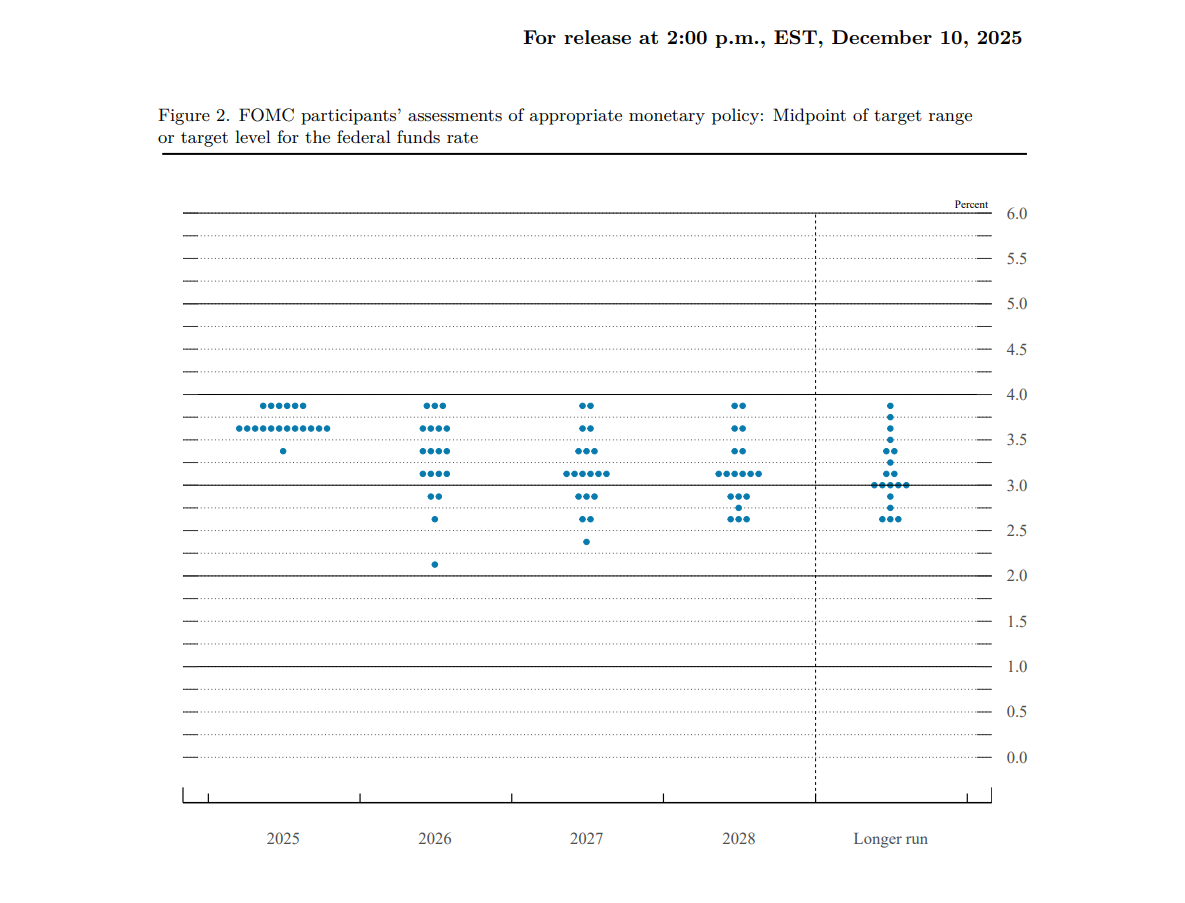
The Federal Reserve cut interest rates by 25 basis points, but the market interpreted the move as hawkish. Bitcoin is constrained by a structurally fragile range, making it difficult for the price to break through $100,000. Summary generated by Mars AI This summary was generated by the Mars AI model, and the accuracy and completeness of its content are still being iteratively updated.

Full text of the Federal Reserve decision: 25 basis point rate cut, purchase of $4 billion in Treasury bills within 30 days
The Federal Reserve cut interest rates by 25 basis points with a 9-3 vote. Two members supported keeping rates unchanged, while one supported a 50 basis point cut. In addition, the Federal Reserve has restarted bond purchases and will buy $40 billion in Treasury bills within 30 days to maintain adequate reserve supply.
Trending news
MoreCrypto prices
More





