
WikiLeaks turns to Bitcoin blockchain to protect Assange's Afghan War Logs

Quick Take Project Spartacus’ free Ordinals mint of more than 70,000 Afghan War logs published by WikiLeaks will go live on Dec. 5. The effort isn’t being done to directly raise funds for WikiLeaks founder Julian Assange, but to commemorate his story as a part of Bitcoin history.

Bitcoin was just getting started in 2010, the year Julian Assange released the Afghan War Logs. But it’s a tool that eventually helped — and still helps — WikiLeaks stay alive.
The collection of tens of thousands of internal U.S. military and government communications contributed to a change in public understanding of what was officially called Operation Enduring Freedom. As the New York Times put it, this “six-year archive of classified documents offers an unvarnished and grim picture of the Afghan war,” including the extent of civilian casualties and what has been euphemistically called “enhanced interrogation.”
While released into the public domain (first to journalists, then on WikiLeaks.org ), there is still the chance that the Afghan War Logs could be suppressed. That’s part of why Assange and his friends and family are working to preserve them in a manner that will always remain accessible.
On Thursday, 76,911 of these documents — i.e., the full extent of the archive released to the public — are being inscribed on the Bitcoin blockchain using a tool called OrdinalsBot. The free mint, available via ProjectSpartacus.org beginning Dec. 5, aims to preserve the information Assange and Chelsea Manning made public.
The undertaking
Making sure the Afghan War Logs can't be altered or censored using the blockchain is a major task. The sheer size and scope of the project likely make it one of the most complicated mints yet.
“There are 76,911 files, and because each individual inscription is by an individual person, it will span many different blocks,” OrdinalsBot founder Toby Lewis told The Block. “I think it will be quite a long process probably to mint — like, this isn't a 10K collection. We're hoping it will be one of those ‘forever’ iconic projects.”
Project Spartacus provides the interface for people to mint these assets. The Ordinals protocol was introduced in 2023 to "inscribe" data on individual sats (a.k.a. satoshis, the smallest unit of account in BTC), making that data as immutable as bitcoin.
The endeavor isn’t being done to directly raise funds for Assange, who is currently seeking a full pardon from President Joe Biden. Lewis noted the only people getting paid during the mint are the miners.
Following the initial mint, the Project Spartacus collection will go live on Lewis’ new Ordinals marketplace called Trio on Dec. 12. OrdinalsBot was tapped because of its reputation as being the “most robust infrastructure group in Bitcoin,” Shipton said. The platform has airdropped projects like Runestone, which had over 100,000 files.
“We know the infrastructure we have built can handle things well,” Lewis said, adding OrdinalsBot runs one of the largest Bitcoin infrastructure nodes. “Obviously, if all 77,000 mint at once there’ll be some delay but we’re designed for at-scale mints like this.”
Assange's Bitcoin history
Beyond the realities of making the War Logs truly censorship-resistant, the mint is a statement piece that gives the cypherpunk community a way to show solidarity and engage with Assange's legacy, Shipton said.
He noted that the legal fees to free Assange were over $30 million, mostly largely paid in BTC donations and fundraising via AssangeDAO and NFT collections.
Assange’s interactions with Bitcoin creator Satoshi Nakamoto are public and part of Bitcoin’s lore. To some extent, Assange could be said to have hastened Nakamoto’s disappearance from the project after WikiLeaks began soliciting donations in bitcoin, which was the first time many had heard about the digital currency.
“It would have been nice to get this attention in any other context. WikiLeaks has kicked the hornet’s nest, and the swarm is headed towards us,” Nakamoto said on Dec. 11, 2010, on the Bitcointalk forum.
“That's why it's important to keep talking about these things, because there's a lot of people who are coming into this orbit who don't these things about the history of Bitcoin,” Shipton said. “I doubt Larry Fink knows that.”
Shipton noted that keeping WikiLeaks afloat while facing a “global banking blockade” is “proof of concept” of Nakamoto’s vision for a censorship-resistant currency.
“It's one of the strengths of Bitcoin — being able to withstand resist state-level attacks and keep publishing,” he said.
Disclaimer: The content of this article solely reflects the author's opinion and does not represent the platform in any capacity. This article is not intended to serve as a reference for making investment decisions.
You may also like
Research Report|In-Depth Analysis and Market Cap of Talus (US)

Five charts to help you understand: Where does the market go after each policy storm?
After this regulatory crackdown, is it a harbinger of an impending downturn, or the beginning of a new cycle where all negative news has been fully priced in? Let’s examine the trajectory after the storm through five key policy milestones.

Mars Morning News | The crypto market rebounds across the board, Bitcoin rises above $94,500; The "CLARITY Act" draft is expected to be released this week
The crypto market has fully rebounded, with bitcoin surpassing $94,500 and US crypto-related stocks rising across the board. The US Congress is advancing the CLARITY Act to regulate cryptocurrencies. The SEC chairman stated that many ICOs are not securities transactions. Whales are holding a large number of profitable ETH long positions. Summary generated by Mars AI. The accuracy and completeness of the content generated by the Mars AI model is still being iteratively updated.

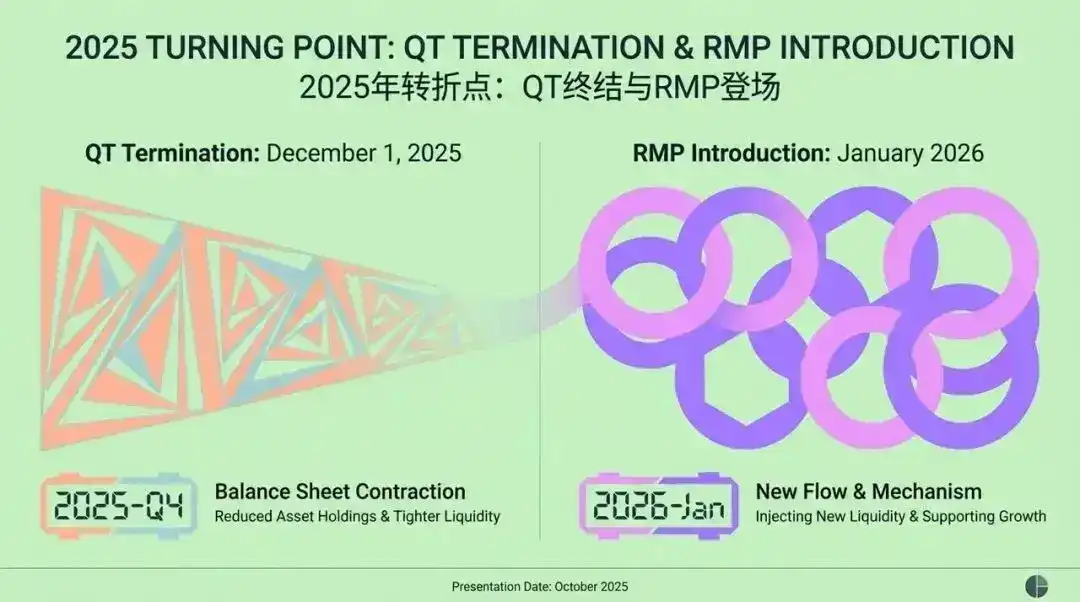
Federal Reserve’s Major Shift: From QT to RMP, How Will the Market Transform by 2026?
The article discusses the background, mechanism, and impact on financial markets of the Federal Reserve's introduction of the Reserve Management Purchases (RMP) strategy after ending Quantitative Tightening (QT) in 2025. RMP is regarded as a technical operation aimed at maintaining liquidity in the financial system, but the market interprets it as a covert easing policy. The article analyzes RMP's potential effects on risk assets, the regulatory framework, and fiscal policy, and provides strategic recommendations for institutional investors. Summary generated by Mars AI This summary was generated by the Mars AI model, and the accuracy and completeness of its content are still in the process of iterative improvement.
Trending news
MoreCrypto prices
More





