
US Spot Bitcoin, Ethereum ETFs See Record $7.6 Billion Net Inflows For November

From decrypt by Vince Dioquino
Exchange-traded funds invested in Bitcoin and Ethereum in the U.S. are seeing record net inflows, following a bullish November that saw crypto-friendly President-elect Donald Trump take the Whitehouse.
As post-election momentum drives institutional adoption, cumulative flow data indicates steady growth since March 2024.
The nature of these inflows suggests a maturing market where ETFs are increasingly becoming the preferred vehicle for traditional finance to gain Bitcoin exposure.
According to aggregated data from SoSoValue and CoinGlass, U.S. spot Bitcoin and Ethereum ETFs have seen over $7.54 billion in monthly net inflows.
That's more than $1.5 billion compared to February's record of $6.03 billion for Bitcoin ETFs.
Notably, Ethereum spot ETFs, which went live for trading in July, are gaining ground, with records between November 25 and November 29 seeing a net inflow of $467 million—most of which stems from BlackRock’s ETHA, representing $300 million.
Changing tides for Ethereum
Comparing daily total net inflows, Bitcoin spot ETFs accounted for $320 million, while Ethereum ETFs made $332 million, although the latter only has roughly $11 billion in net assets, compared with Bitcoin spot ETFs, which have almost 10 times in net assets at over $105 billion.
Ether outpaced Bitcoin's price performance during the final week of November, rising 15% compared to Bitcoin's modest 1.7% decline over the same period, according to data from CoinGecko.
However, a comparison between Ethereum's price versus the fully diluted valuation of Bitcoin reveals its fundamental supply-side constraints. Ethereum would need to reach $16,673 (a 4.61x increase) to match Bitcoin's $2 trillion total addressable market cap.
Bitcoin ETFs retain dominance
BlackRock's iShares Bitcoin Trust (IBIT) continues to dominate Bitcoin spot ETFs, accumulating $48 billion in market cap flows since launch, data from CoinGlass shows.
Grayscale's Bitcoin ETF (GBTC) follows with $20.9 billion, though this is being trailed closely by Fidelity's Bitcoin ETF (FBTC) at $19 billion.
The surge in ETF adoption comes as Bitcoin trades near $96,000, approaching but not yet breaching the psychological $100,000 barrier.
“Bitcoin dominance has dropped by 5% over the past 12 days, breaking below the positive trendline established in June 2023,” Valentin Fournier, a digital asset analyst at Singapore-registered market intelligence firm Bread News, told Decrypt in an email.
“With significant resistance at $100,000, the market is seeing a capital shift towards altcoins, supported by increasing liquidity.”
Disclaimer: The content of this article solely reflects the author's opinion and does not represent the platform in any capacity. This article is not intended to serve as a reference for making investment decisions.
You may also like
Five charts to help you understand: Where does the market go after each policy storm?
After this regulatory crackdown, is it a harbinger of an impending downturn, or the beginning of a new cycle where all negative news has been fully priced in? Let’s examine the trajectory after the storm through five key policy milestones.

Mars Morning News | The crypto market rebounds across the board, Bitcoin rises above $94,500; The "CLARITY Act" draft is expected to be released this week
The crypto market has fully rebounded, with bitcoin surpassing $94,500 and US crypto-related stocks rising across the board. The US Congress is advancing the CLARITY Act to regulate cryptocurrencies. The SEC chairman stated that many ICOs are not securities transactions. Whales are holding a large number of profitable ETH long positions. Summary generated by Mars AI. The accuracy and completeness of the content generated by the Mars AI model is still being iteratively updated.

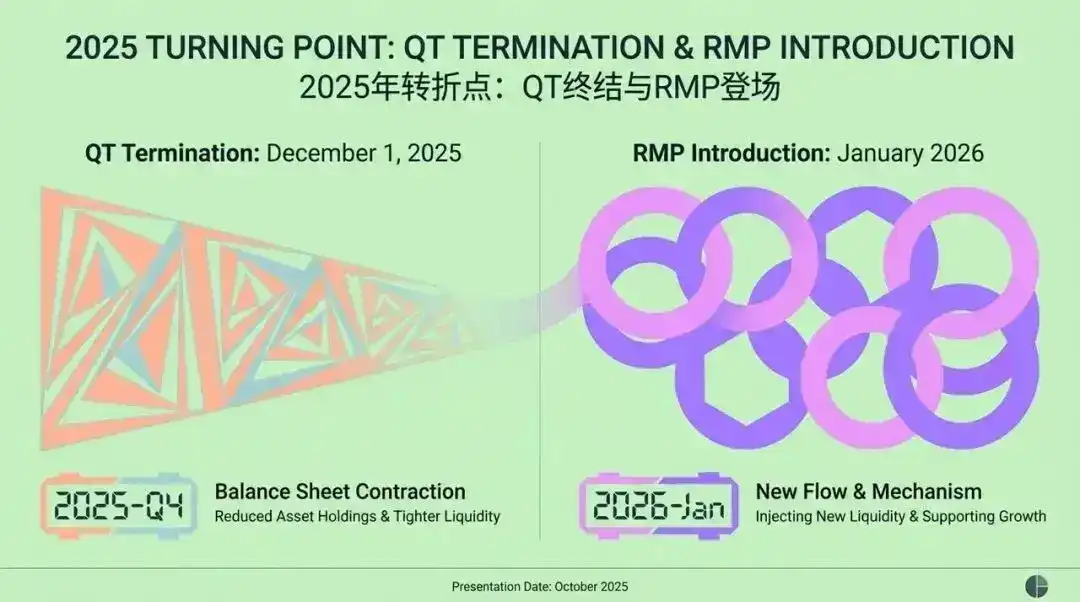
Federal Reserve’s Major Shift: From QT to RMP, How Will the Market Transform by 2026?
The article discusses the background, mechanism, and impact on financial markets of the Federal Reserve's introduction of the Reserve Management Purchases (RMP) strategy after ending Quantitative Tightening (QT) in 2025. RMP is regarded as a technical operation aimed at maintaining liquidity in the financial system, but the market interprets it as a covert easing policy. The article analyzes RMP's potential effects on risk assets, the regulatory framework, and fiscal policy, and provides strategic recommendations for institutional investors. Summary generated by Mars AI This summary was generated by the Mars AI model, and the accuracy and completeness of its content are still in the process of iterative improvement.
Rate Hike in Japan: Will Bitcoin Resist Better Than Expected?

Trending news
MoreCrypto prices
More





