
Vitalik Buterin Backs ZKsync: Accelerating the Evolution of Ethereum’s Layer 2 Solutions
- Vitalik Buterin endorsed ZKsync, highlighting its ZK rollup role in Ethereum's scalability and security. - ZKsync's Atlas upgrade achieved 30,000 TPS with Ethereum compatibility, driving ZK token's 120% surge to $0.74. - Institutional adoption grew with $3.3B TVL, 27M monthly transactions, and partnerships with Deutsche Bank/Sony. - ZKsync leads ZK rollups with $3.3B TVL vs. $1.2B (StarkNet), leveraging EVM compatibility and low fees. - Investors face opportunities in ZKsync's network effects and deflati
Ethereum’s Next Chapter: ZKsync’s Rise Backed by Vitalik Buterin
The Ethereum ecosystem is undergoing a transformative phase, fueled by Vitalik Buterin’s recent public support for ZKsync and the platform’s rapid technical progress. As Ethereum’s co-founder, Buterin’s endorsement of ZKsync as a key scaling solution signals a major shift toward zero-knowledge (ZK) rollups as the foundation for Ethereum’s future. This overview examines how ZKsync’s growing institutional adoption, technological breakthroughs, and evolving tokenomics are positioning it as a leading Layer 2 contender—and what this means for investors navigating the changing crypto landscape.
Vitalik Buterin’s Endorsement: Elevating ZKsync’s Status
In 2025, Vitalik Buterin’s support for ZKsync was a deliberate acknowledgment of the project’s significant contributions to Ethereum’s scalability and security. According to Bitget, Buterin described ZKsync’s advancements as “underrated and valuable,” highlighting its progress in zero-knowledge proofs to enable secure, private, and scalable transactions. This endorsement coincided with ZKsync’s Atlas upgrade, which boosted transaction speeds to 30,000 per second while maintaining full compatibility with Ethereum. The market responded quickly, with ZK token prices jumping 120% to $0.74 in just a few days, reflecting renewed confidence from both institutions and individual investors.
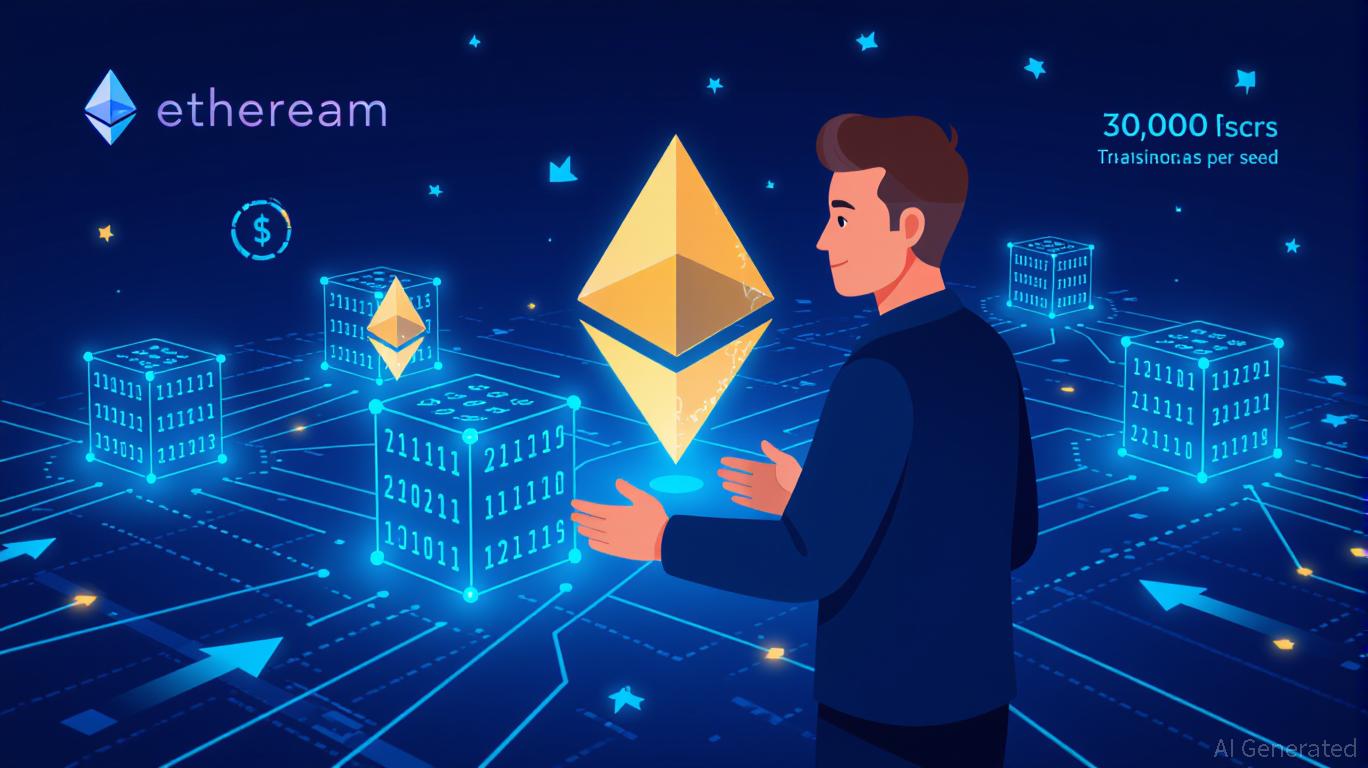
Buterin’s backing aligns with his broader vision for Ethereum—a decentralized network empowered by ZK proofs to deliver high throughput without sacrificing trustlessness. By spotlighting ZKsync, he has set a benchmark for how Layer 2 solutions can address Ethereum’s scalability challenges.
Institutional Momentum: Unlocking New Capital Flows
Following Buterin’s endorsement, ZKsync has seen a surge in institutional interest, with major organizations such as Deutsche Bank and Sony adopting its infrastructure for compliance-focused applications. Bitget reports that ZKsync’s Total Value Locked (TVL) has reached $3.3 billion, supported by 27 million monthly transactions and collaborations with over 30 institutions. This influx of capital is the result of several strategic upgrades:
- Atlas Upgrade: With 30,000 TPS and near-instant finality, ZKsync offers enterprises a scalable, low-cost transaction platform. CoinMarketCap notes this has made ZKsync a formidable Layer 2 solution.
- Prividium Solution: ZKsync’s enterprise-focused Prividium product has attracted financial institutions seeking private, permissioned Layer 2 networks for cross-border settlements and asset tokenization, according to Cryptorank.
- Deflationary Tokenomics: The ZK token’s transition from a governance asset to a utility token, combined with buybacks, burns, and staking rewards, has created a value system that aligns with real-world usage. Bitget highlights this as a driver of investor trust.
These developments have made ZKsync a preferred choice for institutional capital, with Deutsche Bank and Citi reportedly exploring its use for tokenized securities and international payments. Cryptorank indicates this trend is likely to continue, fueling a cycle of adoption, TVL growth, and token appreciation.
Competing for Users: ZKsync’s Edge in the Layer 2 Race
While institutional adoption is strong, ZKsync’s ability to attract developers and retail users is equally crucial. As of the third quarter of 2025, ZKsync’s $3.3 billion TVL surpasses StarkNet’s $1.2 billion and Loopring’s $400 million, establishing it as the leading ZK rollup. This leadership is built on several factors:
- Seamless Ethereum Integration: Full EVM compatibility makes it easy for developers and users to transition from Ethereum or other Layer 2s. CoinMarketCap identifies this as a major advantage.
- Developer-Friendly Architecture: Modular upgrades and GPU-optimized proofs simplify the deployment of scalable applications, offering a smoother experience than StarkNet’s Cairo-based system, according to Nethermind.
- Low Transaction Fees: With average costs of just $0.001 per transaction, ZKsync provides a cost-effective alternative to Arbitrum and Optimism, which face challenges with fluctuating gas fees. PatentPC notes this appeals to budget-conscious users.
Nonetheless, competition remains fierce. StarkNet’s focus on privacy for institutions and Scroll’s EVM compatibility present ongoing challenges. However, ZKsync’s early lead and Buterin’s endorsement give it a significant advantage.
Investor Outlook: Balancing Potential and Risk
For early-stage investors, ZKsync offers compelling opportunities—alongside notable risks.
Opportunities:
- Network Effects: Growing TVL and institutional partnerships create a self-reinforcing cycle, attracting more users and developers.
- Tokenomics: Deflationary mechanisms and increased utility for the ZK token could drive long-term value, especially with continued adoption.
- Regulatory Alignment: As governments seek scalable, compliant blockchain solutions, ZKsync’s Prividium positions it well for regulatory-friendly applications, according to Cryptorank.
Risks:
- Rising Competition: StarkNet and Scroll are innovating rapidly, and Ethereum’s own sharding upgrades could reduce the need for Layer 2 solutions.
- Market Fluctuations: The ZK token’s 26.2% decline after the initial surge highlights the volatility of speculative markets, as noted by Cryptorank.
- Technical Uncertainties: While ZKsync’s 30,000 TPS is impressive, its real-world performance during periods of high demand, such as DeFi congestion, remains to be fully tested, according to CoinMarketCap.
Final Thoughts: ZKsync’s Strategic Role in Ethereum’s Evolution
Vitalik Buterin’s support for ZKsync is more than just a publicity boost—it marks a strategic commitment to ZK rollups as the future of Ethereum. With accelerating institutional adoption, significant technical achievements, and a robust token model, ZKsync is poised to lead the Layer 2 landscape. For investors, the challenge is to balance optimism with due diligence: while ZKsync’s long-term prospects are strong, its ultimate success will depend on continued innovation and effective execution.
As Ethereum continues to evolve, ZKsync’s ability to deliver scalability without sacrificing decentralization will shape both its legacy and the future value of its token.
Disclaimer: The content of this article solely reflects the author's opinion and does not represent the platform in any capacity. This article is not intended to serve as a reference for making investment decisions.
You may also like
The Impact of New Financial Crises on Technology-Based Asset Classes: Systemic Threats and Hedging Strategies in AI and Blockchain Investment
- AI and blockchain reshape finance but introduce systemic risks like synchronized market crashes. - 2025 Bank of England study warns AI-driven strategies using shared data could trigger cascading liquidity crises. - Blockchain offers resilience via DeFi platforms but crypto volatility creates feedback loops in traditional banking. - Strategic hedging combines AI dynamic portfolios (12% 2024 outperformance) with NIST/EU regulatory frameworks to mitigate risks. - Future stability requires balancing AI innov

New Prospects in Security Technology and Advancements in Cybersecurity
- Post-cyberwarfare era demands AI-integrated defense-grade security as cyber threats evolve, with AI cybersecurity market projected to grow from $22.4B (2023) to $136.18B by 2032 at 24.81% CAGR. - Key drivers include cloud/IoT expansion, regulatory mandates (e.g., U.S. NSF privacy research), and institutional innovation like federal talent programs and startup collaborations. - Real-world applications show AI mitigating ransomware (Darktrace) and zero-day attacks (Cylance), while military operations lever

COAI Experiences Significant Price Decline and the Enduring Insights for Investors Focused on the Long Term
- ChainOpera AI (COAI) collapsed from $44.90 to $0.52 in late 2025 due to market shifts, structural flaws, and regulatory uncertainty. - COAI's 88% supply concentration and 60 manipulative wallets exacerbated liquidity crises amid sector-wide AI token outflows to meme coins. - Regulatory pressures (GENIUS Act, FSB) and algorithmic stablecoin collapses (xUSD, deUSD) deepened distrust in DeFi, compounding COAI's decline. - Long-term investors may find opportunities in COAI's collapse by applying margin of sa
Assessing How the TGE of MMT Token Influences the Cryptocurrency Ecosystem
- Momentum Finance's MMT token TGE on Sui blockchain highlights innovative DeFi tokenomics with 42.72% community allocation and ve(3,3) governance model. - Post-TGE volatility (4,000% surge followed by 70% correction) reflects market dynamics, but technical indicators and buybacks suggest long-term resilience. - MMT's $250-350M FDV target and Sui integration demonstrate strategic benchmarks, offering lessons for balancing innovation, sustainability, and institutional trust in emerging blockchain projects.
Trending news
MoreCrypto prices
More





