
LUNA up 8.13% in 24 hours as token burns continue and Do Kwon faces possible sentencing
- LUNA surged 8.13% in 24 hours to $0.1133 on Dec 6, 2025, driven by 959B token burns and legal updates. - Do Kwon faces sentencing on Dec 11 for Terra/Luna collapse, with U.S. prosecutors seeking 12 years and South Korea 40 years. - Technical indicators show bullish momentum (RSI 66, rising MACD), but legal uncertainty risks a "bull trap" reversal. - Key resistance at $0.00003914 could trigger a test of $0.00005107 if breached, while breakdown risks $0.00002485 support.
LUNA Experiences Significant Price Fluctuations Amid Legal and On-Chain Developments
As of December 6, 2025, LUNA surged by 8.13% within a single day, reaching $0.1133. Over the past week, the token has climbed 60.53%, and it has gained 50.97% in the last month. However, when viewed over the past year, LUNA has declined by 73.72%. These price swings have paralleled increased on-chain activity, such as a spike in token burns and pivotal legal events involving the project's founder.
Accelerated Token Burns Ahead of Key Legal Sentencing
Luna Classic’s recent price recovery has been accompanied by a sharp rise in token burning. Data from Luncmetrics shows that more than 959 billion LUNC tokens were burned in December alone, with 182.09 million removed from circulation on a single Friday. This aggressive burn rate has reduced the available supply, potentially creating the impression of heightened demand.
This uptick in burn activity comes as a major legal event approaches. Do Kwon, the co-founder of Terraform Labs and a central figure in the Terra/Luna collapse, is set to be sentenced on December 11. He admitted guilt to charges including commodities fraud, securities fraud, and wire fraud earlier in August.
Legal Proceedings Shape Market Sentiment
Legal outcomes remain a dominant factor influencing LUNA’s market outlook. U.S. prosecutors have called for a 12-year prison term for Kwon, citing the magnitude of the $40 billion fraud. Meanwhile, authorities in South Korea have requested a 40-year sentence. Kwon’s defense has sought a reduced sentence, pointing to external factors such as third-party trading and technical issues that contributed to the collapse.
The ongoing legal uncertainty has made the market environment for LUNA highly volatile. Many investors are wary of a potential “bull trap,” where rising prices may give a false sense of recovery that could quickly reverse if legal news turns negative.
Technical Analysis Points to Ongoing Strength
Despite the legal headwinds, LUNA’s technical indicators remain positive. The token is forming what appears to be a bullish Marubozu candle on the daily logarithmic chart, reflecting a nearly 20% price jump in the 24 hours leading up to Friday. LUNA is currently challenging resistance at the R1 Pivot Point of $0.00003914.
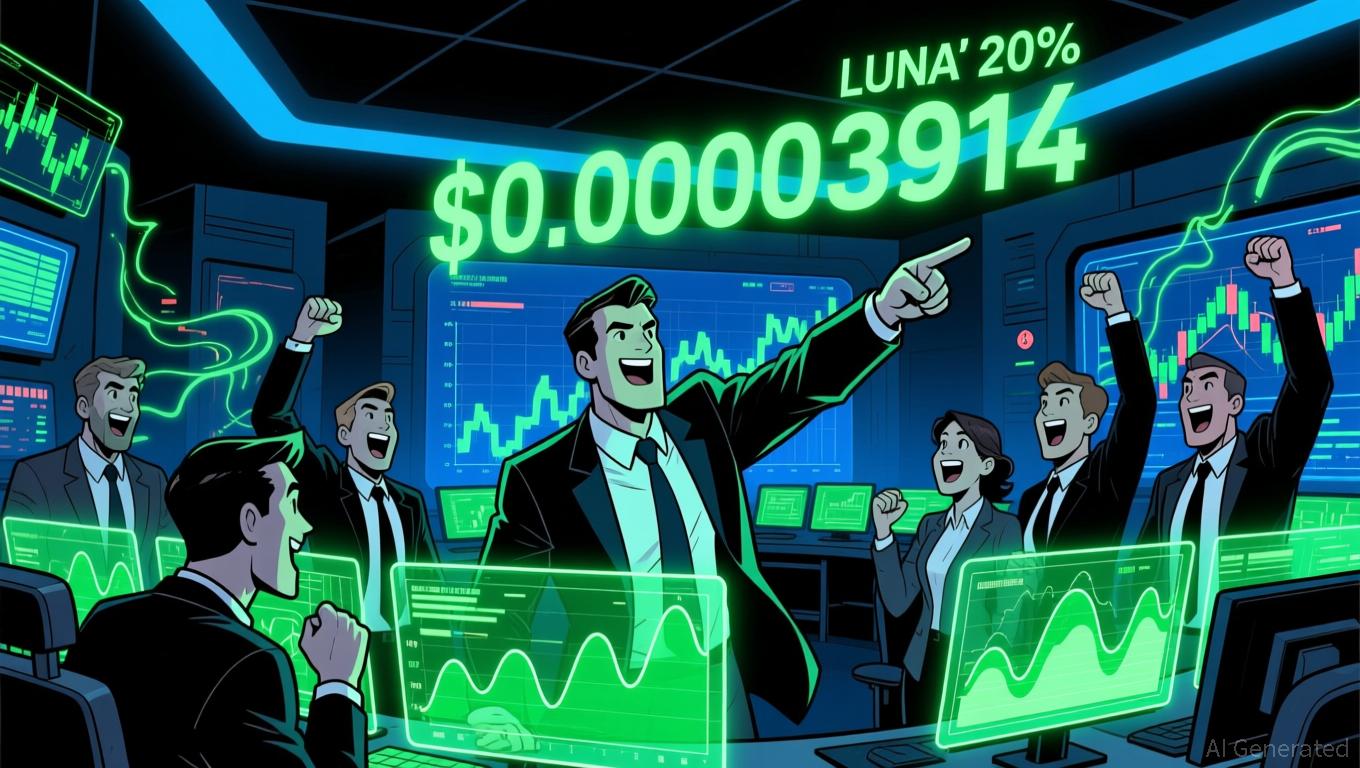
If LUNA manages to surpass this resistance, the next target is $0.00005107 (R2), which would bring it close to the psychologically important $0.00005000 mark. Momentum indicators remain favorable: the Relative Strength Index (RSI) stands at 66, suggesting the asset is nearing overbought conditions, while the MACD continues to show increasing bullish momentum.
On the downside, if LUNA falls below the central Pivot Point at $0.00003241, it could revisit the December 1 low of $0.00002485, posing a significant risk of further declines.
Experts believe that the interplay between ongoing token burns and the outcome of Kwon’s legal case will remain key drivers of LUNA’s price movements in the near future.
Disclaimer: The content of this article solely reflects the author's opinion and does not represent the platform in any capacity. This article is not intended to serve as a reference for making investment decisions.
You may also like
The Impact of New Financial Crises on Technology-Based Asset Classes: Systemic Threats and Hedging Strategies in AI and Blockchain Investment
- AI and blockchain reshape finance but introduce systemic risks like synchronized market crashes. - 2025 Bank of England study warns AI-driven strategies using shared data could trigger cascading liquidity crises. - Blockchain offers resilience via DeFi platforms but crypto volatility creates feedback loops in traditional banking. - Strategic hedging combines AI dynamic portfolios (12% 2024 outperformance) with NIST/EU regulatory frameworks to mitigate risks. - Future stability requires balancing AI innov
New Prospects in Security Technology and Advancements in Cybersecurity
- Post-cyberwarfare era demands AI-integrated defense-grade security as cyber threats evolve, with AI cybersecurity market projected to grow from $22.4B (2023) to $136.18B by 2032 at 24.81% CAGR. - Key drivers include cloud/IoT expansion, regulatory mandates (e.g., U.S. NSF privacy research), and institutional innovation like federal talent programs and startup collaborations. - Real-world applications show AI mitigating ransomware (Darktrace) and zero-day attacks (Cylance), while military operations lever

COAI Experiences Significant Price Decline and the Enduring Insights for Investors Focused on the Long Term
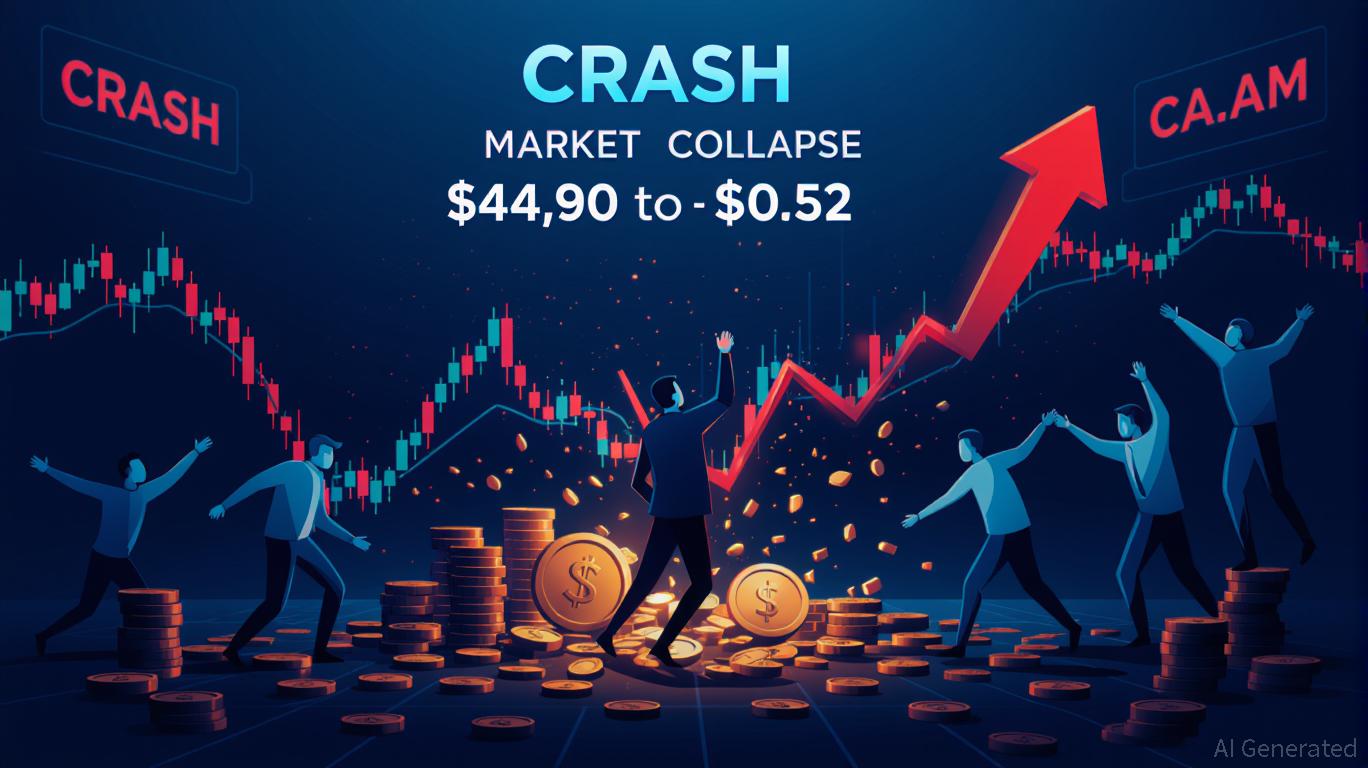
- ChainOpera AI (COAI) collapsed from $44.90 to $0.52 in late 2025 due to market shifts, structural flaws, and regulatory uncertainty. - COAI's 88% supply concentration and 60 manipulative wallets exacerbated liquidity crises amid sector-wide AI token outflows to meme coins. - Regulatory pressures (GENIUS Act, FSB) and algorithmic stablecoin collapses (xUSD, deUSD) deepened distrust in DeFi, compounding COAI's decline. - Long-term investors may find opportunities in COAI's collapse by applying margin of sa
Assessing How the TGE of MMT Token Influences the Cryptocurrency Ecosystem
- Momentum Finance's MMT token TGE on Sui blockchain highlights innovative DeFi tokenomics with 42.72% community allocation and ve(3,3) governance model. - Post-TGE volatility (4,000% surge followed by 70% correction) reflects market dynamics, but technical indicators and buybacks suggest long-term resilience. - MMT's $250-350M FDV target and Sui integration demonstrate strategic benchmarks, offering lessons for balancing innovation, sustainability, and institutional trust in emerging blockchain projects.
Trending news
MoreCrypto prices
More





