
Terra Luna Classic (LUNC) Soars 100% After Viral T-Shirt Moment in Dubai

Terra Luna Classic rallied almost 100% after CoinDesk journalist Ian Allison sparked viral attention by wearing a vintage Terra logo shirt at Binance Blockchain Week Dubai. The surge coincides with a Binance-backed network upgrade, burn activity, and renewed interest in Terra’s legacy ahead of Do Kwon’s sentencing.
Terra Luna Classic (LUNC) jumped nearly 100% today, after CoinDesk journalist Ian Allison appeared at Binance Blockchain Week Dubai wearing a vintage Terra Luna logo t-shirt while moderating interviews with executives from Mastercard, Ripple, and TON.
The image circulated across X and Telegram within hours, triggering discussion that the moment felt like a nostalgic revival of one of crypto’s most notorious altcoins.
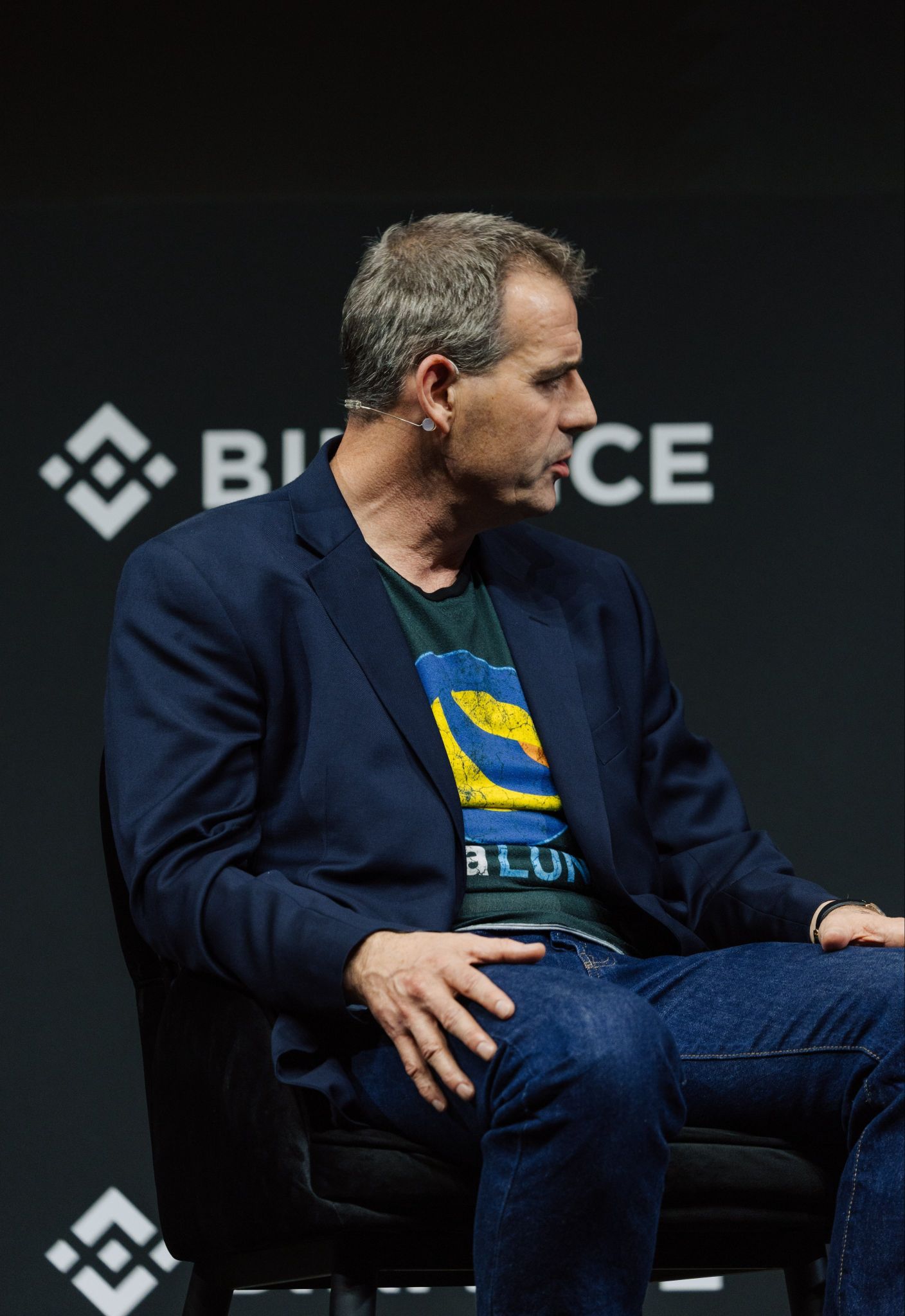 Journalist Ian Allison Wearing a Terra Luna T-shirt at the Binance Blockchain Week in Dubai
Terra Luna Is Back? Not Quite
Traders had already been rotating into LUNC ahead of a scheduled network upgrade supported by Binance.
The exchange confirmed it would pause deposits and withdrawals during the upgrade, signalling strong operational backing from the world’s biggest trading venue.
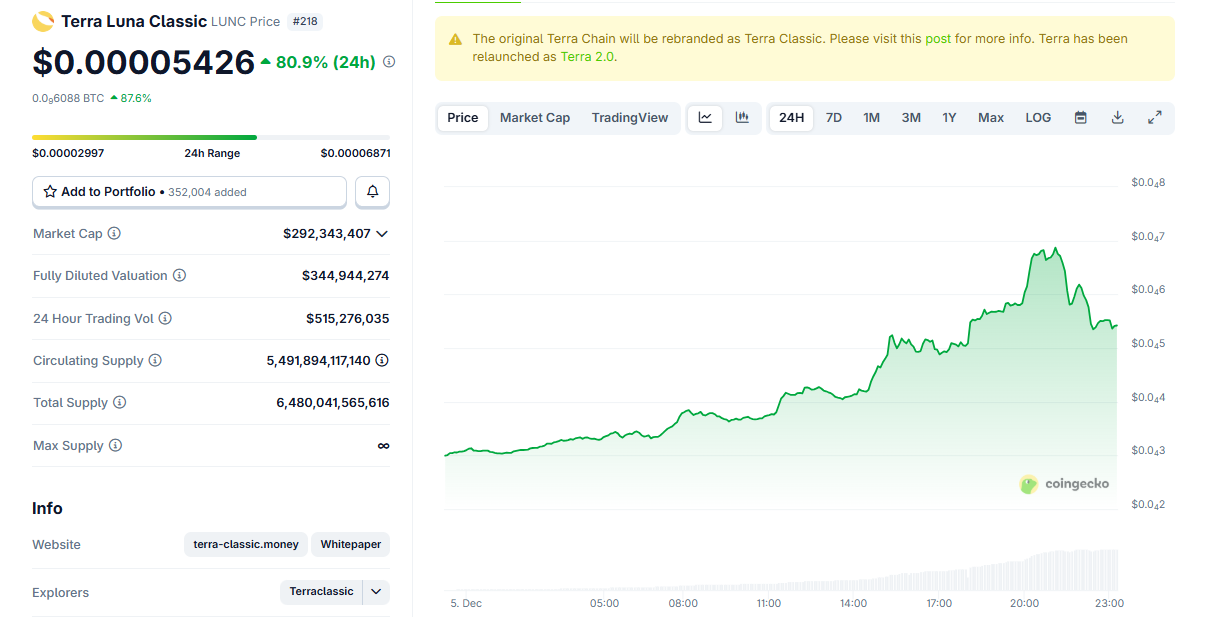 Terra Luna Classic (LUNC) Price Chart on December 5. Source:
CoinGecko
Terra Luna Classic (LUNC) Price Chart on December 5. Source:
CoinGecko
That announcement pushed volume sharply higher, setting the stage for fast speculative flows.
Token burn trackers reported aggressive supply reduction recently, including hundreds of millions of LUNC removed from circulation in the past week. Community messaging amplified the theme, reviving the idea of a shrinking float.
04 December 2025:Terra Classic $LUNC Max Supply: 6,480,742,753,204 Tokens Burned Previous Day: 83,945,886 (🔴-0.0013%)Terra Classic $LUNC Price: $0.00002834 (🟢+0.11%) pic.twitter.com/Gwppn0zHZH
— LUNC BURN UPDATE (@LuncBurnDaily) December 4, 2025
This narrative resurfaced at the same moment as Allison’s shirt went viral, reinforcing the perception of a coordinated cultural comeback.
The Do Kwon Effect
The rally also coincides with renewed attention on Do Kwon’s ongoing sentencing proceedings in the United States. Traders view developments toward legal conclusion as a potential reset point, allowing LUNC to trade like a legacy meme asset rather than a distressed one.
As volume spiked and spot markets tightened, the narrative gained traction quickly.
As expected, the DOJ wants a 12-year prison sentence for Do Kwon. Their sentencing submission suggests they don't buy Kwon's apologies, and they attack his attempts to evade blame and cast himself as a victim of Montenegrin officials. pic.twitter.com/Ub8MKk8iiP
— Alexander Osipovich (@aosipovich) December 5, 2025
Why the T-Shirt Moment Landed So Loudly
Terra’s collapse remains one of crypto’s most dramatic episodes, erasing billions in market value in 2022 and triggering regulatory crackdowns worldwide. Many in the industry still associate the logo with that moment — a symbol of excess, leverage, and systemic failure.
Seeing the design reappear on a main stage alongside established institutions added an unexpected emotional layer to the rally. It represented a strange throwback and also an emotional provocation.
$LUNC just went x2 and added 150 million to its market cap. Not because of some innovation, not because of fundamentals, but simply because a @IanAllison123 from CoinDesk wore a $LUNC t-shirt on camera. This is the reality of the market. People are not chasing technology,… pic.twitter.com/TpHeZwCWgm
— Cryptech Sam 𐤊 (@Cryptech_Sam) December 5, 2025
Terra’s Ghosts Are Still Here
Terra’s algorithmic stablecoin unraveled three years ago, triggering contagion that spread into lending platforms, hedge funds, and later exchanges. Millions of investors were left underwater, and it drove the biggest crypto winter to date.
Today’s rally simply shows that memory, speculation, and narrative still carry weight in crypto — sometimes more than fundamentals.
As LUNC surged, the sight of that shirt reminded markets how quickly sentiment can swing, even for a project once written off as irrecoverable.
Disclaimer: The content of this article solely reflects the author's opinion and does not represent the platform in any capacity. This article is not intended to serve as a reference for making investment decisions.
You may also like
Investing in AI-Powered Learning and Legal Transformation: Where Innovation Meets Societal Progress
- AI is transforming education and legal systems by addressing inequities through adaptive learning tools and affordable justice platforms. - Impact investors prioritize legal tech startups (e.g., Clio, Clearbox) and edtech innovators aligning with UN SDGs and $7.8T impact markets. - Social impact funds scale AI solutions while navigating regulatory fragmentation, with 33 U.S. states forming AI policy committees. - Clean energy-AI hybrids optimize grids and emissions tracking, though cleantech VC funding f

The Federal Reserve's Change in Policy and Its Impact on Rapidly Growing Cryptocurrencies Such as Solana
- U.S. Fed's 2025 rate cuts and dovish pivot boosted risk-on sentiment, driving capital into high-growth crypto assets like Solana . - Solana's technical upgrades (Firedancer, Alpenglow) and institutional partnerships (Visa, Western Union) enhanced scalability and real-world adoption. - $2B+ inflows into Solana ETFs and regulatory clarity (GENIUS Act, OCC guidance) solidified its role in macro-driven crypto portfolios. - Despite short-term volatility, Solana's $10.2B TVL and 869 TPS throughput position it
The Increasing Expenses of Law School and Public Interest Incentives as Opportunities in the Market
- Rising legal education costs and public interest law demand create investment opportunities in legal tech and education platforms. - AI-driven legal tech (e.g., Bench IQ) reduces costs while addressing systemic barriers, with market growth projected at 9.14% CAGR to $65.5B by 2034. - Racial disparities in public interest scholarships (70% vs. 6% for Black students) drive institutional reforms like UC Berkeley's tuition relief and Harvard's ESG-aligned funding shifts. - Education platforms (Legora, Eudia)
Aligning ESG Investment with Legal Industry Transformation: The Societal Influence of Funding Legal Education and Supporting Public Interest Scholarships
- ESG investing in legal education promotes social equity by funding scholarships for underrepresented communities, aligning financial goals with justice access. - Programs like New York Law School's Wilf Scholars reduce financial barriers, creating pathways for graduates to address legal gaps in marginalized areas. - Persistent racial disparities (70% of full-tuition awards to white students vs. 6% to Black students) highlight the need for equitable ESG scholarship distribution. - ESG-aligned initiatives

Trending news
MoreCrypto prices
More






