
Bitcoin Updates: Blockrise's Bitcoin Lending Reflects Growing Institutional Confidence in Regulated Digital Asset Finance
- Blockrise, a Dutch Bitcoin-only firm, launched €20,000 crypto-backed loans after securing EU MiCA regulatory approval, enabling cross-border EU operations. - The service targets corporate clients, allowing Bitcoin collateralization while retaining asset ownership, with 8% interest rates adjusted monthly. - Its semi-custodial model uses hardware-secured vaults and joint transaction authorization, managing €100M in client assets under this structure. - The move aligns with rising institutional demand for B
Blockrise, a financial services company from the Netherlands that focuses exclusively on Bitcoin, has introduced a
The MiCA authorization,

This launch comes as institutional interest in Bitcoin treasury management continues to rise. As more European businesses add Bitcoin to their balance sheets, credit solutions backed by on-chain assets are likely to become more popular. By expanding its services from custody and trading into business lending, Blockrise is positioning itself to benefit from this growing trend. The company is seeking to raise
Clearer regulations under MiCA have increased trust in the crypto sector. Although the current rules do not yet cover lending or decentralized finance, Lazet expects future updates to address these areas. Blockrise’s commitment to regulatory compliance fits well with Europe’s rapidly changing crypto environment, where institutional adoption is advancing faster than traditional banking. With Bitcoin prices stabilizing after a post-2025 decline, regulated providers like Blockrise are in a strong position to connect institutional investors with digital assets .
Disclaimer: The content of this article solely reflects the author's opinion and does not represent the platform in any capacity. This article is not intended to serve as a reference for making investment decisions.
You may also like
BNB Latest Updates: YZi Labs Confronts BNC's Board Regarding Mismanagement of BNB Treasury Governance
- YZi Labs, linked to Binance's CZ, seeks to overhaul BNC's board amid a 92% stock price drop and governance disputes. - The firm accuses the current board of operational lapses, delayed filings, and conflicts of interest with 10X Capital. - BNC holds $412M in BNB but trades at a discount as the token's price decline exacerbates shareholder concerns. - YZi's consent solicitation aims to install new directors without a shareholder meeting, potentially reshaping governance. - The outcome could signal broader

Blockchain’s “irreversible” scams can now be tracked: Success in fund recovery is rising
- Crypto fraud victims now recover stolen assets at 58–72% rates within 90 days, driven by blockchain forensics and law enforcement collaboration. - A 2025 U.S. seizure of 127,271 BTC ($11B) marked a turning point, proving irreversible blockchain transactions can be traced and frozen at regulated exchanges. - Advanced tools and cross-agency efforts enable tracing through mixers and cross-chain bridges, but challenges persist: 66% of victims fail to report thefts, and privacy coins limit recovery to <10%. -

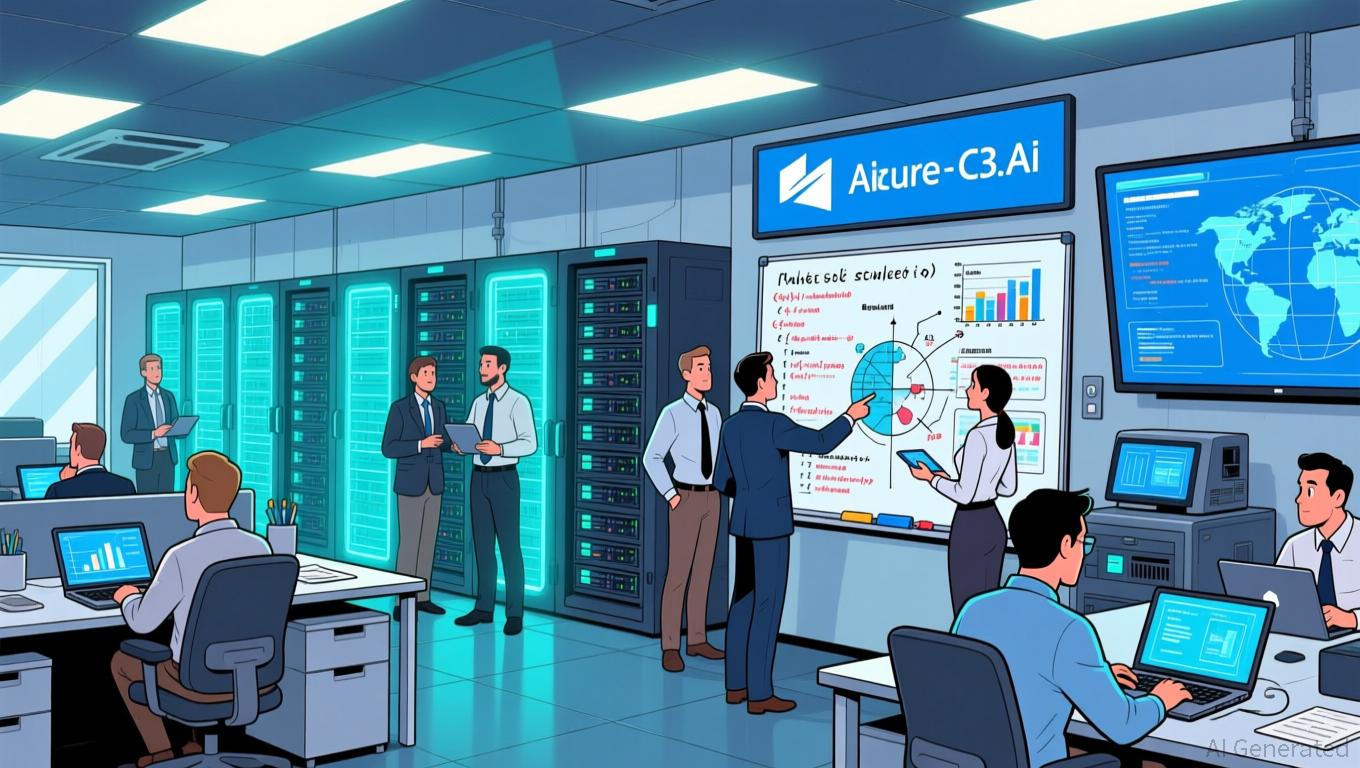
C3.ai Shares Rise Despite AI Industry Slump Thanks to Key Partnerships
- C3.ai reported a 25.3% Q3 revenue drop to $70.26M but saw a 35% stock surge after expanding Microsoft partnerships and alliances with Capgemini, Google Cloud, and AWS. - Analysts project 20.5% YoY revenue decline for Q4 2025, with full-year forecasts at $370M-$395M, highlighting challenges converting AI pilots into long-term contracts. - Strategic consumption-based pricing and Azure/Capgemini collaborations aim to boost customer acquisition, though profitability hurdles persist amid competitive pressures
Astar 2.0 and What Lies Ahead for DeFi Advancements
- Astar Network's 2.0 upgrade introduces a capped ASTR supply and deflationary model, aligning with Bitcoin's scarcity to attract institutional investors. - Enhanced cross-chain interoperability via Plaza and partnerships with LayerZero/Chainlink reduces operational complexity for institutions. - Governance reforms and ESG alignment with Japanese firms aim to address regulatory concerns and expand real-world use cases. - Despite progress, legal uncertainties and smart contract risks persist, limiting large

Trending news
MoreCrypto prices
More





