
Uruguay's Energy Conflict Threatens $500 Million Tether Mining Project
- Tether denies abandoning its $500M Uruguay crypto mining project amid a $4.8M debt dispute with UTE, stating ongoing discussions with the government to resolve the issue. - High electricity costs in Uruguay (vs. $22/MWh in Paraguay) threaten Tether’s operations, mirroring Vici Mining’s 2018 relocation. - Energy expenses (up to 80% of mining costs) highlight the need for competitive pricing to retain energy-intensive industries like crypto mining. - Despite challenges, USDT adoption grows in Latin America
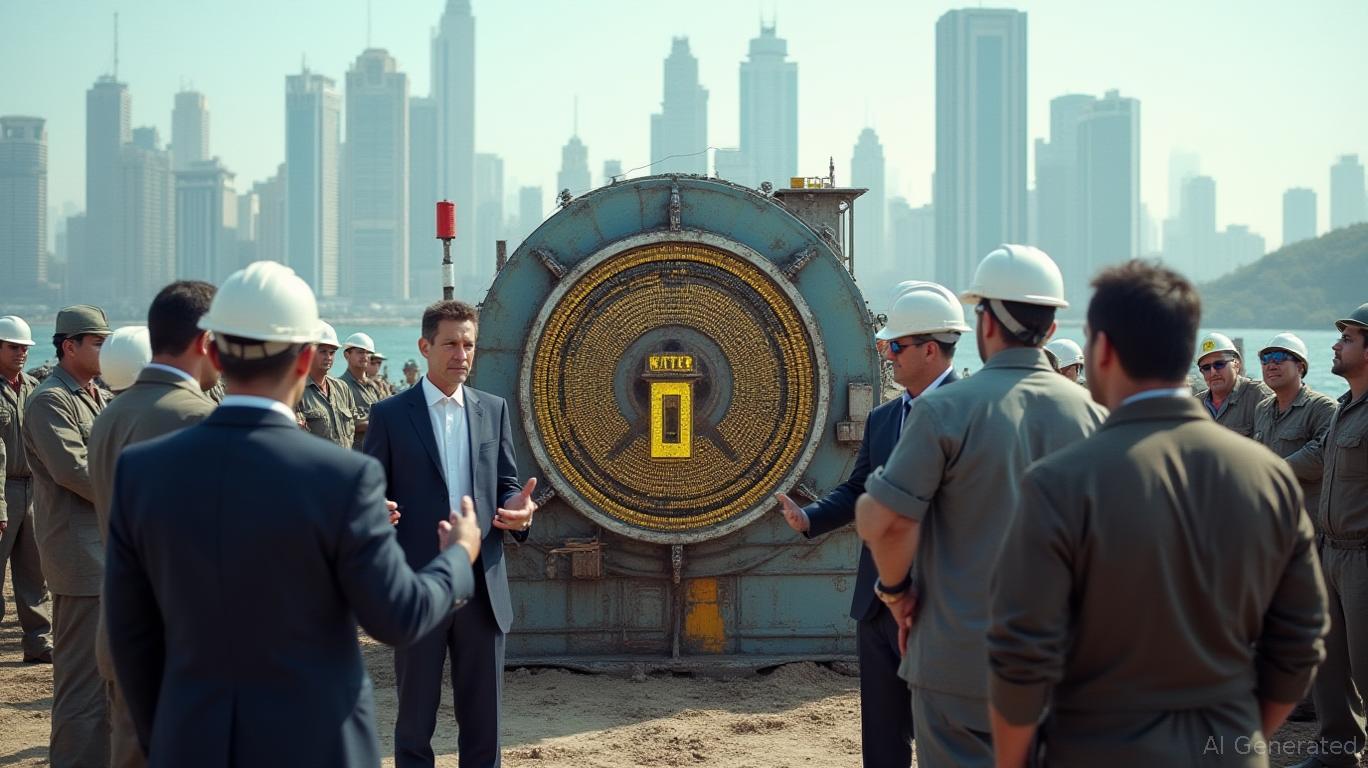
Tether, the company behind the
This conflict highlights the difficulties Tether encounters in Uruguay, where power costs are much steeper than in nearby nations. Electricity in Uruguay is priced between $60 and $180 per megawatt hour (MWh), while in Paraguay—where Tether also runs
Reports indicate that Tether’s Uruguayan arm, Microfin, has been negotiating for reduced electricity prices for new sites, but the details remain confidential. The results of these talks will be key in determining whether Tether can maintain its $500 million investment in the country. If the company cannot resolve its debts and secure better rates, it may be compelled to shift its operations to regions with cheaper power, following the example set by Vici Mining in 2018. Such a move could not only undermine Uruguay’s economic goals but also expose the vulnerability of major crypto projects in areas lacking cost advantages.
This scenario also mirrors broader issues in the crypto mining industry, where reliable and affordable energy is essential for stable operations. UTE’s action to disconnect power over unpaid bills has sparked concerns about the dependability of energy supplies for large-scale consumers. Industry analysts point out that without stable contracts and predictable tariffs, even well-capitalized ventures could face interruptions. This reflects a wider trend in the sector, with miners increasingly seeking locations that offer inexpensive, renewable energy to counteract rising costs.
Despite these challenges, Tether’s stablecoin continues to gain traction across Latin America. In Bolivia, car manufacturers such as Toyota and Yamaha now accept USDT payments, and in Colombia, MoneyGram provides USDT-based services to help manage peso volatility. These examples illustrate the deepening role of stablecoins in mainstream finance, even as mining operations grapple with energy-related obstacles.
The resolution of Tether’s negotiations in Uruguay is expected to shape the region’s appeal for future crypto investments. Lawmakers must decide whether to reform energy policies to stay competitive or risk seeing capital-intensive projects relocate to countries like Paraguay. For Tether, settling the $4.8 million debt and securing sustainable energy agreements will be decisive in determining whether its Uruguayan project becomes a benchmark for large-scale crypto mining or another instance of the industry’s sensitivity to energy costs.
Disclaimer: The content of this article solely reflects the author's opinion and does not represent the platform in any capacity. This article is not intended to serve as a reference for making investment decisions.
You may also like
Dash's Price Soars 150%: Temporary Volatility or the Start of a Lasting Rally?
- Dash (DASH) surged 150% in June 2025, driven by Platform 2.0 upgrades, institutional adoption, and pro-crypto policies. - Institutional inflows ($780M+), cross-chain interoperability, and retail payment integrations boosted DASH's utility and speculative demand. - Privacy features and 0.80 Bitcoin correlation fueled gains, but 77% PrivateSend opacity and regulatory risks question sustainability. - DASH's future hinges on balancing privacy-transparency trade-offs, macroeconomic clarity, and expanding merc
Investing in Educational Technology as Demand for AI and STEM Expertise Grows
- Global EdTech market valued at $277.2B in 2025 is projected to surge to $907.7B by 2034, driven by AI integration in personalized learning and VR/AR tools. - Investors prioritize platforms aligning academic programs with AI/STEM workforce needs, achieving 20-75% higher ROI through systemic AI adoption across institutions. - Case studies like MIT's $350M AI college and OpenClassrooms' 43,000 career-advancing learners demonstrate scalable ROI from workforce-aligned education models. - Despite uneven AI int

Zcash’s Unpredictable Rise: Immediate Drivers and Future Outlook for Privacy
- Zcash (ZEC) rebounded 20% after a 55% drop, testing $375 as liquidity events and technical indicators fueled short-term optimism. - RSI/MACD signals suggest potential $475 breakout if bulls reclaim $375, though ZEC remains 57% below its 2025 peak. - Institutional adoption grows with Grayscale Zcash Trust assets surging 228%, driven by optional privacy tech attracting both retail and institutional users. - Regulatory scrutiny under MiCA and FinCen rules, plus Zcash's hybrid privacy model vs. Monero/Dash,

Zcash Halving and Its Impact on the Cryptocurrency Market
- Zcash’s 2028 halving will reduce block rewards by 50%, mirroring Bitcoin’s scarcity-driven model. - Historical data shows pre-halving price surges, fueled by FOMO and social media-driven hype cycles. - Behavioral economics highlight crypto markets’ reliance on narratives over fundamentals, with sentiment driving 30% of short-term price swings. - Zcash faces adoption challenges despite robust privacy tech, as regulatory uncertainty and competition limit its market share growth. - The 2028 event tests whet

Trending news
MoreCrypto prices
More





