
Arizona Senate Approves Bitcoin Reserve Bill in Tight Vote

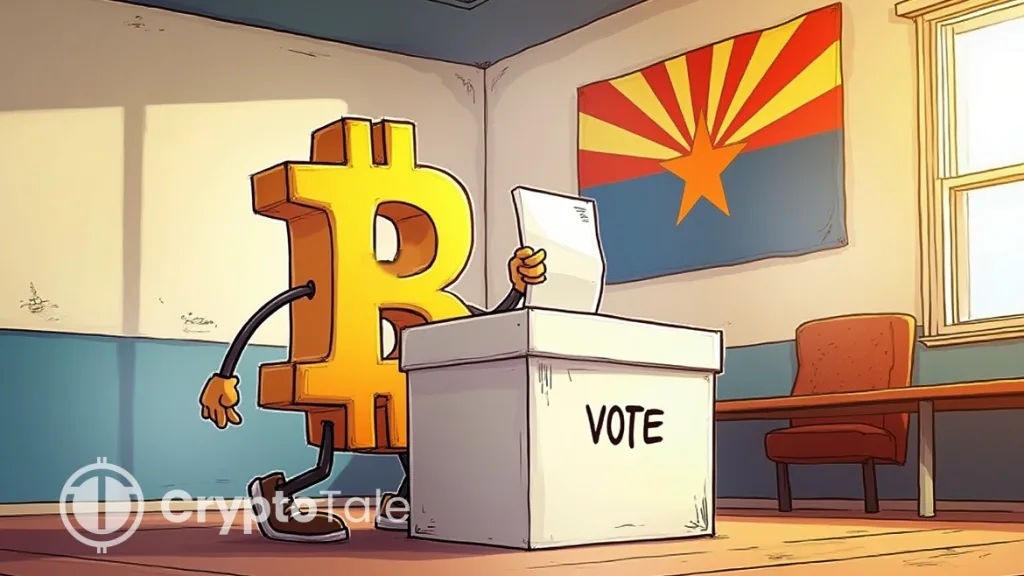
- Arizona Senate approves HB 2324, advancing plans for Bitcoin reserve funded by seized crypto.
- The bill splits forfeited crypto between the Attorney General, state fund, and the reserve fund.
- HB 2324 returns to the House for a final vote before reaching Governor Katie Hobbs.
Arizona lawmakers have given a fresh push to a Bitcoin bill that aims to create a state-run digital asset reserve. On Thursday, the Senate voted to approve House Bill 2324 in a close 16-14 decision. Senator Janae Shamp, who had previously voted against it, later moved to revive the proposal.
If passed, HB 2324 would create a ‘Bitcoin and Digital Assets Reserve Fund’, which would manage digital assets seized in criminal cases. The first $300,000 from any forfeiture would go to the Attorney General’s office, while the remaining assets would be split, with 50% going to the Attorney General, 25% to the state general fund, and the last 25% to the new reserve fund.
The bill also aims to update Arizona’s forfeiture laws by allowing the state to seize and manage digital assets. The state could claim crypto from people who are deceased, deported, or have abandoned the property. However, the authorities must initially prove that there is no one to take ownership and also show that diligent efforts were made to find one.
Senator Jeff Weninger sponsored HB 2324, proposing to bring digital assets into Arizona’s financial systems with the support of other Republican lawmakers. However, the Senate vote mostly followed party lines. Republican Senator Jake Hoffman was the only one from his party to oppose it.
Related: Arizona Becomes Second State to Enact Crypto Reserve Bill
Bill Moves to Arizona House for Final Decision
The bill now returns to the House of Representatives for a final vote. There are 60 members in the Arizona House, 33 of whom are Republicans. If the bill is approved at this level, it will go to Governor Katie Hobbs.
Notably, Hobbs has a mixed record on crypto. On May 7, she signed HB 2749, allowing the state to hold unclaimed crypto and set up a reserve fund without using taxpayer money. The fund may also grow through staking rewards or airdrops.
Hobbs vetoed two other crypto bills in May. One aimed to allow the state treasurer to invest public funds in Bitcoin, while the other sought to establish a broader digital assets reserve fund. Hobbs cited market volatility and the risk to public funds in her veto letters. If HB 2324 passes the House, Arizona could become one of the first states to build a reserve using seized crypto.
The post Arizona Senate Approves Bitcoin Reserve Bill in Tight Vote appeared first on Cryptotale.
Disclaimer: The content of this article solely reflects the author's opinion and does not represent the platform in any capacity. This article is not intended to serve as a reference for making investment decisions.
You may also like
Ethereum Staking Weekly Report December 1, 2025
🌟🌟Core Data on ETH Staking🌟🌟 1️⃣ Ebunker ETH staking yield: 3.27% 2️⃣ stETH...

The Blood and Tears Files of Crypto Veterans: Collapses, Hacks, and Insider Schemes—No One Can Escape
The article describes the loss experiences of several cryptocurrency investors, including exchange exits, failed insider information, hacker attacks, contract liquidations, and scams by acquaintances. It shares their lessons learned and investment strategies. Summary generated by Mars AI This summary was produced by the Mars AI model, and the accuracy and completeness of its generated content are still in the process of iterative improvement.

Mars Morning News | Federal Reserve officials to advance stablecoin regulatory framework; US SEC Chairman to deliver a speech at the New York Stock Exchange tonight
Federal Reserve officials plan to advance the formulation of stablecoin regulatory rules. The SEC Chair will deliver a speech on the future vision of capital markets. Grayscale will launch the first Chainlink spot ETF. A Coinbase executive has been sued by shareholders for alleged insider trading. The cryptocurrency market fear index has dropped to 23. Summary generated by Mars AI This summary was generated by the Mars AI model, and the accuracy and completeness of its content are still in the process of iterative updates.

OECD's latest forecast: The global interest rate cut cycle will end in 2026!
According to the latest forecast from the OECD, major central banks such as the Federal Reserve and the European Central Bank may have few "bullets" left under the dual pressures of high debt and inflation.
Trending news
MoreCrypto prices
More






